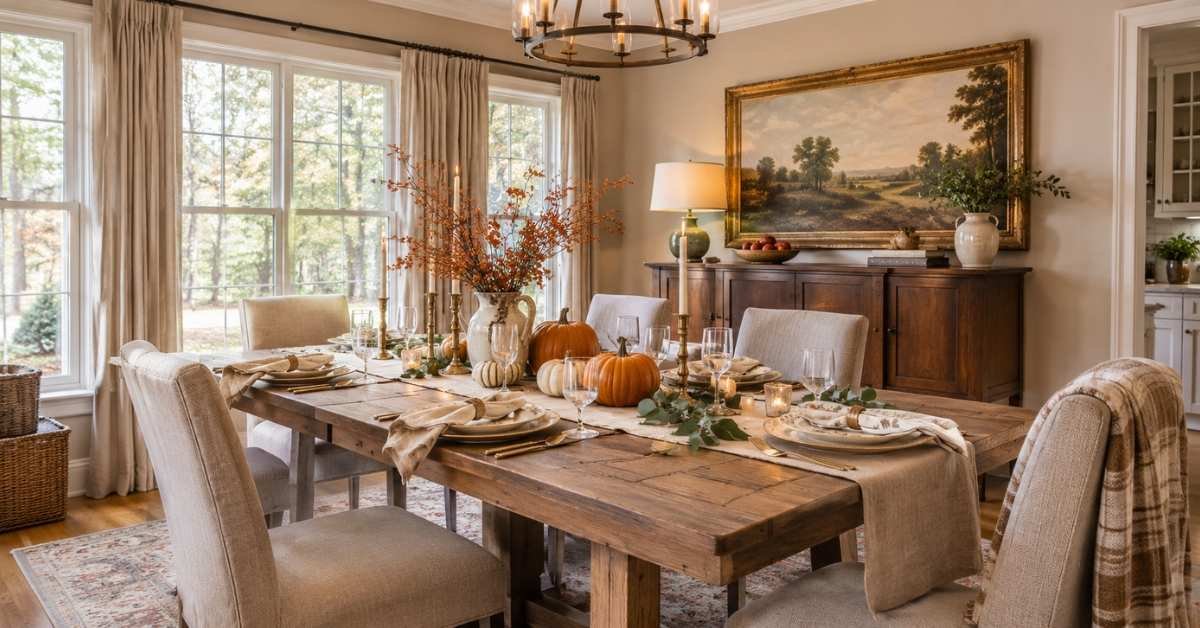

Thanksgiving home decor is about creating a welcoming atmosphere where family and friends can relax, share a meal, and enjoy time together. From autumn-inspired table settings to cozy living room accents, thoughtful seasonal touches can make a home feel festive without requiring expensive decorations or a complete makeover. The challenge is finding ideas that complement your existing furniture, fit your available space, and remain practical when guests arrive.
This guide explores creative Thanksgiving decorating ideas, color combinations, affordable DIY projects, and simple styling tips for every room.
My take: The most inviting Thanksgiving homes don’t necessarily have the most decorations; they use a few well-chosen textures, warm colors, and thoughtful details to make everyday spaces feel special.
What Makes Thanksgiving Home Decor Special?
Thanksgiving decorations have a distinctive character because they focus on warmth, gratitude, seasonal abundance, and gathering together. Unlike holidays that often feature bright lights or elaborate displays, Thanksgiving lends itself to natural materials, understated arrangements, and comfortable interiors.
A dining table dressed with linen napkins, miniature pumpkins, and a few autumn branches can feel just as festive as a more elaborate centerpiece. Similarly, adding a rust-colored throw to a neutral sofa or placing a ceramic pumpkin on a wooden console introduces seasonal character without changing the room’s overall design.
One of the biggest advantages of fall Thanksgiving decor is its flexibility. Traditional homes can accommodate plaid fabrics, copper accents, and rustic wooden accessories, while modern interiors often look better with sculptural ceramics, muted greenery, and restrained color palettes.
The decorations can also remain useful beyond the holiday. A woven basket, amber glass vase, or textured cushion works throughout autumn, making these pieces more practical than accessories featuring large holiday-specific messages.
However, Thanksgiving styling needs to accommodate real activities. Dining tables require space for serving dishes, entryways need clear walking routes, and living rooms should remain comfortable for guests. Beautiful decorations lose their appeal when they interfere with everyday movement.
How to Choose the Right Thanksgiving Decorations for Your Home
Before choosing pumpkins, wreaths, garlands, or table accessories, consider the rooms you actually use and the furniture already in place.
- Room size: Compact rooms benefit from small arrangements and vertical decorations, while larger spaces can support fuller centerpieces and layered accessories.
- Interior style: Farmhouse homes suit woven textures and weathered wood. Modern spaces often look better with ceramic pumpkins, clean-lined candleholders, and simple arrangements.
- Color palette: Start with existing upholstery, flooring, and wall colors. Warm neutrals, terracotta, olive green, burgundy, and muted gold are versatile seasonal choices.
- Budget: Use branches, existing vases, fabric remnants, and reusable ornaments before purchasing additional decorations.
- Materials: Ceramic and metal accessories are generally easy to wipe clean, while dried foliage, woven fibers, and untreated wood require gentler handling.
- Lighting: Rooms with limited daylight can benefit from warm-toned lamps and battery-operated candles instead of relying on dark decorations.
- Space limitations: Renters and apartment dwellers can use tabletop arrangements, removable hooks suitable for their surfaces, and freestanding accessories.
- Maintenance and storage: Consider whether items are washable, fragile, reusable, or difficult to store after Thanksgiving.
- Household needs: Keep breakable ornaments, small loose decorations, and potentially hazardous plants away from children and pets.
My advice: Choose two main colors and one accent rather than purchasing every attractive fall decoration you find. A consistent palette helps inexpensive accessories look more coordinated.
10 Thanksgiving Home Decor Ideas Worth Trying
1. Create a Natural Thanksgiving Table Centerpiece
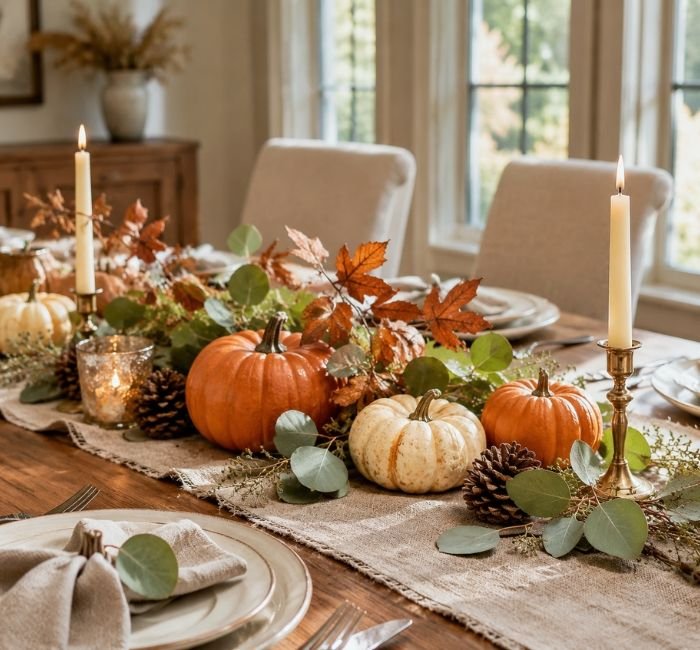
A natural centerpiece combines pumpkins, seasonal foliage, branches, pinecones, and simple containers into a decorative arrangement. The mixture of organic shapes and textures creates a harvest-inspired focal point without requiring elaborate floral work.
Best Suited For: Farmhouse, rustic, traditional, and neutral dining rooms. It also works for budget-conscious households because many components can be reused or collected responsibly.
What to Watch Out For: Tall branches and oversized arrangements can block conversation or leave too little space for food.
How to Style It: Begin with a linen runner and arrange three to five small pumpkins along the center. Add short sprigs of eucalyptus or other suitable greenery, then use ceramic or glass vessels to create subtle height differences. For seated dining, keeping the main arrangement around 12 inches (30 cm) tall or lower is a useful styling guideline, not a fixed rule.
Practical Decorating Tip: Assemble the arrangement on a shallow tray so you can move it quickly when serving the meal.
2. Decorate Your Front Door With an Autumn Wreath
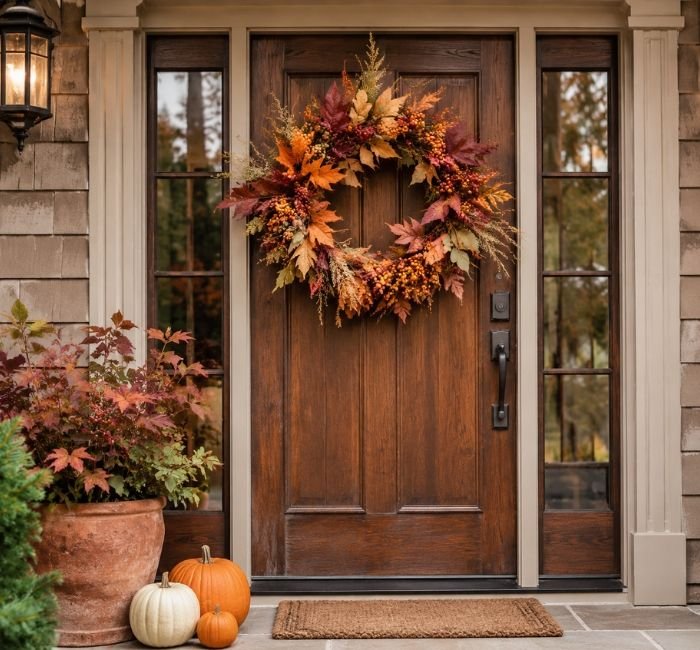
A Thanksgiving wreath uses seasonal leaves, dried grasses, berries, or small decorative gourds to create a welcoming entrance. Natural-looking arrangements offer autumn color without relying on large signs or excessive ornamentation.
Best Suited For: Houses with covered porches, apartment doors where decorations are permitted, and homes with understated exterior styling.
What to Watch Out For: Dried foliage and inexpensive artificial leaves can deteriorate when exposed to strong sunlight, wind, or rain.
How to Style It: Choose a wreath proportionate to your door, leaving enough space around the edges for a balanced appearance. A 20–24-inch (51–61 cm) wreath is a useful starting point for many standard residential doors, but measure before purchasing. Coordinate its colors with nearby planters or a doormat.
Practical Decorating Tip: Check that the hanger doesn’t prevent the door from closing properly, and use weather-resistant materials for exposed entrances.
3. Style Your Living Room With Cozy Autumn Textiles
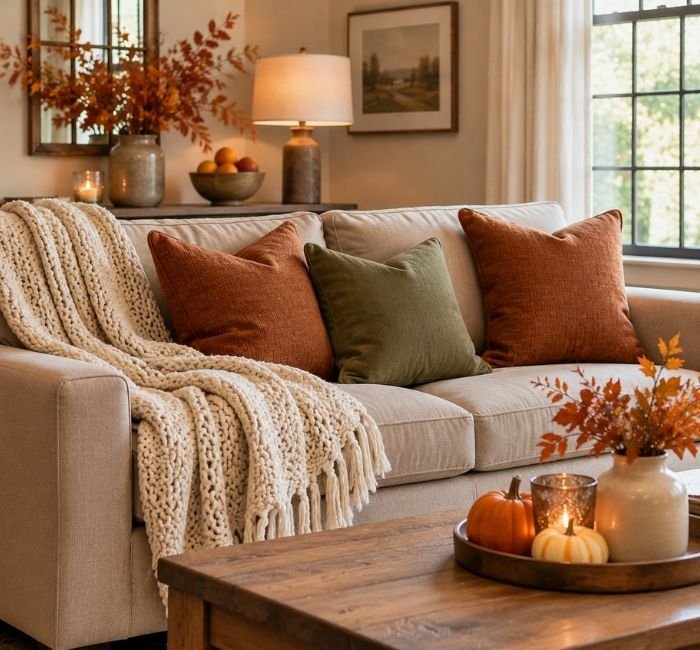
Seasonal textiles include cushion covers, knitted throws, plaid blankets, and textured fabrics that introduce warmth through color and material. They are especially useful because they transform a room without requiring furniture changes.
Best Suited For: Living rooms, reading corners, and family spaces where comfort matters as much as appearance.
What to Watch Out For: Too many patterned cushions can make a sofa look crowded and reduce usable seating.
How to Style It: Pair a neutral sofa with two warm-toned cushions and one textured throw. Rust, oatmeal, mustard, and olive green work well with beige or cream upholstery. For a charcoal sofa, consider muted copper, camel, or burgundy.
Mix textures rather than competing patterns. A smooth cotton cushion beside a chunky knitted throw creates visual interest while keeping the overall look calm.
Practical Decorating Tip: Replace existing cushion covers instead of buying complete cushions to reduce costs and storage requirements.
4. Arrange Pumpkins on a Fireplace Mantel or Console
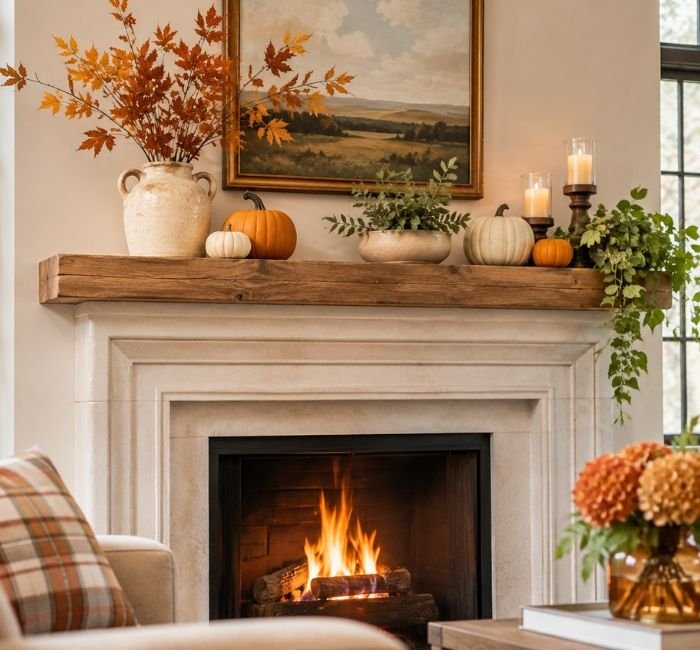
Pumpkin arrangements combine decorative gourds, small ceramics, candles, and autumn greenery across a horizontal surface. Their rounded shapes soften the straight lines of shelves, consoles, and fireplace surrounds.
Best Suited For: Living rooms with mantels, entryway consoles, sideboards, or open shelving.
What to Watch Out For: Excessive decorations can make the display look cluttered. Real pumpkins may also damage delicate surfaces if moisture collects underneath them.
How to Style It: Arrange pumpkins in groups of three with varied heights and finishes. Try a matte cream ceramic pumpkin, a small natural orange pumpkin, and a wooden accent. Leave visible space between groups so each arrangement has room to stand out.
For a modern room, use white, taupe, and muted green rather than traditional bright orange.
Practical Decorating Tip: Place a washable tray beneath real pumpkins and inspect them regularly for soft spots or moisture.
5. Add Warm Ambient Lighting for Thanksgiving Gatherings
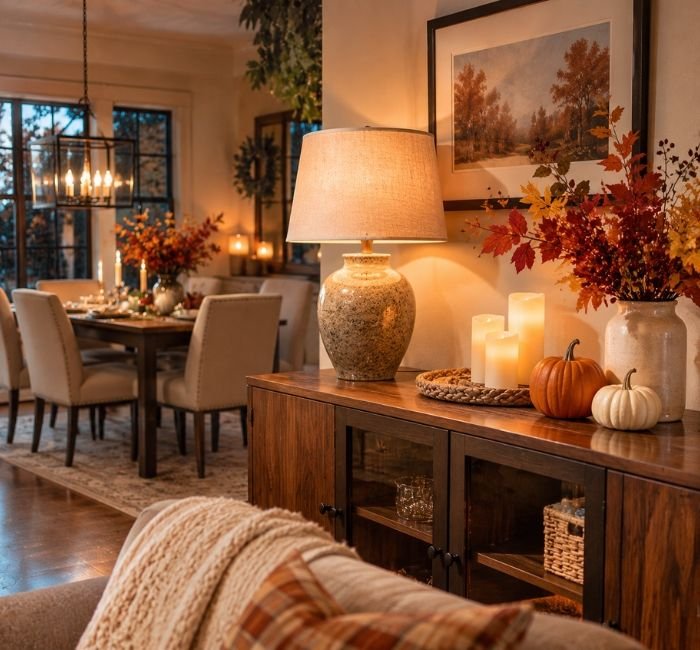
Ambient lighting provides the soft background illumination that makes a room comfortable and inviting. Table lamps, LED candles, and decorative string lights can complement existing ceiling fixtures.
Best Suited For: Dining rooms, living rooms, entryways, and evening gatherings, particularly in homes with limited natural light.
What to Watch Out For: Too many lights can create visual clutter, while exposed cords can become tripping hazards.
How to Style It: Combine a table lamp with battery-operated candles placed on a dining sideboard or coffee table. Warm-white lighting generally feels more appropriate for an autumn setting than cool, bluish light.
Avoid placing string lights where guests need to move chairs or walk between rooms. Use products according to their manufacturer’s instructions.
Practical Decorating Tip: Choose flameless LED candles for arrangements involving dried leaves, fabrics, or other combustible decorations. The U.S. Fire Administration’s candle safety guidance explains why keeping combustible materials away from open flames matters.
6. Design a Simple Thanksgiving Entryway Display
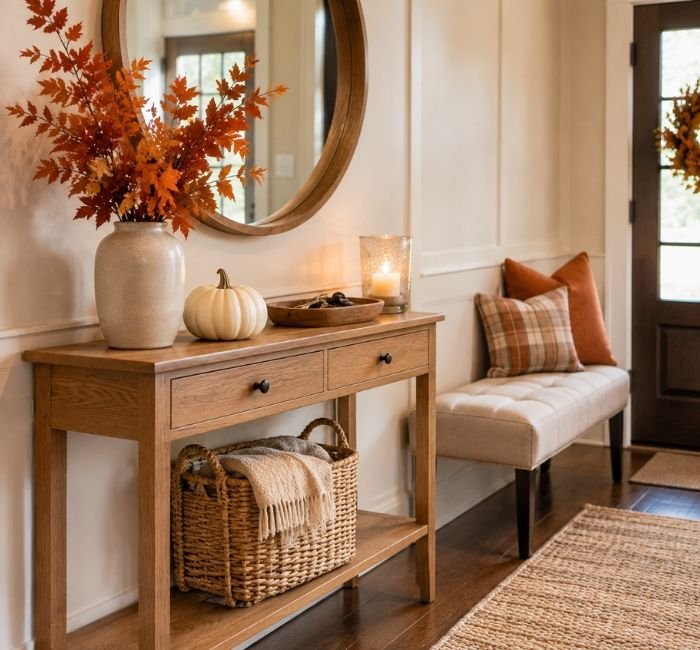
An entryway display combines a small seasonal arrangement with functional pieces such as a mirror, tray, basket, or console table. It establishes the home’s holiday atmosphere before guests enter the main living areas.
Best Suited For: Apartments, narrow hallways, and homes where decorating the entire interior isn’t practical.
What to Watch Out For: Large floor baskets or decorative arrangements can obstruct doorways and create inconvenient traffic patterns.
How to Style It: Place a narrow vase with autumn branches on a console, then add a small ceramic pumpkin and a shallow tray for keys. In a compact entryway, use a wall shelf rather than adding another piece of furniture.
Keep the arrangement visually connected to the living room by repeating one color or material.
Practical Decorating Tip: Leave a clear section of the console for everyday essentials instead of covering the entire surface with ornaments.
7. Make a Budget-Friendly DIY Thanksgiving Garland
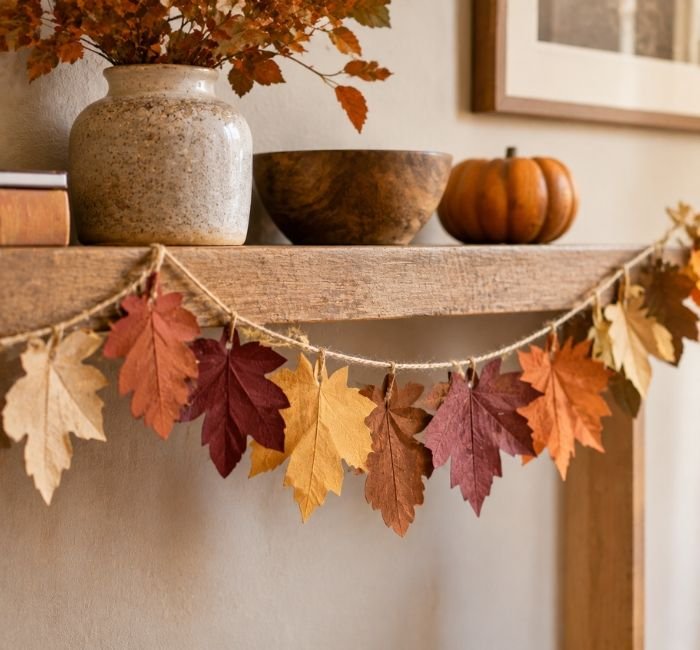
A handmade garland can feature paper leaves, fabric scraps, wooden beads, or dried orange slices threaded together. It adds a personal, handmade quality to Thanksgiving decorations without requiring expensive craft supplies.
Best Suited For: DIY enthusiasts, families decorating together, renters, and anyone looking for inexpensive seasonal accents.
What to Watch Out For: Paper and dried fruit can be damaged by moisture, while small components and loose strings require care around young children and pets.
How to Style It: Cut leaf shapes from kraft paper in three complementary shades, such as tan, rust, and burgundy. Attach them to cotton twine with even spacing and hang the finished garland across a shelf, window frame, or decorative wall area.
Avoid positioning handmade garlands near flames, hot light fixtures, or cooking equipment.
Practical Decorating Tip: Make the garland in short sections so it is easier to hang, adjust, and store without tangling.
8. Set an Elegant Thanksgiving Table With Layered Place Settings
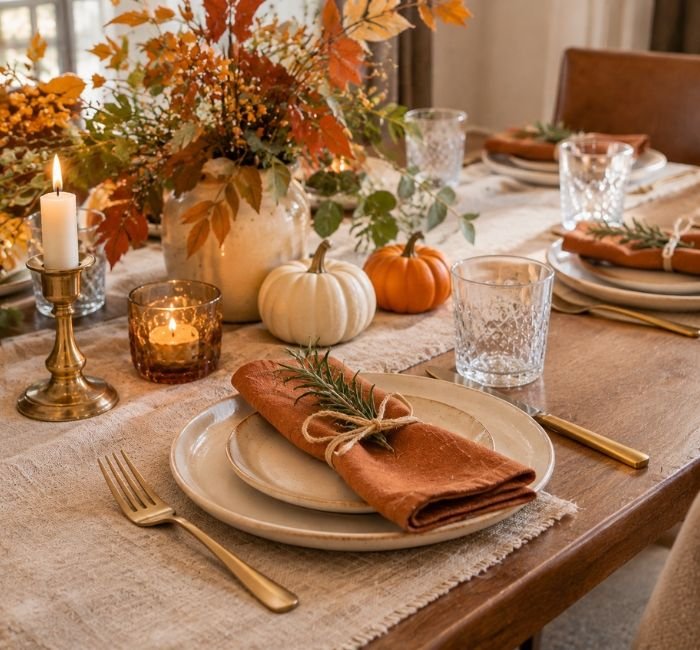
Layered place settings use coordinated dinnerware, napkins, placemats, and small decorative accents to make each seat feel considered. They can look festive without purchasing a completely new dinnerware collection.
Best Suited For: Formal dinners, intimate family meals, contemporary dining rooms, and hosts who prefer understated decoration.
What to Watch Out For: Excessive layers can consume valuable table space, especially when serving dishes will be shared.
How to Style It: Begin with everyday white or cream plates, then add linen or cotton napkins in terracotta, sage, or warm beige. A small rosemary sprig or paper place card provides a finishing detail.
Keep drinking glasses, cutlery, and serving access in mind before adding decorative pieces.
Practical Decorating Tip: Set one complete place setting before arranging the rest of the table. This helps identify spacing problems early.
9. Use Autumn Branches and Dried Florals in Decorative Vases
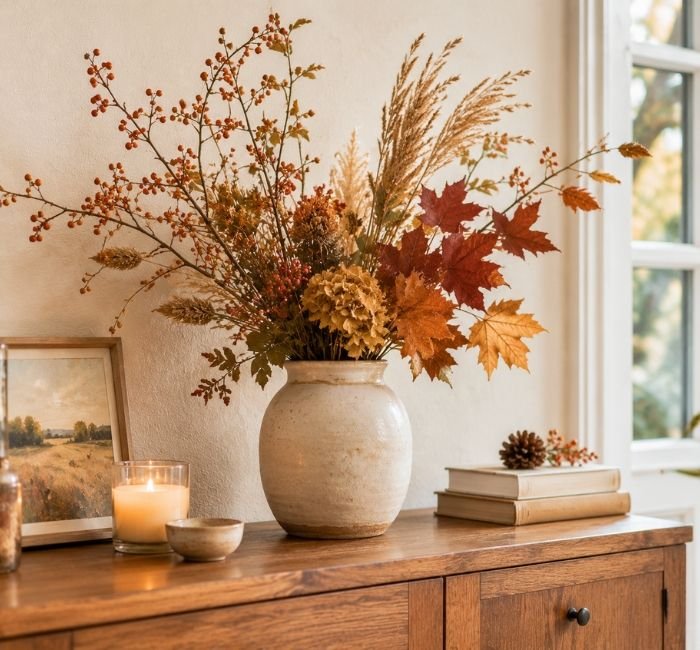
Branches, dried grasses, seed heads, and preserved foliage create seasonal displays with height and natural movement. Their sculptural shapes work particularly well in simple ceramic or glass vases.
Best Suited For: Minimalist, Scandinavian, rustic, and contemporary interiors, especially sideboards and unused corners.
What to Watch Out For: Dried materials can shed, collect dust, or become brittle, and some plants may be unsuitable for households with pets.
How to Style It: Choose a sturdy vase with a wide enough base to support the arrangement. Combine a few taller branches with shorter stems, leaving gaps between them rather than creating a dense bouquet.
Amber glass, matte stoneware, and earthy ceramics complement autumn foliage beautifully.
Practical Decorating Tip: Test the arrangement’s stability before placing it near seating or a busy walkway.
10. Create a Small Thanksgiving Coffee Table Display
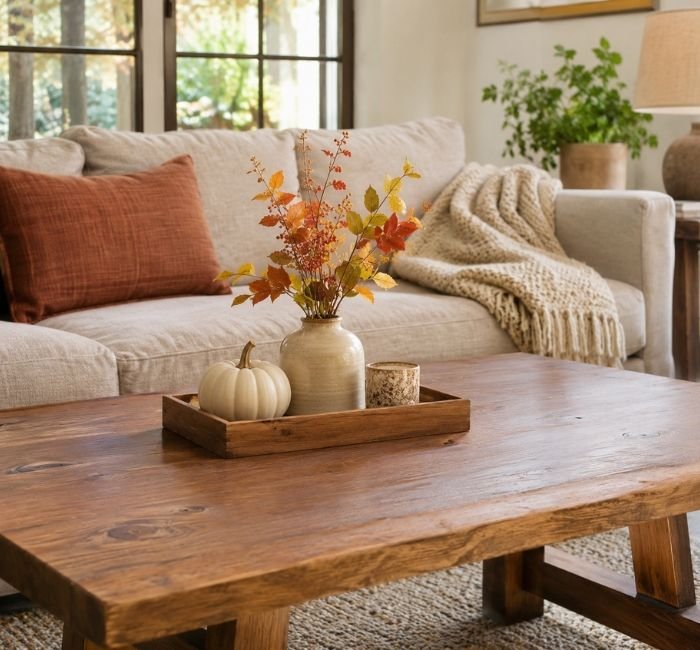
A coffee table arrangement gathers a few seasonal objects into a compact decorative grouping. A tray, small vase, decorative pumpkin, and candle alternative can provide enough autumn character without overwhelming the room.
Best Suited For: Small apartments, casual living rooms, and homes with limited decorating surfaces.
What to Watch Out For: Tall arrangements can obstruct television viewing or interfere with drinks, books, and remote controls.
How to Style It: Choose a tray that occupies no more than roughly one-third of the tabletop as a starting point. Combine a small ceramic pumpkin, a low vase, and one textured accessory. Leave the rest of the surface accessible.
A wooden tray adds warmth to glass or stone tables, while a metal tray creates contrast against wooden furniture.
Practical Decorating Tip: Keep everything together on one movable tray so the coffee table can be cleared in seconds when guests need it.
My take: The most effective Thanksgiving decorating ideas are often the ones that can be adjusted easily when a room fills with people. Movable trays, washable textiles, and compact arrangements offer flexibility that elaborate fixed displays rarely provide.
Quick Comparison Table: Thanksgiving Decorating Options
The following comparison focuses on relative spending levels rather than unverified retail prices. Actual costs depend on size, materials, whether you already own supplies, and where you shop.
| Decorating Option | Best For | Budget Level | Main Materials | Maintenance |
|---|---|---|---|---|
| Natural centerpiece | Dining tables | Low–mid | Pumpkins, foliage, linen | Check fresh materials |
| Autumn wreath | Front doors | Mid | Grapevine, foliage, ribbon | Dust; protect from weather |
| Seasonal textiles | Sofas and chairs | Low–mid | Cotton, linen, knit | Wash according to labels |
| Ceramic pumpkins | Mantels and consoles | Mid | Ceramic, stoneware | Wipe clean |
| LED candle display | Evening gatherings | Low–mid | LED, glass, metal | Replace batteries |
| DIY paper garland | Shelves and walls | Low | Paper, twine | Keep dry |
| Layered table setting | Thanksgiving dinner | Mid–premium | Dinnerware, fabric, glass | Wash after use |
| Dried floral arrangement | Sideboards and corners | Low–mid | Branches, grasses, vase | Gentle dusting |
The simplest way to control spending is to choose one focal display and support it with smaller accessories you already own. For example, a well-styled dining table may create more impact during Thanksgiving dinner than purchasing decorations for every corner of the house.
What to Consider Before Buying or Decorating
Before buying Thanksgiving home decorations, identify which spaces will receive the most attention. For many households, the dining table, living room, and entryway are enough to establish a seasonal atmosphere.
Measure surfaces carefully. Check the length and width of your dining table, the depth of your mantel, and the available clearance around doorways. Product photos can make decorative objects appear smaller or larger than they actually are, so always review listed dimensions.
Set a realistic budget and divide it between reusable accessories and short-lived seasonal materials. Durable candleholders, washable runners, and neutral vases offer greater versatility than decorations printed with a specific holiday message.
Material quality matters, too. Check whether fabrics are washable, ceramic pieces have stable bases, and decorative greenery is appropriate for its intended location. For outdoor displays, confirm that products are suitable for exterior exposure.
I’d recommend starting with a table runner, two or three reusable decorative pieces, and one seasonal arrangement before investing in a larger collection. This creates a coordinated foundation that can be expanded gradually.
Storage is another consideration. Stackable accessories, foldable fabrics, and compact garlands are easier to manage than oversized wreaths or delicate arrangements. Keep original packaging for fragile items when practical.
My advice: Before purchasing anything new, arrange the decorations you already have in their intended locations. You’ll quickly see where a missing color, texture, or focal point would genuinely improve the space.
Common Thanksgiving Decorating Mistakes to Avoid
1. Using Too Many Autumn Colors
Orange, burgundy, mustard, brown, and green all have seasonal appeal, but combining every shade in one room can create a busy appearance.
This often happens when decorations are purchased individually without considering the existing interior. Choose a dominant neutral, one warm seasonal shade, and a restrained accent. Repeat those colors across cushions, table accessories, and foliage.
2. Overcrowding the Thanksgiving Dining Table
A dramatic centerpiece may look attractive before dinner, yet become frustrating once plates, glasses, and serving dishes arrive.
The mistake is treating the dining table purely as a display surface. Test your arrangement with actual dinnerware and serving pieces. If space is limited, move larger decorations to a nearby sideboard.
3. Ignoring the Scale of Decorations
Tiny pumpkins can disappear on a long mantel, while an oversized wreath may overwhelm a narrow apartment door.
Decorations often look different at home than they do in store displays. Measure the available surface, then combine objects of different heights and sizes. Aim for visual balance rather than filling every empty area.
4. Relying on Harsh Overhead Lighting
Even carefully chosen decorations can appear flat under bright, cool ceiling lights. Strong overhead illumination may also make an intimate dinner feel less relaxed.
Use existing table lamps or dimmable fixtures where available. Add battery-operated candles for gentle accent lighting without introducing open flames near seasonal materials.
5. Buying Decorations That Are Difficult to Store
Oversized artificial arrangements, fragile ornaments, and bulky signs can create storage problems once the holiday ends.
This usually happens when shopping decisions focus only on appearance. Before purchasing, consider where the item will go afterward. Choose reusable, compact accessories whenever possible, and protect fragile finishes during storage.
My take: Thanksgiving decor should make hosting easier, not create another household chore. Decorations that are simple to clean, rearrange, and pack away are often the smartest long-term choices.
Frequently Asked Questions
When Should You Start Decorating for Thanksgiving?
Many households begin Thanksgiving decorating in early November, although autumn decorations can be introduced earlier. If you already have fall decor, adding a few Thanksgiving-specific table accessories closer to the holiday is usually enough.
How Can I Decorate My Home for Thanksgiving on a Budget?
Start with existing vases, cushions, blankets, and dinnerware. Add affordable seasonal materials such as small pumpkins, paper garlands, or responsibly collected branches. Concentrating on one or two prominent areas creates a stronger result than scattering inexpensive ornaments everywhere.
What Colors Are Best for Modern Thanksgiving Home Decor?
Cream, taupe, sage green, terracotta, muted rust, and warm brown work particularly well in contemporary interiors. Pair two or three complementary colors with simple ceramic, glass, or wooden accessories for a restrained seasonal appearance.
How Do I Decorate a Small Apartment for Thanksgiving?
Use compact tabletop arrangements, seasonal cushion covers, a small door wreath, and a movable coffee table tray. Avoid large floor displays or decorations that reduce walking space. Vertical accents can add interest without consuming valuable surfaces.
What Can I Use Instead of Pumpkins for Thanksgiving Decorations?
Try dried grasses, autumn branches, pinecones, woven baskets, amber glassware, linen napkins, or seasonal floral arrangements. These materials create a harvest-inspired look without relying on pumpkin motifs.
How Can I Make Thanksgiving Decorations Last Longer?
Choose reusable materials such as ceramic, metal, glass, and washable fabrics. Store decorations in dry containers, protect fragile items with padding, and keep dried arrangements away from moisture. Inspect fresh foliage and pumpkins regularly, replacing anything that begins to deteriorate.
Conclusion
My biggest takeaway is… Thanksgiving home decor works best when it feels connected to the home you already love rather than competing with it. A cohesive color palette, natural textures, comfortable lighting, and a few well-placed decorations can create a welcoming atmosphere without excessive spending.
Focus first on the rooms where people will gather, then choose decorations that suit your furniture, available space, and daily routines. Start with one thoughtfully arranged centerpiece or cozy living room display, and build from there only if the space genuinely needs more.
The result should be a home that feels warm, personal, and ready for a memorable Thanksgiving gathering.