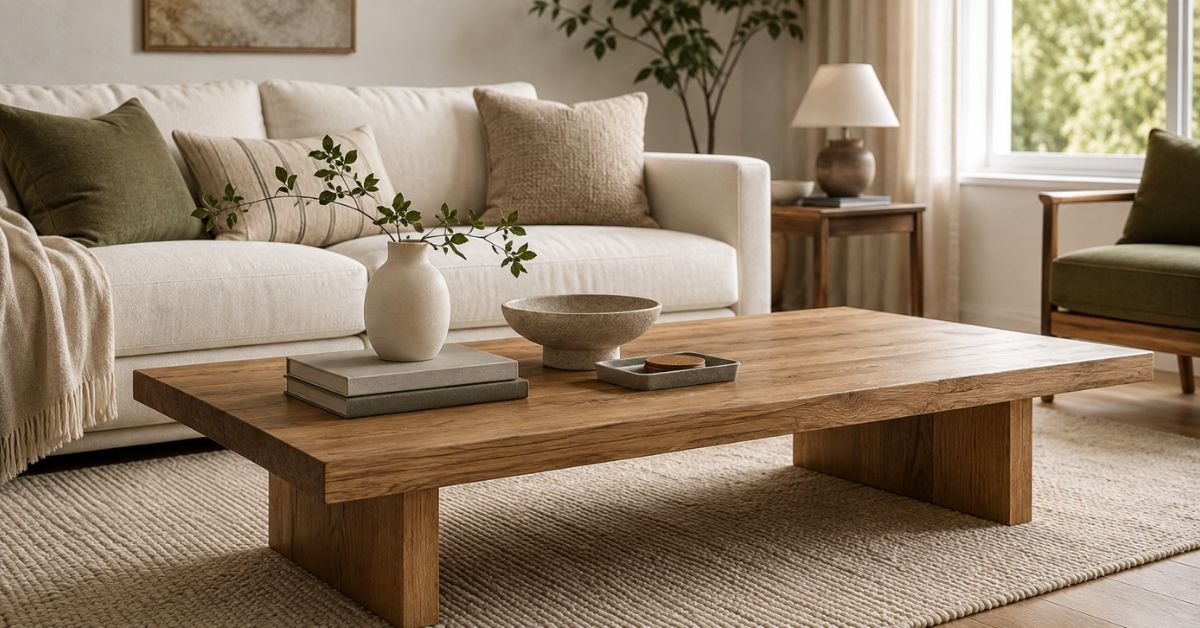

A coffee table sits right in the middle of your living room, so even a small styling change can affect how the whole seating area feels. The best ideas for decorating a coffee table combine visual interest with enough open space for everyday life. You still need somewhere for a drink, remote, book, or snack.
Instead of filling the surface with random accessories, think about height, texture, color, proportion, and negative space. Books can create structure, a vase can introduce height, while a tray keeps smaller items together.
Below are 15 coffee table decorating ideas for different styles, table shapes, room sizes, and budgets.
Quick Coffee Table Styling Guide
| Style Goal | Start With | Add | Best Materials |
| Minimal | Books or a low bowl | One sculptural object | Ceramic, glass, stone |
| Natural | Wooden tray | Greenery or branches | Wood, rattan, stoneware |
| Modern | Sculptural centerpiece | Small book stack | Metal, ceramic, glass |
| Warm and layered | Books + tray | Vase and textured object | Wood, linen, ceramic |
| Colorful | Neutral foundation | One repeated accent color | Books, pottery, glass |
| Small-space | One compact grouping | Low vase or coasters | Light wood, ceramic |
| Family-friendly | Stable tray or bowl | Durable accessories | Wood, woven fiber |
A simple formula works for many tables: one anchor piece + one taller element + one low object + some clear surface.
You can reduce that formula for a small table or expand it into two separate groups when working with an oversized coffee table.
1. Start With Coffee Table Books and a Small Vase
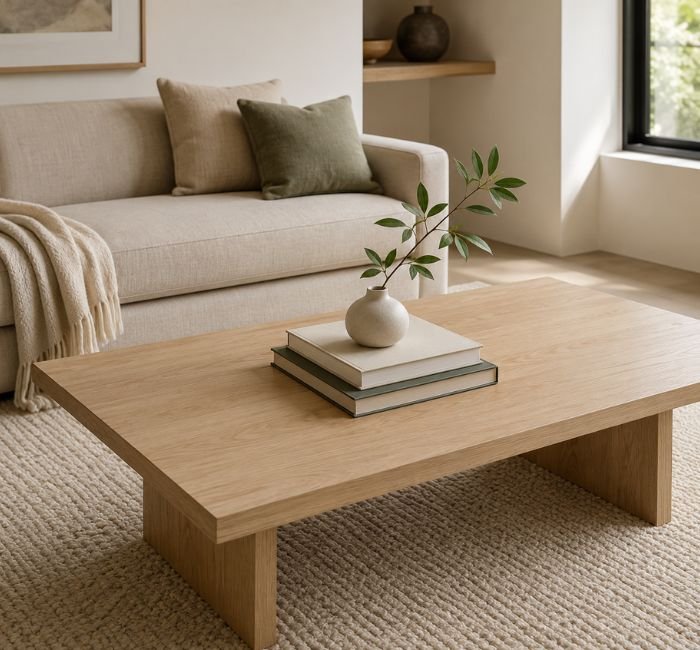
Coffee table books are one of the easiest foundations for a balanced arrangement. Instead of stacking six or seven books, begin with two or three.
Place the stack slightly off-center and add a small ceramic or glass vase on top. A single green branch, a few simple stems, or a restrained floral arrangement adds height without dominating the table.
Choose books that actually interest you. Architecture, photography, travel, fashion, gardening, art, and food books work especially well because people may genuinely pick them up and browse through them.
For the color palette, try warm white, pale oak, oatmeal, and muted green.
Styling Tip: Let the largest book create the base and gradually reduce the size of the books above it.
Best For: Minimal, Scandinavian-inspired, contemporary, and small living rooms.
2. Make One Sculptural Object the Focus
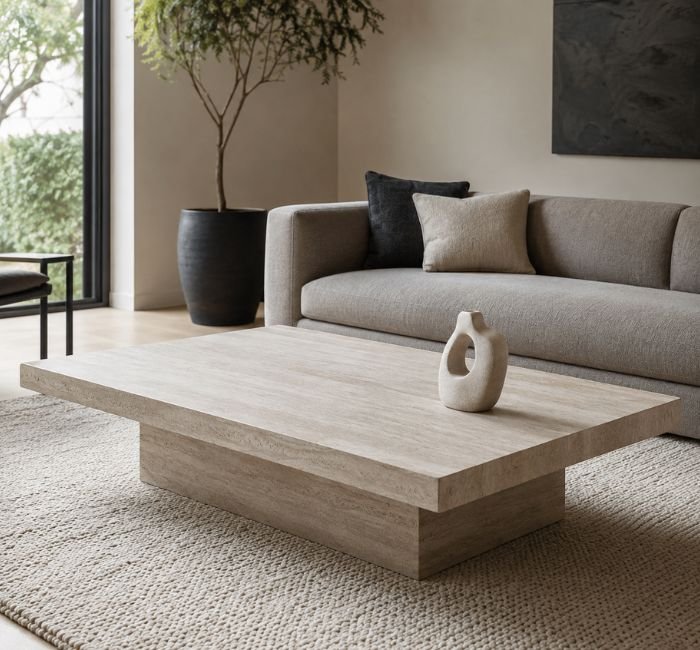
You do not need several accessories to make a coffee table look considered.
If your table has an interesting surface, such as marble, textured timber, stone, colored glass, or burl wood, try placing one substantial decorative object slightly away from the center.
A handmade ceramic piece, sculptural bowl, carved wooden object, or decorative stone form can work well.
The empty space surrounding the object becomes part of the arrangement. This creates a much calmer look than scattering small accessories across the entire tabletop.
This approach also puts more attention on the coffee table itself.
Styling Tip: Choose an object that looks substantial enough to be noticed from the sofa rather than something that disappears visually.
Best For: Contemporary, minimalist, architectural, and organic-modern interiors.
3. Use a Low Decorative Bowl
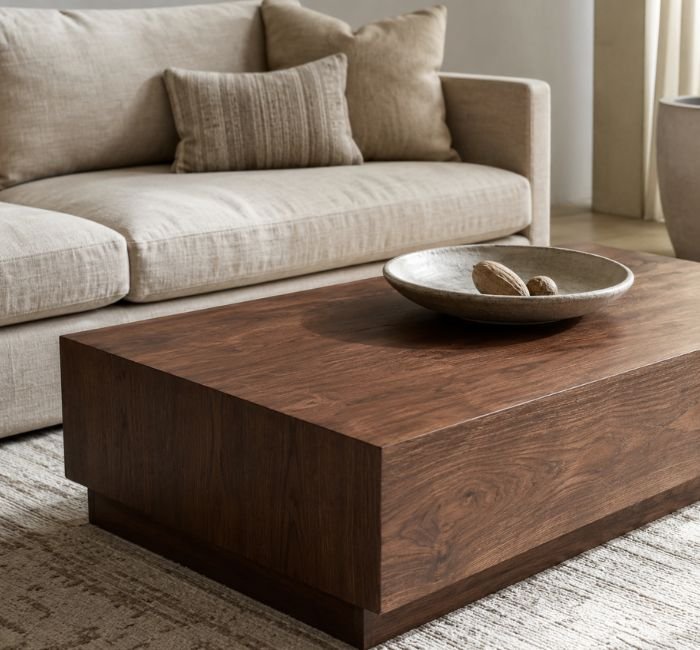
A shallow decorative bowl is useful when you want something simple but do not want the table to feel completely bare.
Try a wooden bowl for warmth, stoneware for a natural look, metal for stronger contrast, or clear glass when you want less visual weight.
You can leave the bowl empty or place only a few carefully selected objects inside. Avoid filling it with decorative items simply because there is available space.
Low bowls are particularly effective in rooms that already contain tall lamps, plants, shelves, or strong artwork. They add interest without creating another tall focal point.
Styling Tip: Position the bowl slightly off-center and allow plenty of visible tabletop around it.
Best For: Busy living rooms that need a quieter central surface.
4. Create a Monochromatic Ceramic Arrangement
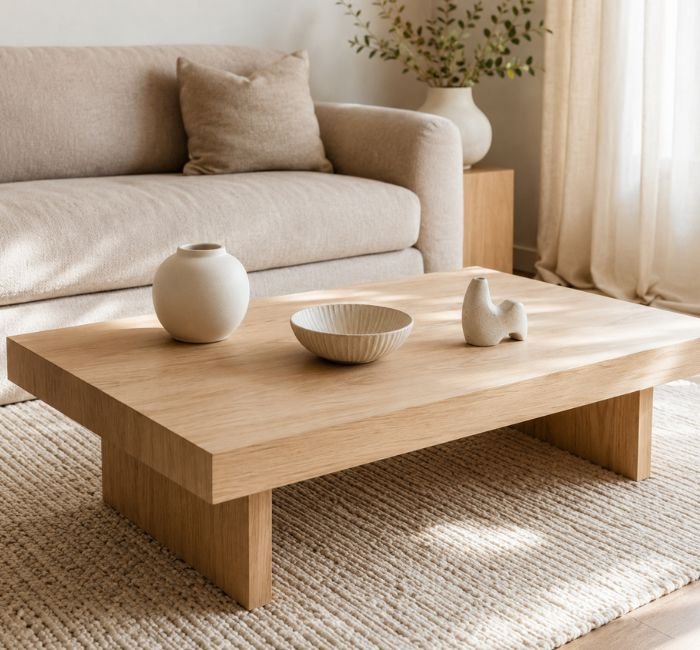
When a room already contains strong colors or patterns, keep the coffee table restrained.
Choose two or three ceramic pieces within the same color family. For example, combine a matte ivory vase with a cream ribbed bowl and a small off-white sculptural object.
Although the colors are similar, different shapes and finishes keep the arrangement from looking flat.
A monochromatic grouping can also help connect a light sofa, rug, curtains, or nearby furniture without adding another competing accent color.
Try a palette of ivory, warm white, beige, sand, and soft gray.
Styling Tip: Vary shapes before adding more colors. A rounded vase, shallow bowl, and angular object can create enough contrast on their own.
Best For: Transitional, contemporary, minimalist, and neutral living rooms.
5. Mix Wood, Stone, Books, and Greenery
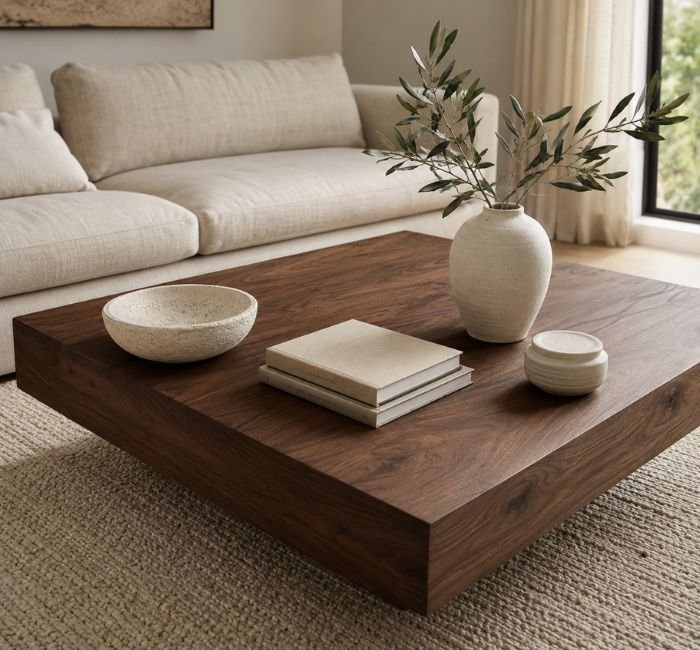
Natural materials work particularly well on coffee tables because their textures contrast without requiring a complicated color palette.
On a wooden table, try combining a light stoneware bowl, two neutral books, and a ceramic vase with a leafy branch. If your coffee table is stone, reverse the balance by introducing a wooden tray or bowl.
The goal is not to use every natural material available. Three or four distinct surfaces are usually enough.
For example:
- Walnut wood
- Cream ceramic
- Pale stone
- Olive-green foliage
The wood adds visual warmth, while stone and ceramic provide a cooler, matte contrast. Greenery softens the arrangement.
Styling Tip: Repeat one of these materials elsewhere in the room through a lamp base, side table, frame, or decorative accessory.
Best For: Organic-modern, Japandi-inspired, relaxed contemporary, and rustic-modern rooms.
6. Keep Small Accessories Together With a Tray
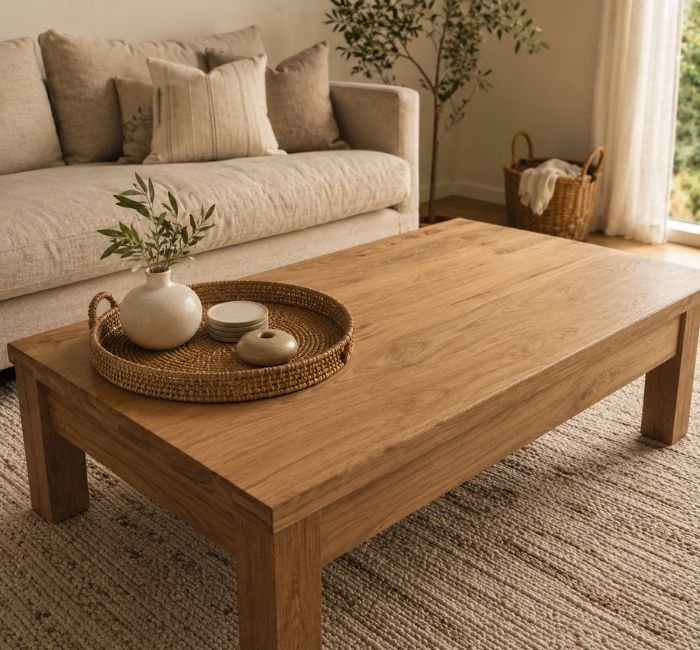
A tray is one of the most practical tools for coffee table styling.
Instead of spreading coasters, a vase, a decorative object, and other small pieces around the tabletop, contain several items within one tray. They then read as a single visual group.
A round tray can soften the straight edges of a rectangular table, while a rectangular tray can create structure on a large round or oval surface.
Material matters too. Rattan and woven trays introduce texture, wood feels warm and understated, while metal creates stronger visual contrast.
If you also want inspiration for decorating other surfaces around your home, Decorvello’s guide to table decoration ideas explores additional ways to combine flowers, greenery, candles, bowls, and seasonal accents.
Styling Tip: Do not choose a tray so large that it covers most of your coffee table. Leave part of the surface open for everyday use.
Best For: Family rooms, farmhouse-inspired spaces, coastal interiors, and multipurpose living rooms.
7. Add a Candle for Evening Atmosphere
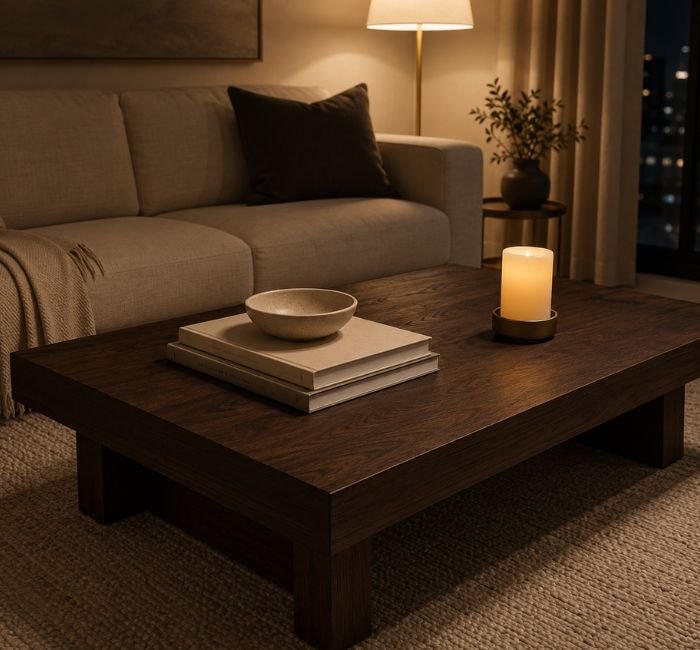
A candle can bring another layer to a coffee table arrangement, especially when the living room is used in the evening.
Rather than creating an entire display of candles, include one alongside a low stack of books or ceramic objects.
A simple arrangement might include:
- Two coffee table books
- One candle
- One small ceramic bowl
Keep the surrounding area restrained so the objects have enough breathing room.
Safety matters whenever real flames are used. The U.S. Fire Administration’s candle-safety guidance recommends keeping burning candles away from items that can catch fire and using stable holders. In active households, a quality flameless candle can provide a similar visual effect without an open flame.
Styling Tip: Do not surround a burning candle with dried leaves, fabric, paper, or other combustible decorative materials.
Best For: Living rooms where evening lighting and atmosphere are important.
8. Replace a Large Bouquet With One Loose Branch
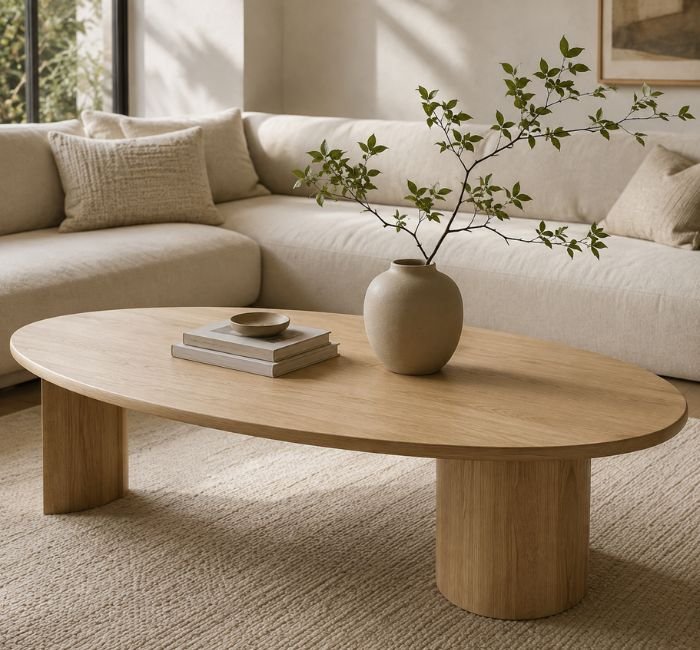
A huge flower arrangement may look impressive in a photograph, but it can quickly become inconvenient on an everyday coffee table.
Instead, try a single leafy branch or several restrained stems in a simple vase.
The irregular shape of a natural branch contrasts particularly well with straight furniture lines. It can soften a rectangular table, structured sofa, or geometric shelving unit.
Keep the vase substantial enough to remain stable while still matching the scale of the table.
Before deciding on the final height, sit on the sofa. Check that the branch does not block the television, artwork, fireplace, or people sitting opposite you.
Styling Tip: Rotate the vase and view the arrangement from several seats rather than judging it only while standing above the table.
Best For: Modern, organic, Scandinavian-inspired, and seasonally adaptable living rooms.
9. Let Your Coffee Table Books Show Your Personality
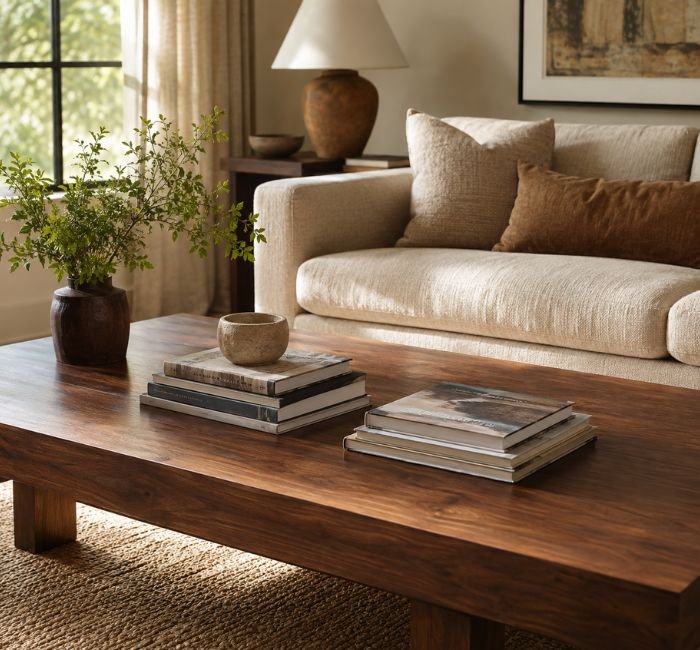
Books should not function only as color-coordinated props.
Choose subjects that reflect what you enjoy. A stack about architecture and travel feels more personal when those subjects genuinely interest you than a collection chosen only because every cover is beige.
You might combine a photography book with a smaller travel book and place a meaningful object on top.
The object could be something collected while traveling, a handmade ceramic piece, or another small item with a story behind it.
This creates a table that feels lived-in rather than assembled from a single décor collection.
Styling Tip: Keep book stacks low enough that they remain easy to pick up and browse.
Best For: Eclectic, collected, creative, and personality-led living rooms.
10. Repeat One Accent Color From the Living Room
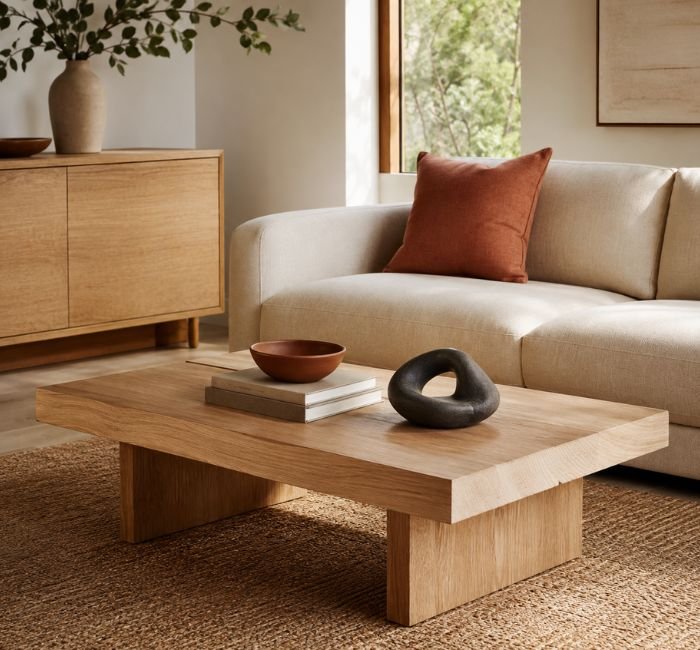
If your coffee table looks disconnected from the rest of the room, look at the surrounding color palette before buying new accessories.
Suppose your sofa has a muted terracotta cushion. Repeat a smaller amount of that color through a ceramic bowl or book cover on the coffee table.
A navy chair could connect to a blue-gray vase. Olive-green artwork might be repeated through natural foliage.
You do not need an exact color match. Slightly different shades often look more natural.
A simple palette might include:
Main: Warm white
Secondary: Natural oak
Accent: Muted terracotta
Contrast: Charcoal
Repeating one accent helps the eye move between the coffee table and the rest of the room.
Styling Tip: Limit the coffee table to one or two noticeable accent colors rather than introducing several unrelated shades.
Best For: Living rooms where the table currently feels visually separate from the sofa, rug, or artwork.
11. Mix Vintage and Modern Accessories
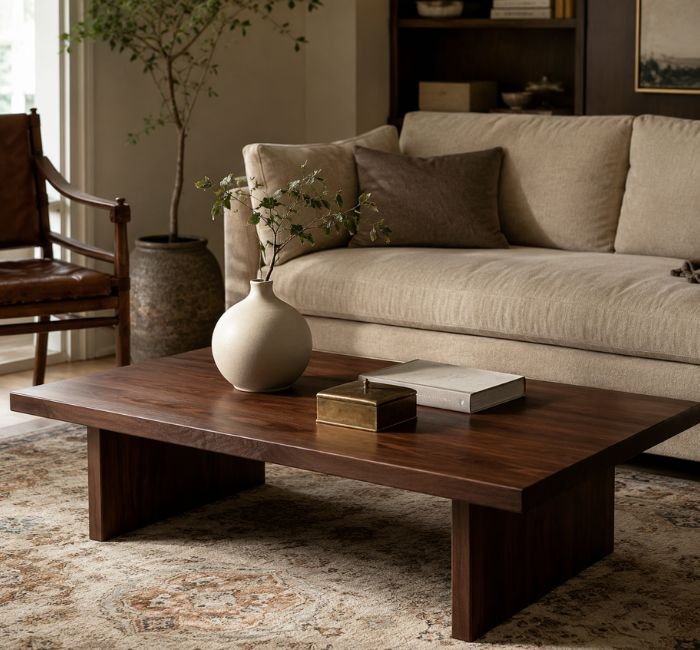
Coffee table décor can become much more interesting when every item does not come from the same collection.
Pair something modern with one older or collected piece.
For example, place a contemporary matte vase beside an art book and a small vintage brass box. Or combine a clean-lined tray with an old handmade ceramic bowl.
The contrast between newer and aged finishes creates depth.
This approach also works particularly well in darker interiors. If you enjoy dramatic palettes, antique-inspired objects, aged metal, candles, and rich materials, Decorvello’s gothic home decor guide offers additional ideas for incorporating those elements throughout a room without making the space feel overly themed.
Styling Tip: Give your most unusual object a little empty space around it so it remains noticeable.
Best For: Eclectic, transitional, vintage-modern, and dark interiors.
12. Divide a Large Coffee Table Into Two Zones
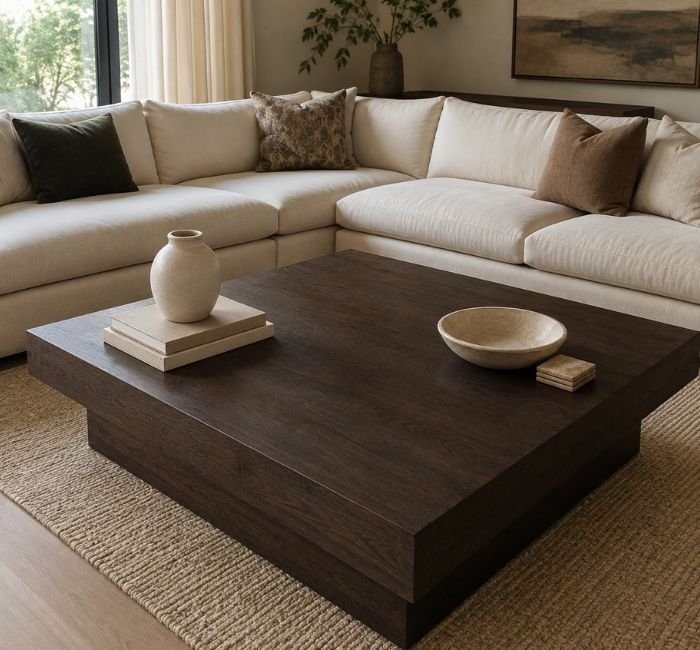
Large rectangular and square coffee tables can look strangely empty when everything is grouped directly in the middle.
Instead, divide the surface visually into two loose zones.
One side might contain books and a vase. The second could hold a low bowl or tray with coasters.
Leave some empty surface between the two groups.
The arrangements do not need to be symmetrical. In fact, slight differences usually make the table feel less formal.
Connect the two zones through one repeating feature. You might use the same color family, similar ceramic finishes, matching wood tones, or related shapes.
Styling Tip: Make one group slightly taller than the other so they do not compete equally for attention.
Best For: Large sectionals, oversized square tables, and open-plan living spaces.
13. Keep a Small Coffee Table Simple
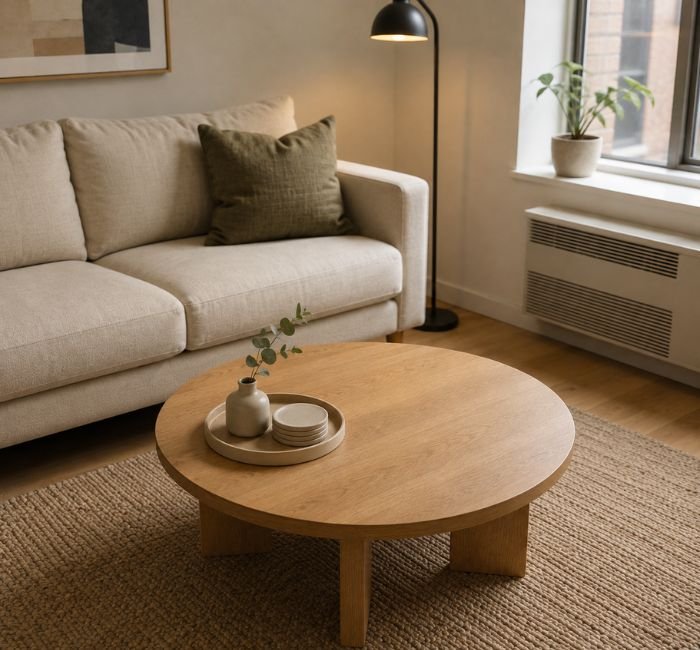
Compact living rooms require a different approach.
Trying to squeeze a vase, books, tray, bowl, candle, decorative object, and plant onto a small table usually creates clutter.
Instead, create one compact grouping.
Try two books topped with a small ceramic object. Another option is a small tray containing a bud vase and coasters.
Keep a significant section of the surface open.
Reducing the number of individual objects is especially important in small rooms because several tiny accessories can create more visual noise than one larger piece.
Styling Tip: If the arrangement reaches almost every edge of the table, remove something before looking for another organizer.
Best For: Apartments, small living rooms, studios, and narrow seating layouts.
14. Style an Ottoman With a Rigid Tray
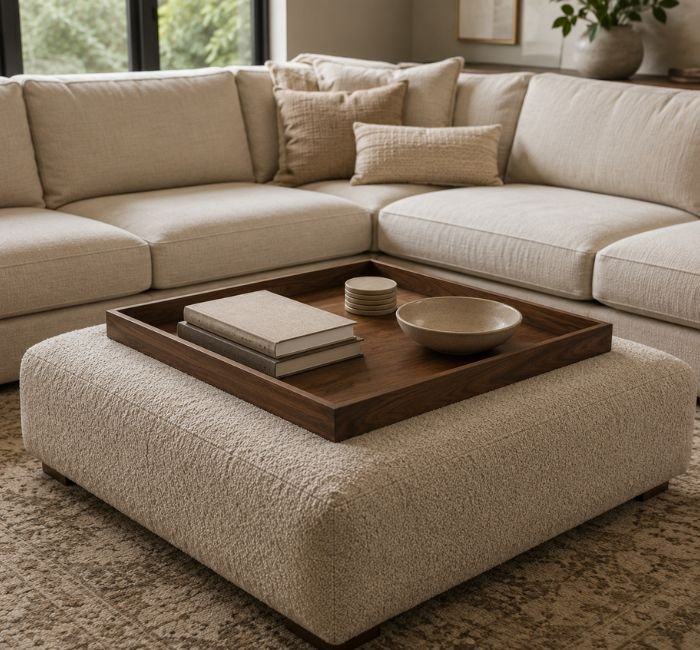
Not every living room has a traditional coffee table. Upholstered ottomans are often used instead because they can provide a softer surface and extra flexibility.
Because an ottoman is not rigid, start with a large, stable tray.
Use the tray to hold low accessories, books, coasters, or a shallow bowl. Avoid top-heavy vases or delicate objects that could become unstable on the upholstered surface.
Keep the grouping compact so the tray can be moved when the ottoman is needed for another purpose.
Wood and metal trays create useful textural contrast against fabric upholstery.
Styling Tip: Choose a tray with enough structure to sit steadily on the ottoman without bending.
Best For: Multipurpose family rooms and living rooms without a conventional coffee table.
15. Create a Family-Friendly Coffee Table Arrangement
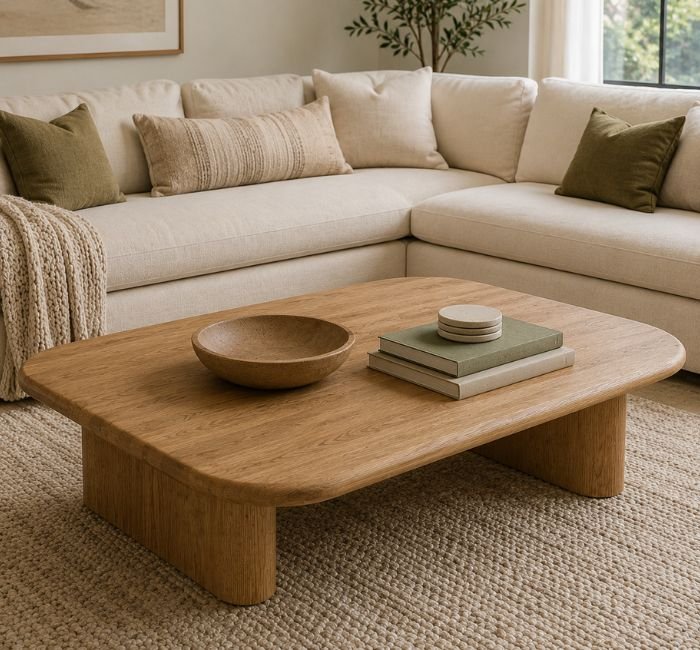
A heavily used family room needs different décor from a formal sitting room.
Choose stable, low-profile accessories such as a broad wooden bowl, sturdy books, durable coasters, or a low tray.
Fragile glass objects, small loose ornaments, top-heavy vases, and accessible open flames may be better displayed somewhere less active.
You can still create plenty of visual interest through texture.
Try combining:
- Wood grain
- Woven fibers
- Hardcover books
- Matte ceramics
- Soft neutral colors
The arrangement should also be easy to reset. If everything can return to its place within a few seconds, everyday maintenance becomes much simpler.
Styling Tip: If an accessory constantly has to be moved or protected, it probably does not belong on your most frequently used table.
Best For: Family living rooms and households with children or active pets.
How to Style a Coffee Table by Shape
The shape of your table should influence the arrangement.
Rectangular Coffee Table
Rectangular tables naturally support linear compositions.
Try one off-center grouping on a small table or two connected styling zones on a larger one.
Avoid placing every object in one straight row. Vary the depth so some pieces sit slightly closer to the sofa while others sit toward the opposite side.
Round Coffee Table
Round tables are viewed from several directions, so the arrangement should work from more than one angle.
A central grouping works well, but you can also create a loose triangular arrangement using three pieces with different heights.
A small vase, low bowl, and book stack provide an easy starting point.
Square Coffee Table
Large square tables can support more substantial arrangements.
You can create one large grouping or divide the surface loosely into separate areas. Do not feel that all four corners need decoration.
Leaving one side completely clear can make the table much more practical.
Oval Coffee Table
Oval tables already have softer lines, so avoid arranging everything in a rigid grid.
A loose off-center composition usually follows the shape better.
Try a small stack of books with a vase on one end and a low bowl positioned closer to the center.
Nested Coffee Tables
When several tables overlap, avoid styling every surface.
Decorate the largest table lightly and leave the smaller table available for drinks or flexible use. This keeps the overall arrangement from becoming visually crowded.
How to Choose the Right Height for Coffee Table Decor
Height variation makes a coffee table arrangement more interesting, but tall accessories are not always practical.
Judge the display from a seated position.
If a vase blocks the television, fireplace, artwork, or a person sitting opposite you, reduce the height of the stems or move the taller element toward one side.
A balanced grouping might contain:
- A low bowl
- A medium-height book stack
- A slightly taller vase
The objects create different levels while preserving comfortable sightlines.
Avoid making every accessory the same height. It can cause the surface to look flat even when individual pieces are attractive.
Why Negative Space Matters
Empty space is one of the most useful coffee table styling tools.
You do not need to decorate every visible section of the tabletop.
Negative space allows the strongest accessories to stand out. It also ensures the coffee table still has somewhere for a cup, phone, remote, snack, or book.
When an arrangement feels crowded, try removing one piece before adding anything new.
You may find that the remaining objects suddenly look more intentional.
How to Decorate a Coffee Table on a Budget
Good styling does not require buying an entirely new collection of accessories.
Start elsewhere in your home.
Look for:
- Books
- Bowls
- Ceramic vessels
- Decorative boxes
- Small trays
- Baskets
- Interesting objects
- Small plants or suitable greenery
Moving an object from a bedroom shelf or dining-room console can make it feel completely different in a new setting.
Secondhand shops can also be useful for unusual bowls, trays, books, and ceramics.
If you decide to spend more, prioritize one strong piece instead of buying several small filler accessories. A well-made tray, handmade vase, interesting bowl, or quality book can remain useful even when you change the surrounding décor.
Easy Seasonal Coffee Table Updates
You do not need to redesign your coffee table every season.
Keep your permanent foundation perhaps books, tray, bowl, and vase and change only one or two elements.
Spring
Introduce a small branch, fresh greenery, or lighter ceramic colors.
Summer
Use glass, pale wood, woven fibers, and restrained botanical elements.
Fall
Introduce warm brown, rust, olive, burgundy, or muted terracotta through a small object, book, or vase.
Winter
Use deeper colors, richer textures, warm metal finishes, or a safe candle element.
Small updates make seasonal decorating easier to store, easier to maintain, and less expensive.
Common Coffee Table Decorating Mistakes
Using Too Many Tiny Accessories
Several small objects may look interesting individually but chaotic when grouped together.
Fix: Replace some of them with one larger vase, bowl, tray, or book stack.
Covering the Entire Table
A completely decorated surface may quickly become frustrating when the table is actually used.
Fix: Intentionally keep one section available for everyday items.
Making Everything the Same Height
A collection of similarly sized objects can feel flat.
Fix: Combine low, medium, and slightly taller pieces.
Choosing an Oversized Centerpiece
Large flower arrangements and tall vases can interrupt conversation and block views.
Fix: Reduce the arrangement or use a smaller branch instead of a dense bouquet.
Matching Every Accessory
Buying a complete coordinated accessory set can make the table look overly planned.
Fix: Repeat one color or material while varying shape, texture, age, or finish.
Forgetting About Scale
A tiny decorative object may disappear on an oversized table, while a massive vase can overpower a compact one.
Fix: Judge accessories in relation to both the coffee table and surrounding furniture.
Ignoring the Rest of the Living Room
Coffee table styling should connect with the larger room.
Fix: Repeat at least one color, material, texture, or shape already present in your sofa, rug, artwork, lighting, or furniture.
Frequently Asked Questions
What should I put on a coffee table for decoration?
Books, a vase, decorative bowl, tray, greenery, coasters, candles, and sculptural objects are all useful choices. You do not need all of them at once. Select a few pieces that fit the scale of your table and how you use the room.
How many items should be on a coffee table?
There is no fixed number. A small table may need only two or three pieces, while a large table can support several grouped accessories. Focus on proportion and usable space rather than counting individual objects.
How do I decorate a coffee table without making it cluttered?
Group smaller objects together, limit the number of colors, vary height, and leave visible negative space. If the table feels busy, remove one or two items rather than trying to reorganize everything.
What are the best ideas for decorating a coffee table in a small living room?
Use one compact grouping, such as two books with a small vase or a tray containing coasters and one decorative object. Keep a significant amount of tabletop open so the table remains practical.
Should coffee table decor be centered?
Not always. Off-center arrangements work particularly well on rectangular and oval tables. Round tables often suit a central or triangular grouping because they are viewed from several directions.
How do you style a round coffee table?
Use a composition that follows the table’s softer shape. A book stack, low bowl, and vase placed in a loose triangle can provide different heights without creating a rigid arrangement.
Do coffee table books need to match the room?
No. Choose books you genuinely enjoy first. Covers that relate to your room’s color palette can help visually, but the collection will feel more personal when the subjects also interest you.
How can I make my coffee table look expensive on a budget?
Use fewer, larger-looking pieces instead of many small accessories. Combine books, ceramics, natural materials, and objects you already own. Good spacing and proportion often make more difference than the price of the décor.
Final Thoughts
The most useful ideas for decorating a coffee table are the ones that work with your actual room rather than simply looking good in a photograph.
If you prefer minimal interiors, start with books and one sculptural piece. For a warmer look, mix wood, ceramic, stone, and greenery. Small tables usually work best with one compact grouping, while large tables can support two separate styling zones.
Most importantly, leave some space empty.
A coffee table should still function as a coffee table. Once scale, texture, color, and placement feel balanced, you may find that you need fewer accessories not more to make the whole living room feel considered.