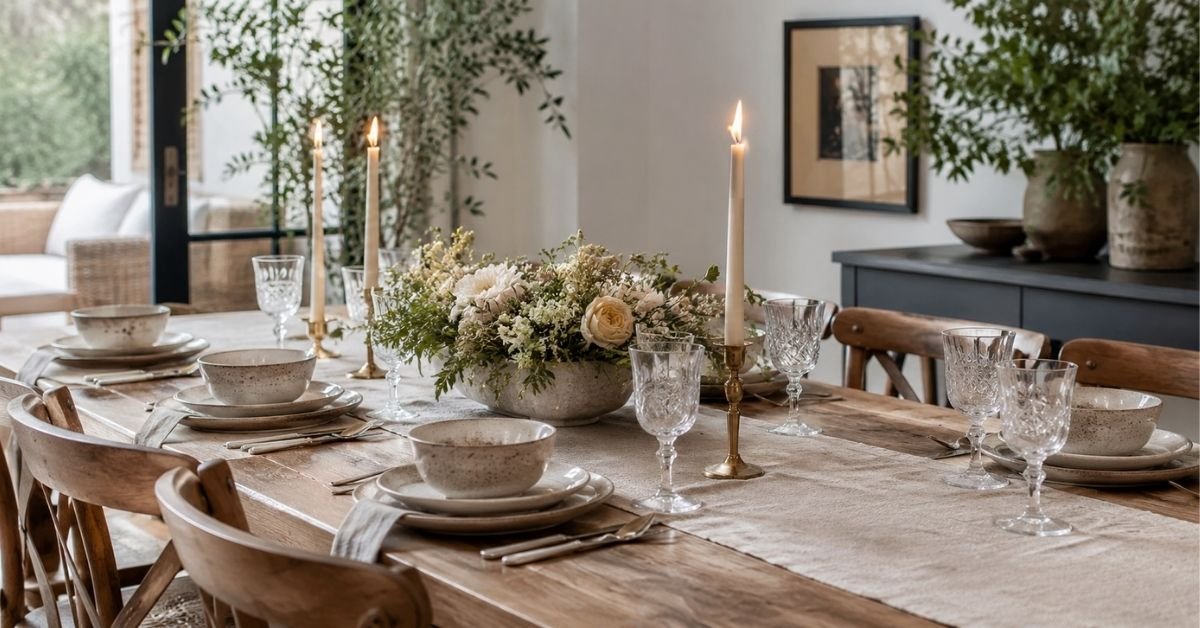

A beautifully decorated table can change the entire mood of a dining room without requiring expensive accessories or an elaborate tablescape. Some of the best table decoration ideas rely on simple pieces such as flowers, candles, bowls, greenery, fruit, and textured linens.
The key is choosing decor that suits the size of your table and how you actually use it. Everyday tables need more breathing room, while occasional dining tables can handle extra layers. The 25 ideas below cover simple, elegant, modern, rustic, and seasonal styles you can adapt to your own home.
Before You Start Decorating Your Table
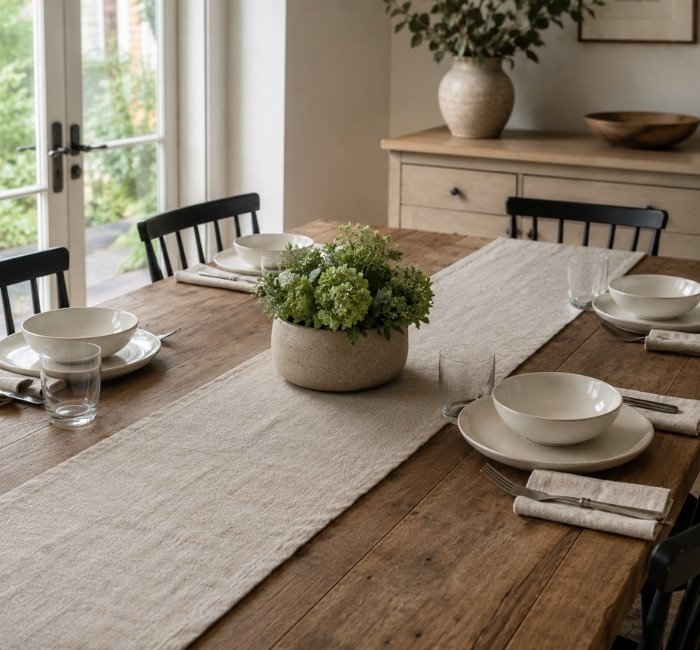
Choose one main focal point instead of covering every empty area. For an everyday dining table, try to keep roughly the outer 12 to 15 inches of the tabletop clear so plates, glasses, and serving pieces still fit comfortably.
Also consider sight lines. A centerpiece used during meals should generally stay below eye level or be narrow enough that guests can easily see one another. Once those basics are covered, you can start experimenting with color, texture, height, and seasonal details.
Simple Table Decoration Ideas for Everyday Use
Everyday table decor should be attractive without becoming something you have to dismantle before every meal. These first five ideas are easy to maintain and simple enough for daily use.
1. Style a Vase With Fresh Flowers
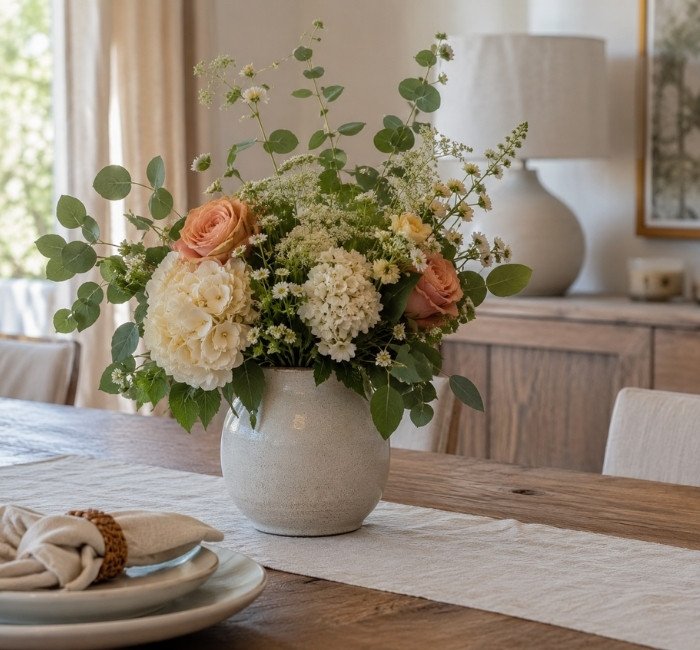
Fresh flowers bring instant color and movement to a dining table. Rather than using an oversized bouquet, choose an arrangement that matches the scale of the surface.
For a four-seat table, a vase around 6 to 10 inches tall is usually enough. On a longer six- or eight-seat table, two or three smaller vases can look more balanced than one dense arrangement.
Ceramic, clear glass, and stoneware vases are easy to find at home stores, thrift shops, flea markets, and even supermarkets. Seasonal flowers are usually the simplest option because they tend to look natural in the surrounding environment.
Styling tip: Trim stems to slightly different heights and keep the arrangement loose instead of creating a perfectly rounded bouquet.
Best for: Everyday dining rooms, breakfast tables, cottage interiors, and casual homes.
2. Arrange a Decorative Bowl
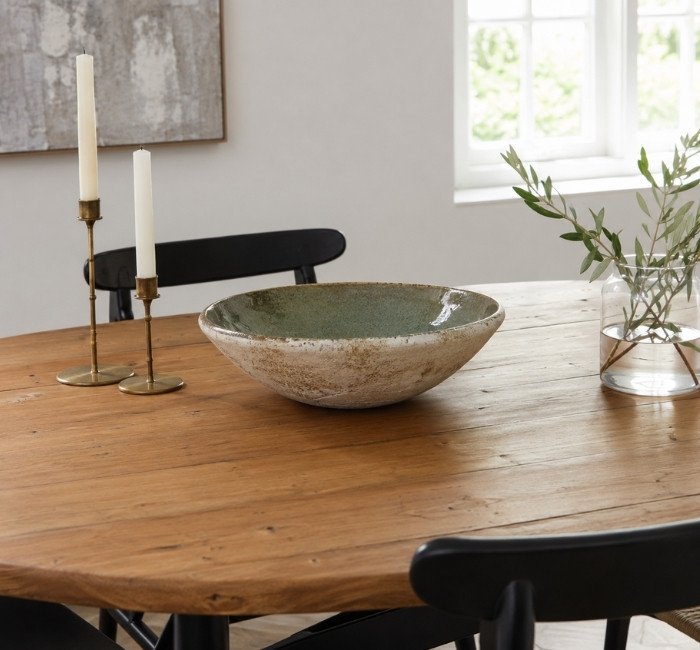
A decorative bowl can act as a centerpiece without adding unnecessary height.
Choose ceramic or stoneware for a softer organic look, carved wood for warmth, or glass for a cleaner contemporary finish. A bowl measuring roughly 10 to 14 inches across gives enough visual presence on most four- to six-seat dining tables.
You can leave it empty if the shape itself is interesting or fill it with a limited number of natural objects. Avoid stuffing the bowl with many unrelated accessories, since the centerpiece can quickly start looking cluttered.
Styling tip: Choose a bowl that contrasts with the tabletop. A matte black bowl stands out on pale oak, while cream ceramic softens a darker wood surface.
Best for: Minimalist interiors, modern dining rooms, everyday tables, and homes that favor low-maintenance decor.
3. Use Fresh Fruit as Decor
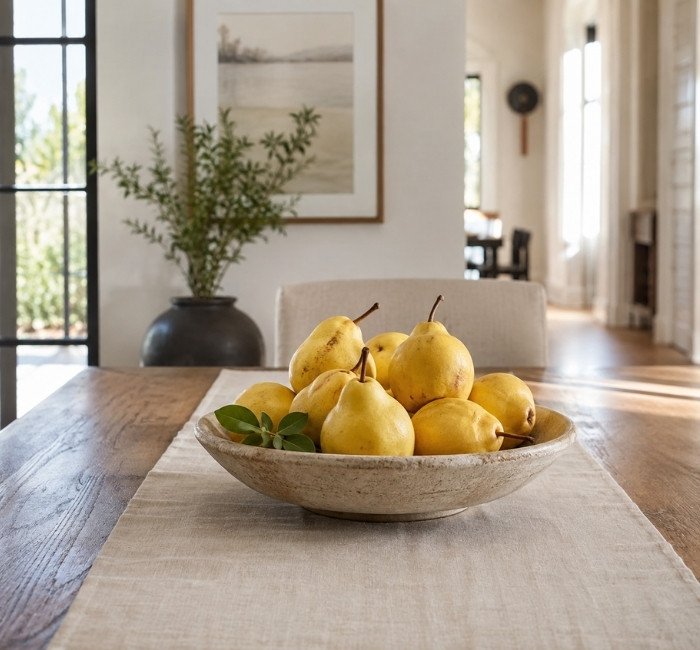
Fruit can introduce natural color while still serving a practical purpose.
Instead of mixing every fruit you have, select one or two varieties. Lemons can brighten a neutral space, green pears add subtle color, and red apples bring warmth to darker wood.
A shallow bowl about 10 to 12 inches wide prevents the arrangement from becoming too tall. Wooden, ceramic, and stone bowls are particularly useful because their texture contrasts nicely with the smooth surface of the fruit.
Styling tip: Use odd numbers when displaying larger fruits individually. Five pears or seven lemons often feel more naturally arranged than a perfectly symmetrical group.
Best for: Kitchens, breakfast nooks, farmhouse interiors, and family dining spaces.
4. Create a Small Decorative Tray
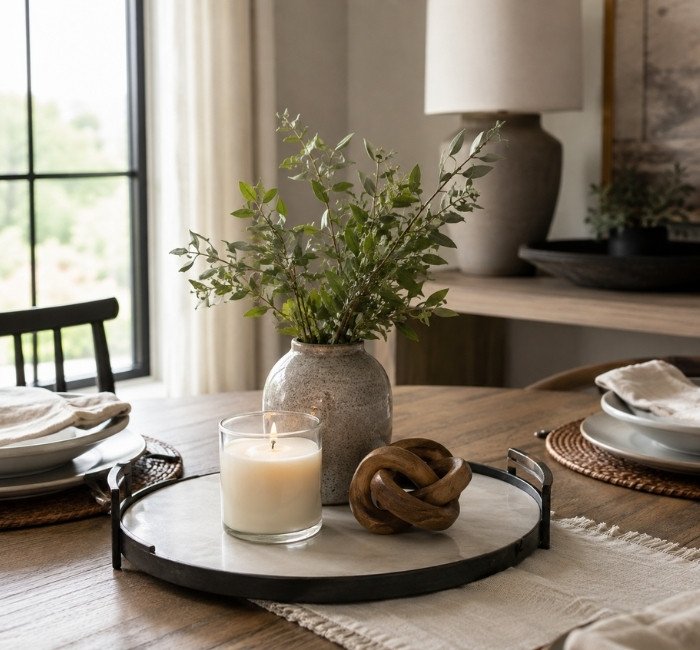
A tray makes several smaller objects feel like one intentional arrangement.
Start with a round or rectangular tray approximately 12 to 16 inches wide. Add three items with different heights, such as a small vase, candle, and decorative object.
The tray also makes everyday cleanup easier because the entire arrangement can be moved in one step when you need more dining space.
Wood trays suit relaxed or rustic spaces, while metal, marble-look, and lacquered trays can create a more polished effect.
Styling tip: Use the three-item rule: one taller piece, one medium piece, and one smaller accent to create an easy visual hierarchy.
Best for: Everyday dining tables, small apartments, multifunctional rooms, and people who frequently clear the table.
5. Add a Simple Table Runner
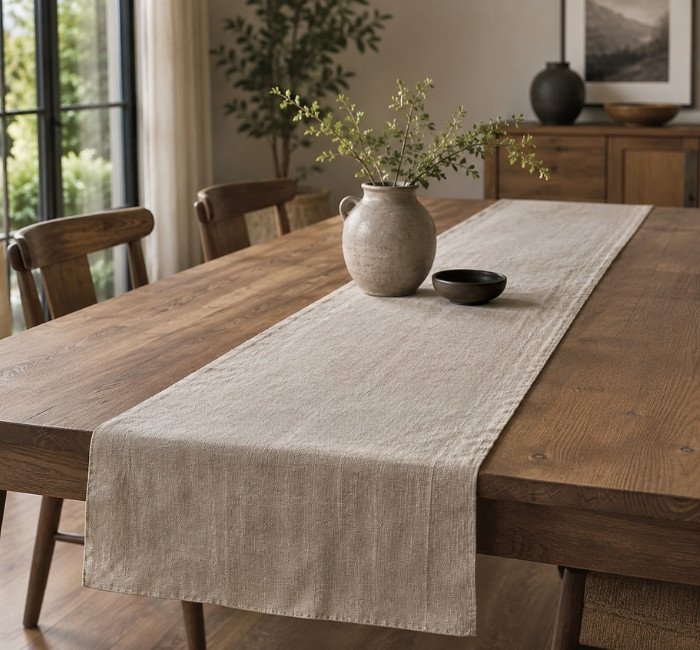
A runner introduces texture without hiding the entire tabletop.
For most dining tables, choose a runner approximately 12 to 16 inches wide. Ideally, allow around 6 to 12 inches to hang over each end if you prefer a traditional look.
Washed linen creates a relaxed appearance, woven cotton adds texture, and jute can suit rustic interiors. You can also use a shorter runner that sits entirely on top of the table for a more contemporary look.
Styling tip: If your runner has a bold pattern, keep the centerpiece simple. If the runner is neutral, use flowers or ceramics to introduce the main color.
Best for: Wooden dining tables, farmhouse rooms, Scandinavian interiors, and casual everyday settings.
Elegant Dining Table Decoration Ideas
An elegant table doesn’t need dozens of expensive accessories. Refined materials, deliberate repetition, and a controlled color palette can create a more sophisticated result.
6. Add Taper Candles and Candlesticks
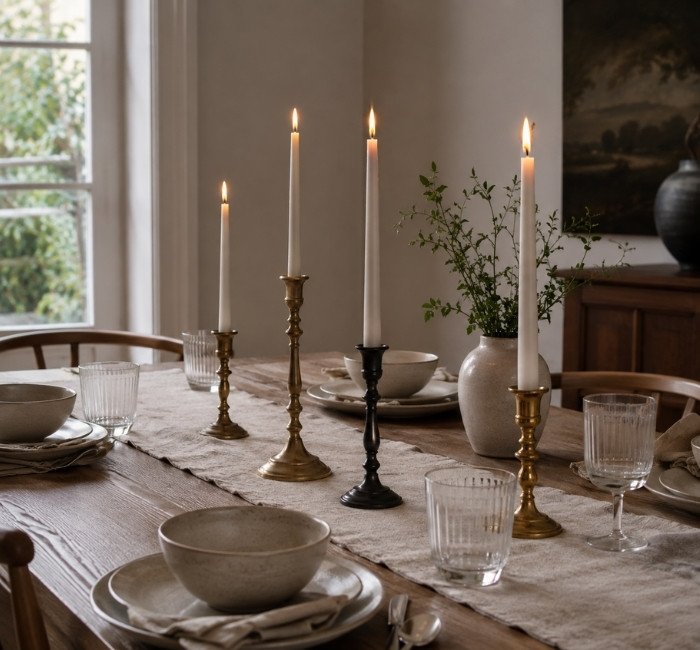
Taper candles create vertical interest without requiring a bulky centerpiece.
Use three candlesticks on a medium dining table or repeat five along a longer rectangular table. Standard taper candles are usually about 10 to 12 inches tall, making them noticeable without occupying much surface area.
Brass introduces warmth, clear glass feels lighter, and matte black metal creates sharper contrast. For dining, choose unscented candles so fragrance doesn’t compete with food.
Styling tip: Vary the candlestick heights by 2 to 4 inches instead of arranging identical pieces in a rigid row.
Best for: Dinner parties, formal dining rooms, romantic evening settings, and traditional interiors.
If you prefer darker candlesticks, antique-inspired metals, and moodier table styling, these details also pair naturally with a gothic home decor
7. Try Several Small Bud Vases
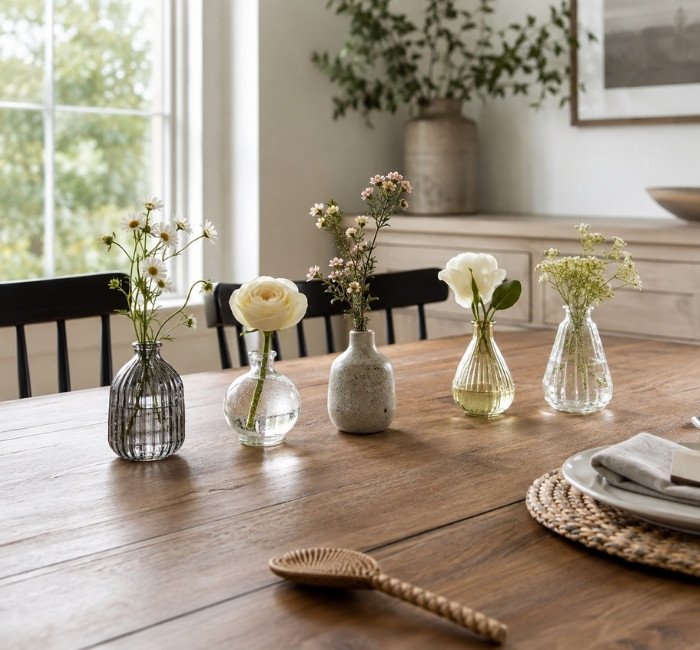
Bud vases provide flowers without creating one large visual barrier across the table.
Choose three to five vases measuring roughly 3 to 7 inches tall. Place one or two stems in each rather than filling them with large bouquets.
Clear glass creates a light look, while mismatched ceramic vases can make the table feel more collected and personal. Affordable bud vases are often easy to source from thrift shops or repurpose from small glass bottles.
Styling tip: Space the vases approximately 8 to 12 inches apart along a rectangular table so the arrangement feels connected but not crowded.
Best for: Long tables, dinner parties, spring settings, and relaxed elegant interiors.
8. Layer a Tablecloth With a Runner
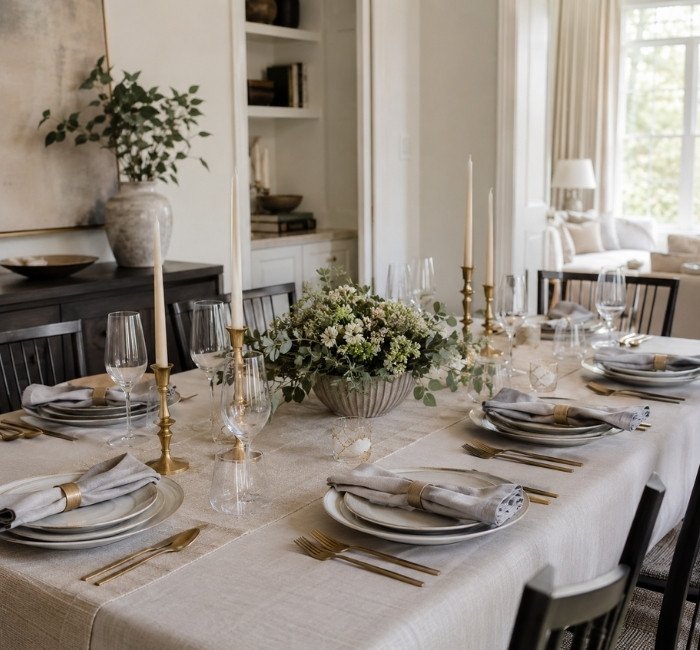
Layered textiles can give a dining table depth before you add any decorative objects.
Start with a solid tablecloth and place a narrower contrasting runner down the center. Linen and cotton are practical choices because they create texture without appearing overly formal.
For an elegant neutral palette, combine ivory with taupe, beige with muted green, or warm white with charcoal. If one textile has a strong print, keep the other relatively plain.
Styling tip: Pick one color from the runner and repeat it in the napkins, candles, or flowers to connect the entire table.
Best for: Formal dinners, holiday meals, traditional dining rooms, and special occasions.
9. Coordinate Your Dinnerware
Dinnerware is part of the table decoration, not simply something added after the centerpiece.
You don’t need a completely matching set. Instead, repeat two or three visual elements. White plates might pair with amber glasses, beige linen napkins, and warm brass flatware.
For a standard place setting, leave approximately 20 to 24 inches of table width per person whenever your table size allows it. This keeps the arrangement comfortable rather than tightly packed.
Styling tip: Keep patterned dinnerware to one major element. If the plates are heavily patterned, choose simpler napkins and glassware.
Best for: Hosted dinners, holiday tables, formal dining rooms, and anyone who prefers layered table settings.
10. Introduce Metallic Accents
Metallic details reflect light and can give an ordinary table a more refined finish.
Choose one dominant metal instead of combining brass, chrome, silver, copper, and gold in equal amounts. Two or three repeated metallic touches are usually enough.
For example, use brass candlesticks with small brass napkin rings, or pair silver serving pieces with a simple silver-edged vase.
Styling tip: Balance shiny metal with matte materials such as linen, ceramic, wood, or stone so the table doesn’t feel overly glossy.
Best for: Elegant interiors, formal meals, holiday dining, and contemporary luxury spaces.
Modern Table Decoration Ideas
Modern table styling benefits from clean shapes, open space, and fewer but stronger objects. Let each piece contribute something visually rather than filling the table simply because space is available.
11. Use One Sculptural Vase
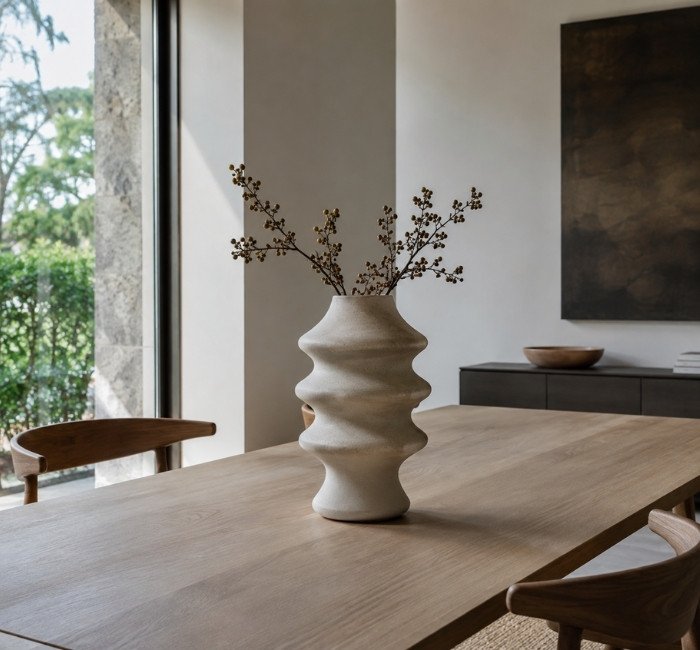
A sculptural vase can serve almost like a small artwork.
Look for an asymmetrical shape, unusual opening, fluted texture, or organic silhouette. A piece around 8 to 14 inches tall usually has enough presence for a medium dining table.
Matte ceramic, stoneware, and textured glass are strong materials for this approach. You can leave the vase empty or add only a few simple stems.
Styling tip: Position the vase slightly off-center rather than automatically placing it in the exact middle for a more relaxed modern composition.
Best for: Minimalist homes, contemporary dining rooms, modern apartments, and tables that are not heavily accessorized.
12. Decorate With a Single Branch
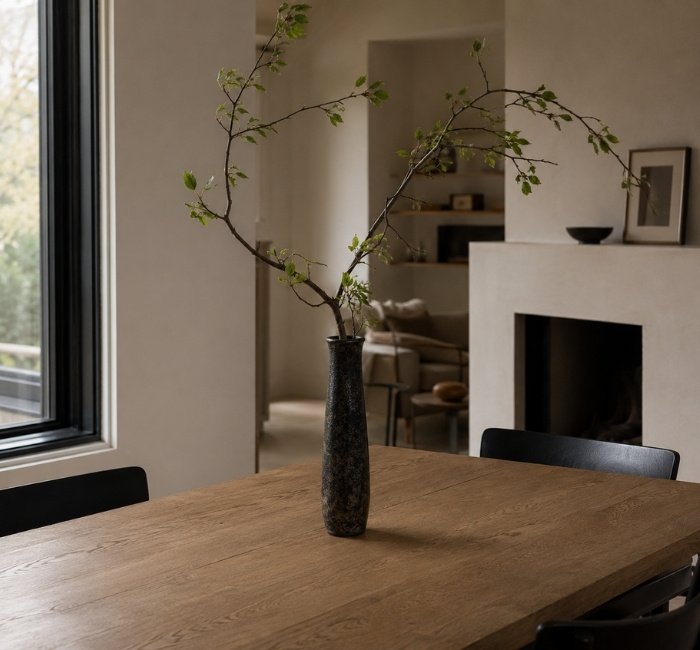
One branch can create a striking vertical statement without the density of a traditional flower bouquet.
Use a tall narrow vase with a stable base and choose a branch roughly one-and-a-half times the height of the vessel. Olive, eucalyptus, magnolia, flowering branches, and simple leafy stems can all create different moods.
For frequently used dining tables, choose a branch with an open shape so it doesn’t create a solid visual obstruction.
Styling tip: Turn the branch until its natural curve extends across open space rather than directly toward a nearby wall.
Best for: Modern dining rooms, organic interiors, console-style tables, and seasonal displays.
13. Choose a Monochromatic Arrangement
A single-color palette can make simple table decor look more intentional.
You could combine warm whites through cream dinnerware, ivory candles, pale flowers, and beige linen. For something moodier, use charcoal ceramics, smoky glass, and black candlesticks.
Use at least three textures so the arrangement doesn’t appear flat. Linen, glazed ceramic, glass, wood, and metal can all create contrast even when their colors are similar.
Styling tip: Keep the color family consistent but vary shades slightly rather than attempting to match every item exactly.
Best for: Contemporary homes, minimalist rooms, formal dinners, and neutral interiors.
14. Style a Minimal Ceramic Bowl
A low ceramic bowl adds visual weight without demanding much attention.
Look for a bowl around 10 to 15 inches wide with an organic edge, textured glaze, or matte finish. Leave it empty for a very clean arrangement or add only a few selected objects.
Handmade-looking stoneware can add character, while a smooth black or white bowl gives the table a sharper architectural feel.
Styling tip: Leave at least one-third of the bowl visibly empty if you fill it. The negative space makes the objects inside appear more deliberate.
Best for: Modern tables, minimalist spaces, open-plan homes, and low-maintenance everyday styling.
15. Mix Glass With Natural Materials
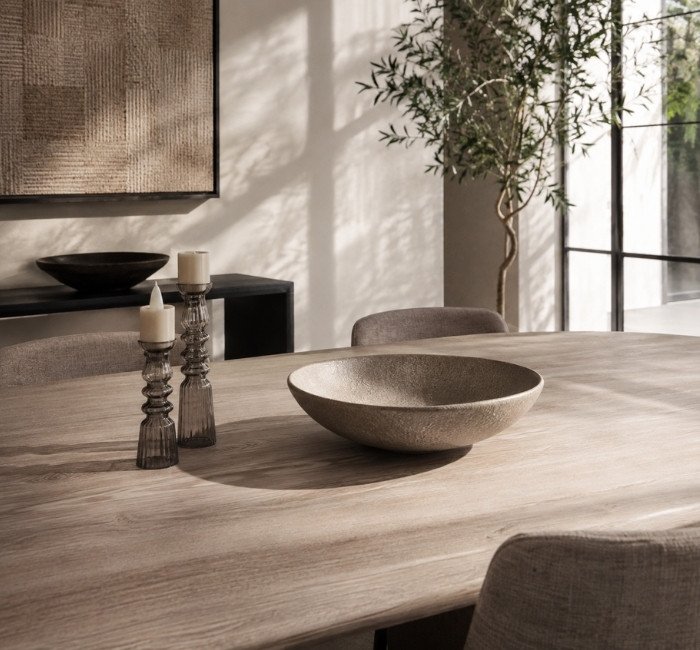
Pairing transparent glass with wood, stone, or linen keeps a modern table from feeling too cold.
Try a clear glass vase on oak, glass candlesticks over a linen runner, or smoky glass beside a travertine-style bowl.
Use only one or two glass forms to avoid creating too many reflections across the table. Textured natural materials should provide the visual anchor.
Styling tip: Combine one transparent element with one matte material and one natural texture for a balanced three-material palette.
Best for: Modern organic interiors, contemporary dining rooms, Scandinavian spaces, and neutral homes.
Rustic and Natural Table Decor Ideas
Rustic table styling feels strongest when the materials have visible texture and natural variation. Wood grain, linen, woven fibers, greenery, and dried botanicals can create warmth without requiring elaborate decoration.
16. Style a Wooden Dough Bowl
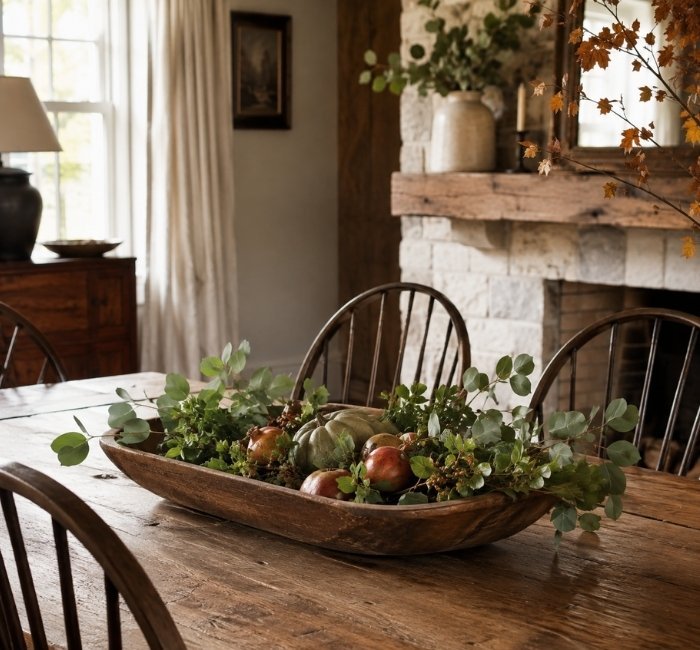
A long wooden dough bowl can anchor the center of a rectangular dining table.
For a six-seat table, a bowl around 20 to 30 inches long usually provides enough scale. Choose natural, reclaimed, or lightly finished wood rather than an overly glossy surface if you want an authentic rustic appearance.
Fill it loosely with greenery, pinecones, seasonal fruit, or decorative spheres, or leave most of the bowl exposed.
Styling tip: Keep the contents below the rim in several places so the wood itself remains part of the display.
Best for: Farmhouse interiors, long dining tables, rustic homes, and seasonal decorating.
17. Use Dried Flowers and Grasses
Dried botanicals offer texture without requiring fresh water or frequent replacement.
Pampas grass, wheat, preserved eucalyptus, dried hydrangeas, and seed heads can all be combined into relaxed arrangements. Use a vase approximately 8 to 12 inches tall for a standard dining table.
Choose preserved or naturally dried materials from florists, craft stores, or dried arrangements you create at home.
Styling tip: Limit the arrangement to two or three botanical varieties so the different textures remain readable.
Best for: Boho spaces, rustic dining rooms, fall decor, and low-maintenance homes.
18. Add Woven Placemats
Woven placemats introduce texture directly beneath each place setting.
Round mats between 13 and 15 inches in diameter suit most standard dinner plates. Rattan, jute, seagrass, and woven cotton each offer a slightly different level of texture.
They can also protect a wooden tabletop while making individual place settings feel more defined.
Styling tip: Pair heavily textured placemats with plain plates so the materials don’t compete with one another.
Best for: Farmhouse tables, coastal homes, casual meals, and natural interiors.
19. Create a Greenery Runner
A line of greenery can replace a traditional fabric runner.
Keep the arrangement around 6 to 10 inches wide so it doesn’t consume the usable dining area. Eucalyptus, olive branches, ruscus, and seasonal foliage are suitable options.
Fresh greenery is ideal for events and special meals, while high-quality faux stems can be reused for everyday decorating.
Styling tip: Break the greenery into loose sections rather than creating one dense, continuous strip across the entire table.
Best for: Weddings, holiday dinners, rustic tables, garden-inspired interiors, and special occasions.
20. Mix Linen With Natural Wood
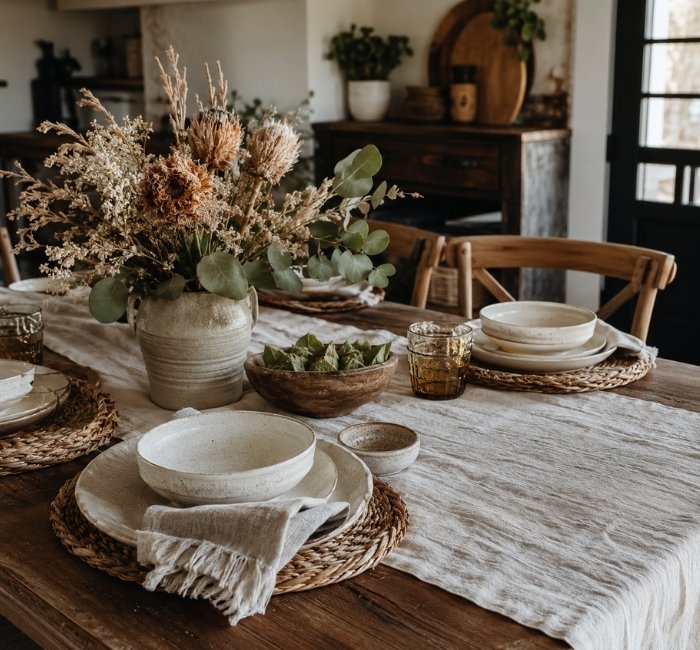
Natural wood already carries plenty of visual texture, so it doesn’t need to be covered completely.
Use a washed-linen runner around 12 to 16 inches wide or place casually folded linen napkins at each seat. Warm white, oatmeal, sage, or muted terracotta can complement many wood tones.
Add one ceramic vase or bowl rather than multiple accessories so the materials remain the focus.
Styling tip: Let the linen show a few natural wrinkles instead of pressing it completely flat; the relaxed texture suits the organic look.
Best for: Scandinavian homes, farmhouse dining rooms, coastal interiors, and organic modern spaces.
Seasonal Table Decoration Ideas
Seasonal styling doesn’t require replacing everything on your table. Keep a simple foundation and change a few colors, plants, or materials as the year progresses.
21. Bring in Fresh Spring Flowers
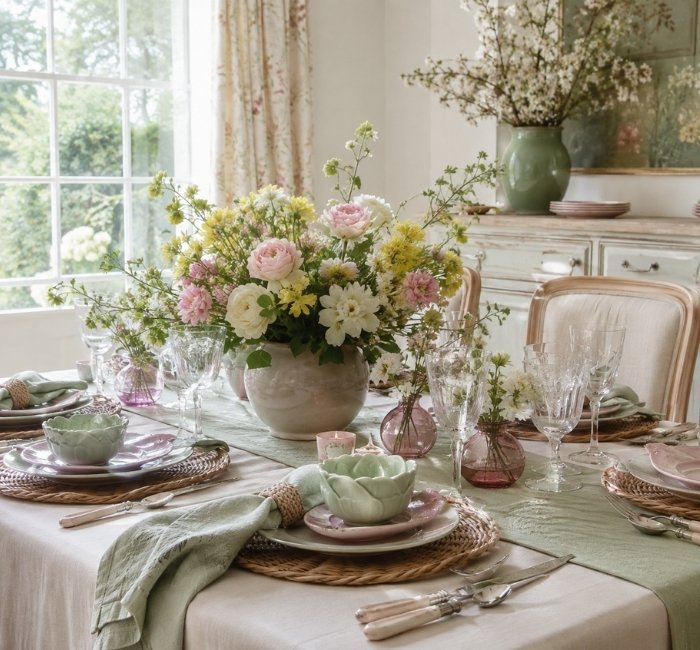
Spring is a natural time to introduce lighter colors and fresh greenery.
Tulips, daffodils, ranunculus, and flowering branches can brighten a neutral dining room. Use a clear or pale ceramic vase between 6 and 10 inches tall for an everyday arrangement.
Stick with two main flower colors to keep the display fresh instead of overly busy.
Styling tip: Pair spring flowers with light linen in cream, pale green, soft yellow, or dusty pink.
Best for: Spring dining, Easter meals, cottage homes, and bright casual interiors.
22. Create a Summer Citrus Table
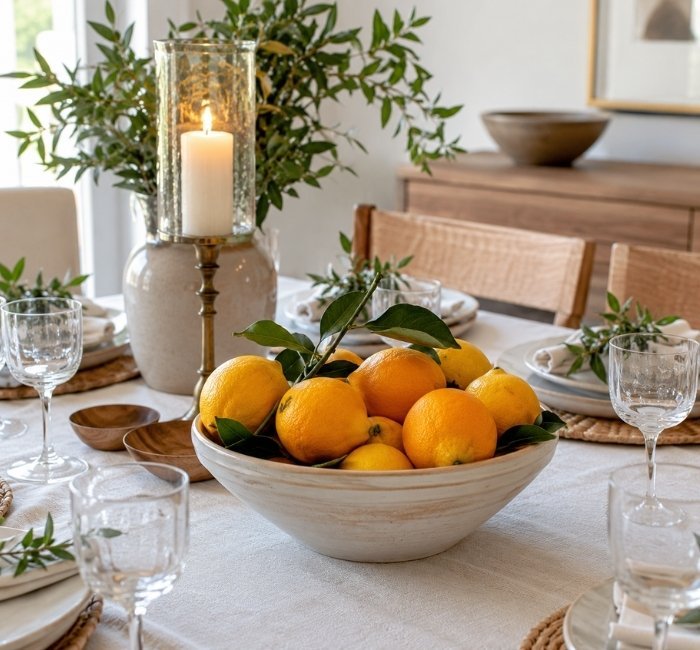
Citrus creates a strong summer palette without specialized decorative accessories.
Place six to ten lemons or oranges in a shallow bowl, depending on its size, and add a few green leaves for contrast. Pair the centerpiece with clear glassware and white or light-neutral linens.
You can source the entire display from your grocery shop and use the fruit afterward, making it an easy low-waste decorating idea.
Styling tip: Choose either lemons or oranges as the main color instead of mixing multiple bright fruits together.
Best for: Summer dinners, outdoor entertaining, breakfast rooms, and colorful kitchens.
23. Decorate With Fall Foliage
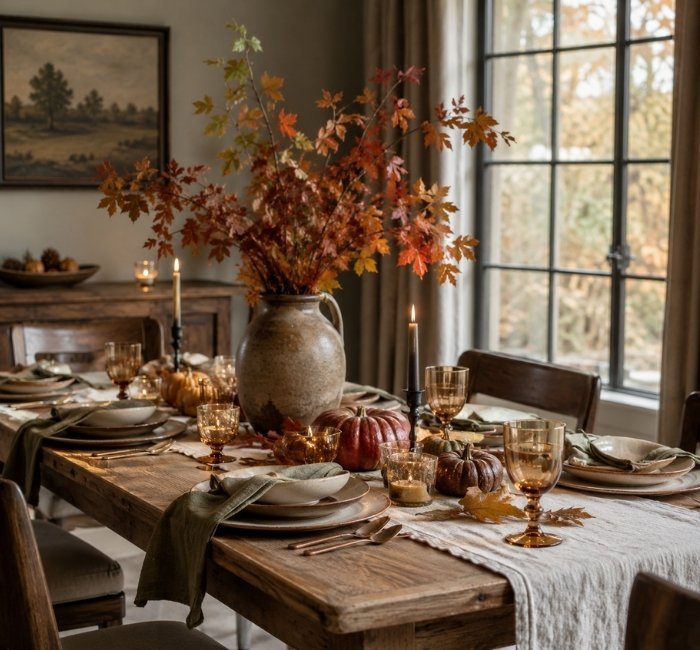
Fall decor can feel seasonal without covering the table with themed accessories.
Use two or three branches with amber, rust, or muted green leaves in a simple vase. Add a small number of pears, miniature gourds, or wooden objects if the table needs more texture.
Warm-toned linen in rust, brown, cream, or olive can reinforce the seasonal palette.
Styling tip: Choose one dominant fall color and repeat it once elsewhere, such as in napkins or candles.
Best for: Autumn dining rooms, Thanksgiving tables, farmhouse homes, and warm neutral interiors.
24. Create a Cozy Winter Table
Winter decorating benefits from deeper textures and softer lighting.
Combine short evergreen branches with ceramic candleholders and neutral linen. If using real greenery, keep it away from open flames and replace dry pieces as necessary.
A group of three pillar candles in different heights can create a cozy focal point on a larger table without relying on holiday-specific decorations.
Styling tip: Use warm-white candlelight rather than cool-toned lighting to emphasize wood, greenery, and neutral fabrics.
Best for: Winter dinners, cozy dining rooms, Christmas season, and evening entertaining.
25. Add Subtle Holiday Details
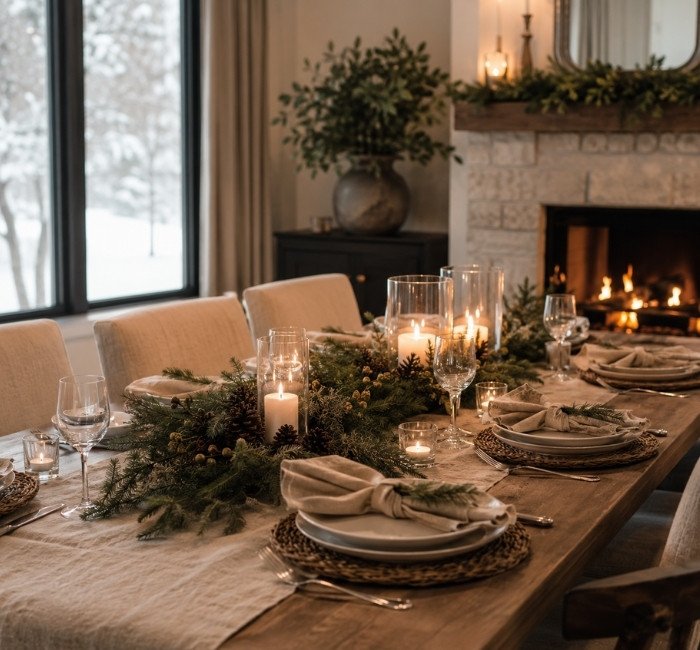
Holiday decor can feel festive without overwhelming the rest of your dining room.
Start with your existing centerpiece, then introduce two seasonal details. Velvet ribbon, evergreen sprigs, metallic candleholders, small ornaments, or holiday napkins can provide enough visual change.
For example, tie a 12- to 18-inch piece of narrow velvet ribbon around each napkin rather than buying an entirely new set of table accessories.
Styling tip: Pick one holiday accent color and repeat it in no more than three places across the table.
Best for: Christmas dinners, holiday entertaining, seasonal family meals, and elegant festive tables.
Table Decoration Ideas by Table Shape
The shape of your table influences the arrangement just as much as your decorating style. Choosing decor that follows its proportions creates a more balanced result.
Round Dining Tables
A round dining table naturally creates one central focal area.
Choose a compact vase, low bowl, or grouping of three small objects. For a 42- to 48-inch round table, try keeping the centerpiece roughly 12 to 16 inches across so enough dining surface remains available.
Circular bowls and rounded flower arrangements reinforce the shape of the tabletop.
Rectangular Dining Tables
Rectangular tables suit linear arrangements.
Use a runner with repeated bud vases, candlesticks, or small bowls placed along the center. On a six-foot table, three main decorative groupings are often enough to create continuity without overcrowding the surface.
Leave open sections between each group for serving dishes.
Small Dining Tables
Small tables need decor with a limited footprint.
One vase approximately 5 to 8 inches wide, a compact bowl, or a single candle grouping can be enough. Avoid large trays containing many accessories because they can take over valuable dining space.
Prioritize vertical interest rather than spreading objects outward.
Long Dining Tables
Long tables often need repetition rather than one isolated centerpiece.
Try three flower arrangements, five candlesticks, or a series of small bowls spaced evenly along the center. Keep at least several inches between each decorative group so the display feels open.
Repeating the same material or color helps the arrangement read as one composition.
How to Choose the Right Table Centerpiece
A centerpiece should complement the table rather than interfere with its purpose. Height, width, scale, and fragrance all matter.
Choose the Right Height
For meals, keep dense arrangements low enough that guests can see one another comfortably.
If you prefer taller branches or flowers, use a narrow vase with open space around the stems.
Leave Enough Dining Space
Keep the area directly in front of each seat clear for plates, glasses, and cutlery.
If you regularly serve food family-style, leave additional space in the center for bowls and platters rather than filling the entire middle with decor.
Match the Scale to the Table
A tiny candle can disappear visually on a large eight-seat table, while a broad flower arrangement can overwhelm a compact breakfast table.
Take a quick photo from across the room after decorating. The centerpiece should be noticeable without becoming the only thing you see.
Be Careful With Fragrance
Strongly scented candles and flowers can compete with food aromas.
Choose unscented candles for meals and use highly fragrant flowers elsewhere in the room rather than directly in the center of the dining table.
When planning your centerpiece, consider the table’s proportions, color palette, and available dining space. Better Homes & Gardens’ dining table decor guide also shows how runners, flowers, and simple centerpieces can be coordinated without overwhelming the table.
Common Table Decorating Mistakes
Even attractive accessories can feel wrong if their proportions or placement are off.
Using Too Many Small Decorations
Several unrelated small objects can quickly create visual clutter.
Group them on a tray or replace them with one larger focal piece.
Choosing a Centerpiece That Is Too Tall
A dense arrangement at eye level can make conversation awkward.
Switch to a lower vase or use tall stems with enough open space between them.
Combining Too Many Colors
Limit the table to two or three main shades and repeat them through textiles, dinnerware, flowers, or accessories.
A controlled palette makes different objects feel connected.
Ignoring the Size of the Table
Large tables generally need more scale or repetition, while compact tables benefit from one restrained centerpiece.
Always assess the arrangement relative to the full tabletop.
Decorating Every Available Inch
Negative space helps individual objects stand out.
Leave areas of bare tabletop visible rather than adding decor simply because space exists.
Forgetting About Everyday Function
If you have to move ten objects before every meal, the arrangement is probably too complicated for everyday use.
Choose a centerpiece you can leave in place or remove in one movement.
Frequently Asked Questions
What Can I Put on a Table for Decoration?
Flowers, candles, decorative bowls, trays, fruit, greenery, vases, runners, ceramics, and small sculptural pieces are all useful options. Choose items that complement the table’s size while leaving enough space for its normal function.
How Can I Decorate a Table Simply?
Start with one focal piece such as a vase, bowl, or decorative tray. Add one supporting color or texture, then leave open space around the arrangement rather than continuing to add accessories.
How Do You Decorate a Dining Table When It Is Not in Use?
Use a low-maintenance arrangement such as a ceramic bowl, vase, plant, tray, or group of candlesticks. Because the table doesn’t need to accommodate a meal immediately, you can use a slightly larger display than you would during dining.
What Makes a Dining Table Look Elegant?
Good proportions, coordinated materials, a restrained color palette, layered textiles, and a thoughtfully scaled centerpiece can make a table feel refined. Expensive accessories aren’t necessary when the composition feels deliberate.
What Is a Good Centerpiece for a Dining Table?
Low flower arrangements, decorative bowls, bud vases, greenery, candlesticks, and simple trays are practical choices. The best centerpiece adds visual interest while still allowing people to eat and talk comfortably.
How Do I Decorate a Small Dining Table?
Use one compact centerpiece with a footprint of roughly 5 to 10 inches, depending on the table size. A narrow vase, bowl, small plant, or candle grouping can add personality without taking away too much dining space.
Should a Dining Table Always Have a Centerpiece?
No. A strong wood grain, attractive table runner, coordinated dinnerware, or statement light fixture may already give the dining area enough visual interest. Leaving the center clear can also make a small or frequently used table feel more spacious.
Conclusion
The most effective table decoration ideas start with your table rather than with a shopping list. Look at its size, shape, material, and how often you use it, then choose one focal piece and build from there.
If you’re unsure where to begin, start with the easiest combination in this guide: one low vase, a simple runner, and either candles or a decorative bowl. Live with the arrangement for a few days before adding anything else. Once the basic balance feels right, you can introduce seasonal flowers, new textures, or occasional table settings without overcrowding the surface. A few deliberate choices will usually create a stronger result than a table filled with accessories.