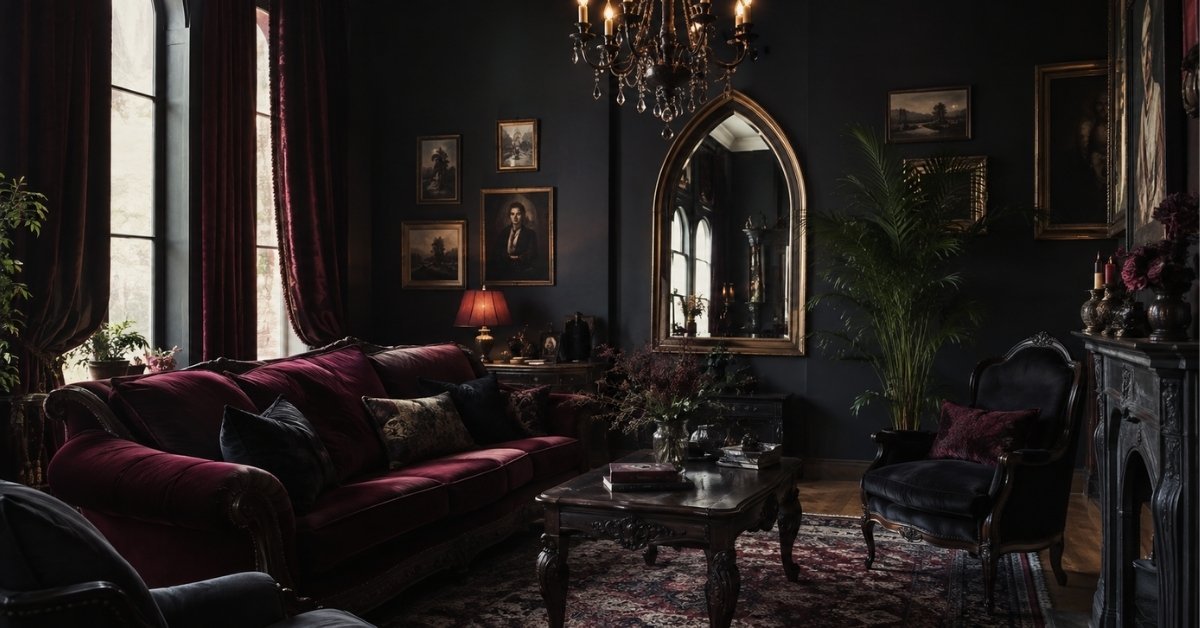

Gothic home decor brings depth, drama and character into an interior. It combines dark colours, architectural details, antique-inspired furniture, rich fabrics and carefully selected accessories to create a space that feels mysterious without becoming uncomfortable.
A well-designed gothic home does not need to look like a haunted house or a temporary Halloween display.
The most successful interiors use gothic influences in a balanced and intentional way. A carved mirror, velvet sofa, dramatic chandelier or deep burgundy wall can completely change the atmosphere of a room without overwhelming it.
Whether you prefer traditional Victorian gothic decor, a cleaner modern gothic interior or a softer romantic style, the following ideas will help you create a home that feels dark, elegant and personal.
What Is Gothic Home Decor?
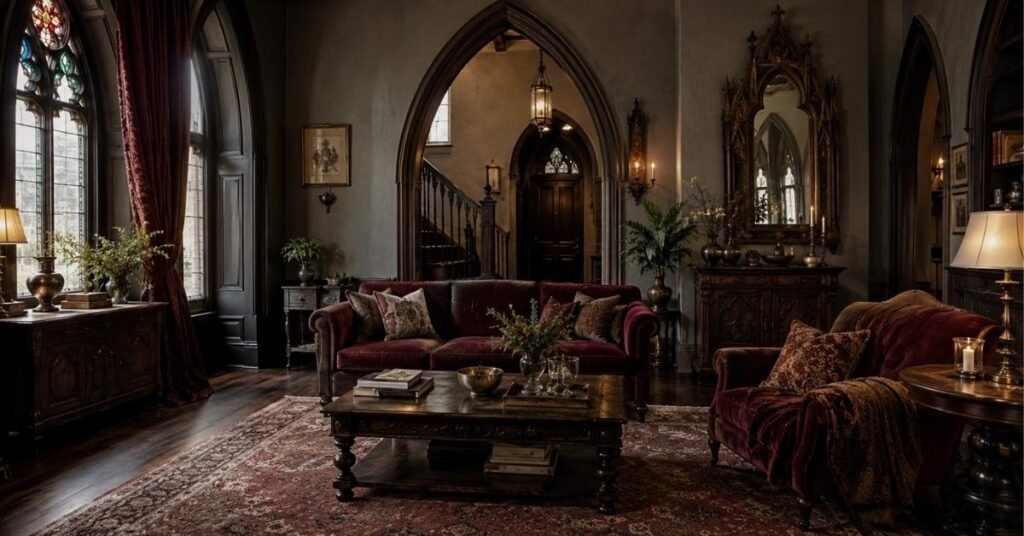
Gothic home decor is an interior style influenced by medieval architecture, Gothic Revival design, Victorian interiors and dark romantic aesthetics.
It often includes pointed arches, carved wood, decorative metalwork, stained glass, antique furniture and dramatic colour palettes.
The style is known for its strong visual identity. Black is commonly used, but gothic interiors are not limited to black walls and furniture.
Burgundy, forest green, midnight blue, deep purple, antique gold and warm cream can all be used to create a rich gothic atmosphere.
Texture is equally important. Velvet, leather, brocade, lace, dark wood, aged brass and stone-inspired surfaces add warmth and depth. These materials prevent a dark room from feeling flat or unfinished.
The aim is not to fill every surface with gothic objects. A successful gothic interior usually has a few strong focal points supported by carefully coordinated colours, lighting and decorative details.
Gothic Decor Versus Halloween Decor
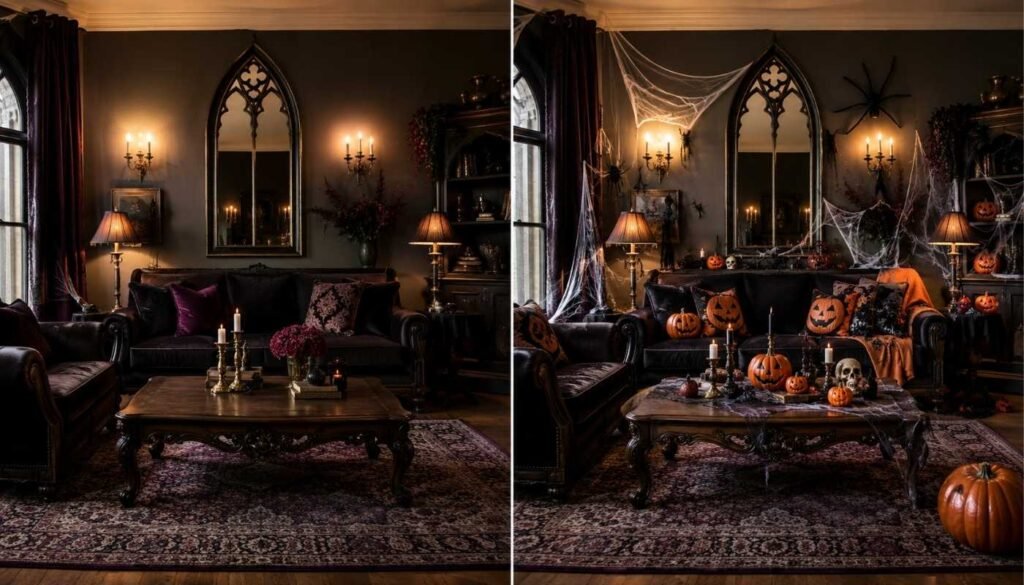
Gothic decor is designed to remain in the home throughout the year, while Halloween decor is usually seasonal and playful.
Both styles may use dark colours, candles, skulls or dramatic imagery, but their execution is different.
Year-round gothic home decor focuses on architecture, craftsmanship and atmosphere. It may include a cathedral-style mirror, carved furniture, vintage portraits, dark floral wallpaper or an antique chandelier.
These elements can feel elegant and timeless.
Halloween decor often relies more heavily on plastic decorations, artificial cobwebs, exaggerated horror symbols and temporary displays.
These items can be fun during October, but they may make a permanent interior feel more like a themed set than a thoughtfully designed home.
To keep your room sophisticated, prioritise materials such as wood, metal, glass, velvet and stone. Use novelty decorations sparingly and allow architectural shapes, lighting and texture to create most of the gothic character.
Which Gothic Interior Style Suits Your Home?
Before buying furniture or painting walls, decide which version of gothic design fits your taste. This will help you avoid mixing too many unrelated ideas.
Modern Gothic Home Decor
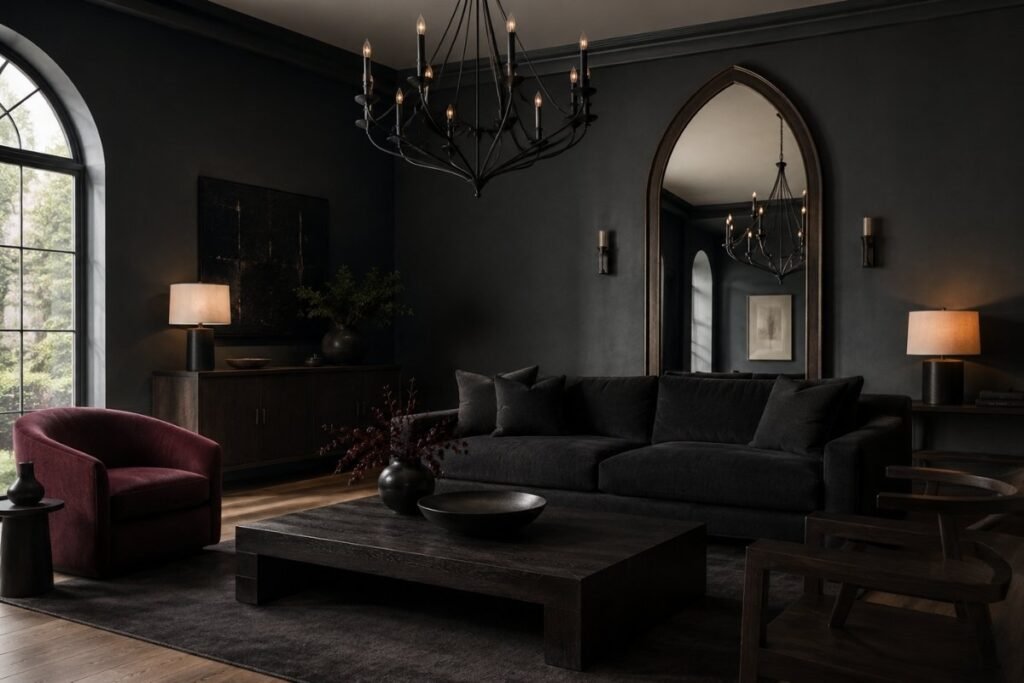
Modern gothic home decor combines dark colours and dramatic details with contemporary furniture and cleaner layouts.
It is ideal for people who like gothic style but do not want a heavily decorated Victorian interior.
A modern gothic room may include charcoal walls, a simple black sofa, an arched mirror, sculptural lighting and one or two antique accessories.
The space remains uncluttered, but it still feels atmospheric.
This approach works particularly well in apartments, modern houses and smaller rooms because it avoids oversized furniture and excessive ornamentation.
Victorian Gothic Home Decor
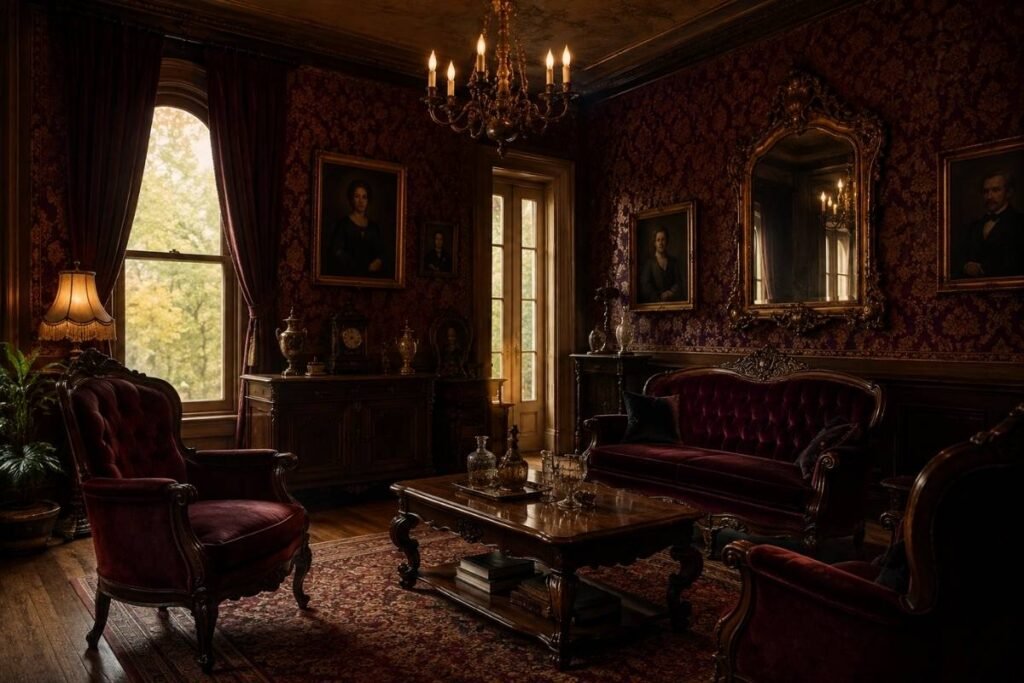
Victorian gothic decor is more decorative and traditional. It often includes carved wooden furniture, patterned wallpaper, velvet curtains, ornate frames, chandeliers and antique-style accessories.
Deep red, dark green, black, gold and walnut brown are common colours. Furniture tends to have curved shapes, detailed legs and substantial proportions.
This style works best when several elements are coordinated. A single Victorian chair may look disconnected in an otherwise minimal room, but it becomes convincing when paired with a patterned rug, decorative mirror and warm lighting.
Romantic Gothic Decor
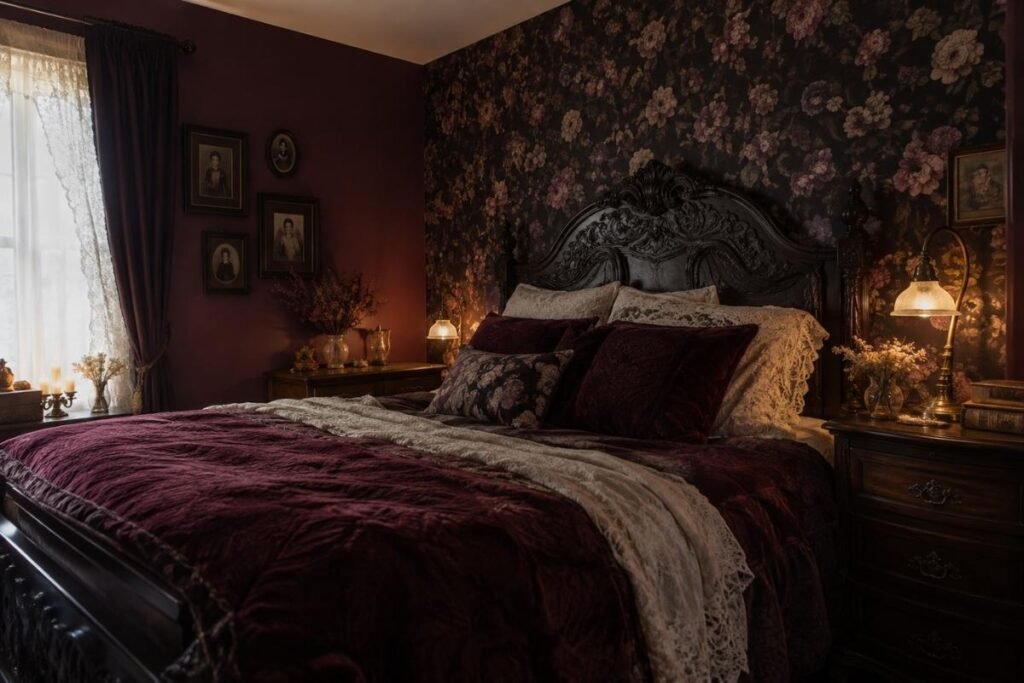
Romantic gothic interiors soften the darker aspects of the style with floral patterns, candlelight, lace, velvet and elegant furniture.
Burgundy, plum, dusty rose, black and ivory often appear together. Dark floral wallpaper, sheer curtains and vintage artwork can make the room feel dramatic without making it severe.
This style is especially suitable for bedrooms, dressing rooms and reading corners.
Medieval-Inspired Gothic Decor
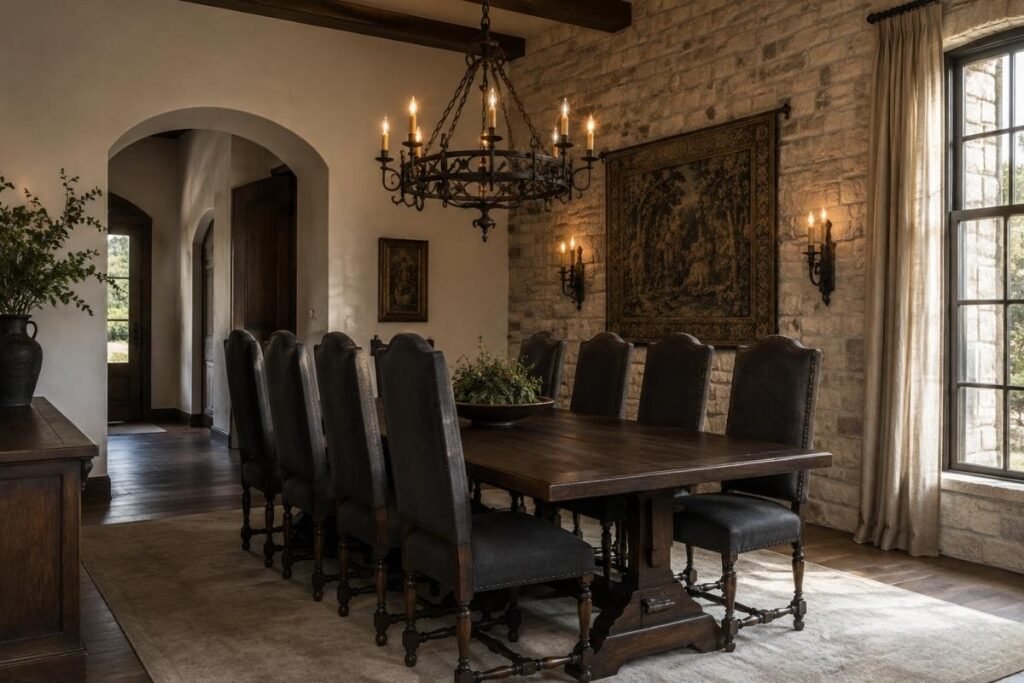
Medieval gothic interiors use stone-like textures, heavy wood, wrought iron, tapestries, candle-style lighting and architectural shapes.
You do not need an old castle to use this style. A stone-effect feature wall, iron chandelier, wooden dining table and arched shelving can introduce medieval character into a modern home.
The key is to use these elements selectively. Too many heavy materials can make an ordinary room feel crowded.
Whimsigoth Decor
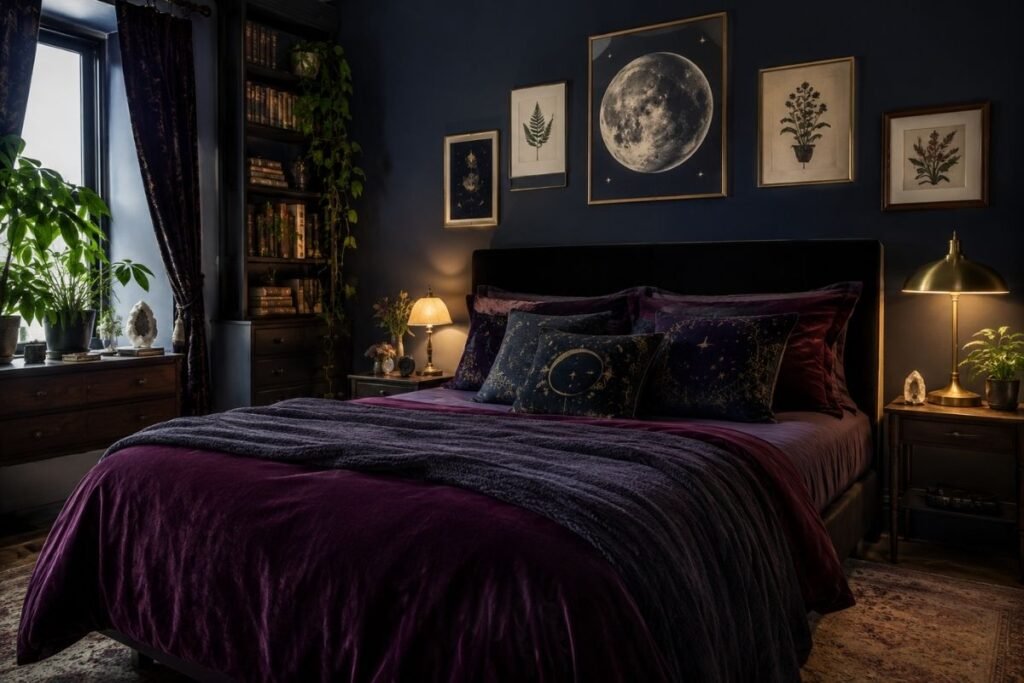
Whimsigoth combines gothic style with celestial, botanical and magical influences. It often includes moons, stars, candles, crystals, dark floral prints, vintage books and rich jewel tones.
The style feels more imaginative and playful than traditional gothic design. It works well in bedrooms, creative studios and small reading spaces.
To prevent the room from becoming visually chaotic, repeat a limited colour palette and group small accessories together rather than spreading them across every surface.
Gothic Decor Versus Dark Academia
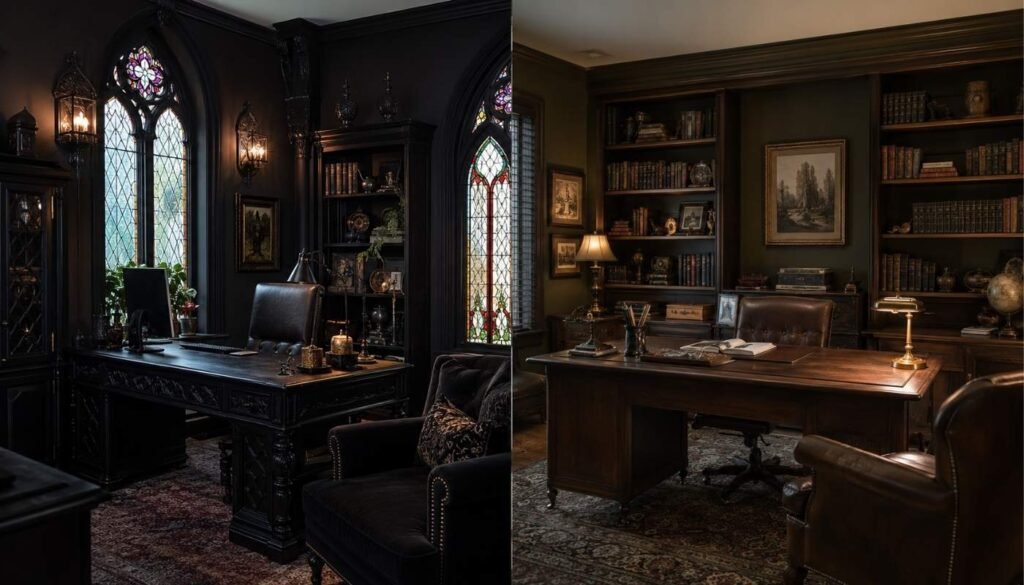
Gothic and dark academia interiors share several features, including old books, dark wood, vintage art and moody lighting. However, their overall mood is different.
Dark academia is inspired by traditional libraries, universities, literature and scholarly spaces. It often uses brown, olive, cream and burgundy.
Gothic decor is generally more dramatic. It uses sharper architectural forms, deeper blacks, ornate details, stained glass and stronger contrasts.
The two styles can be combined successfully, especially in a home office or reading room.
How to Choose a Gothic Colour Palette
Colour determines whether a gothic room feels rich, cold, elegant or oppressive. Instead of choosing several dark colours randomly, build a controlled palette with one main shade, one supporting colour and one or two accents.
Black, Burgundy and Antique Gold
This is one of the most recognisable gothic colour combinations. Black creates depth, burgundy adds warmth and antique gold provides contrast.
Use black on a feature wall, furniture or curtain fabric rather than automatically painting the entire room.
Burgundy can appear in upholstery, bedding or rugs, while gold works well on mirrors, frames and lighting fixtures.
Forest Green, Charcoal and Aged Brass
Forest green creates a sophisticated alternative to red and purple. It works beautifully with dark wood, charcoal walls and aged brass accessories.
This palette is particularly effective in living rooms, offices and dining spaces. It feels dramatic but still connected to nature.
Midnight Blue, Plum and Silver
Midnight blue and plum create a cooler gothic atmosphere. Silver, chrome or pewter accents can add a subtle reflective quality.
This combination works well in bedrooms and bathrooms, especially when paired with soft lighting and textured fabrics.
Gothic Colours Without Black
A gothic interior does not need black walls. Deep green, dark blue, burgundy, brown and muted purple can all produce a dramatic result.
Cream, beige and warm grey can also be used as background colours. Gothic character can then come from arched shapes, antique furniture, dark textiles and decorative lighting.
This approach is useful for people who want a lighter room or live in a rental property where major changes are not possible.
25 Gothic Home Decor Ideas
1. Create a Dark Feature Wall
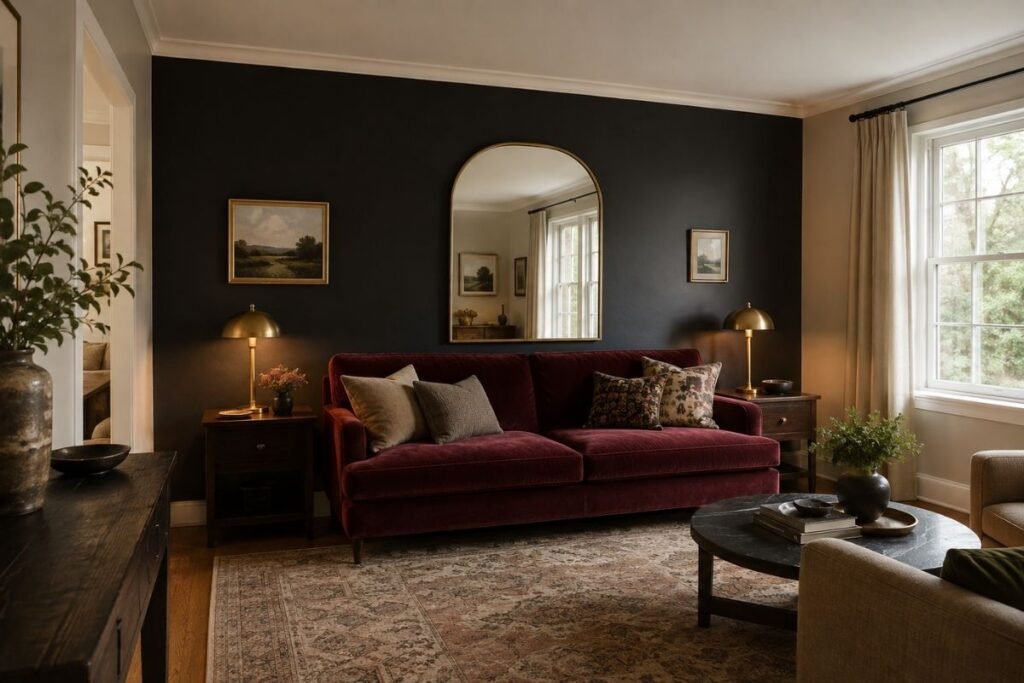
A feature wall is one of the easiest ways to introduce gothic home decor without darkening the entire room.
Choose charcoal, burgundy, forest green, midnight blue or deep plum. Place the darkest wall behind a bed, fireplace, sofa or dining table so it becomes a clear focal point.
Add warm lighting and lighter surrounding surfaces to keep the room balanced.
2. Use Dark Floral Wallpaper
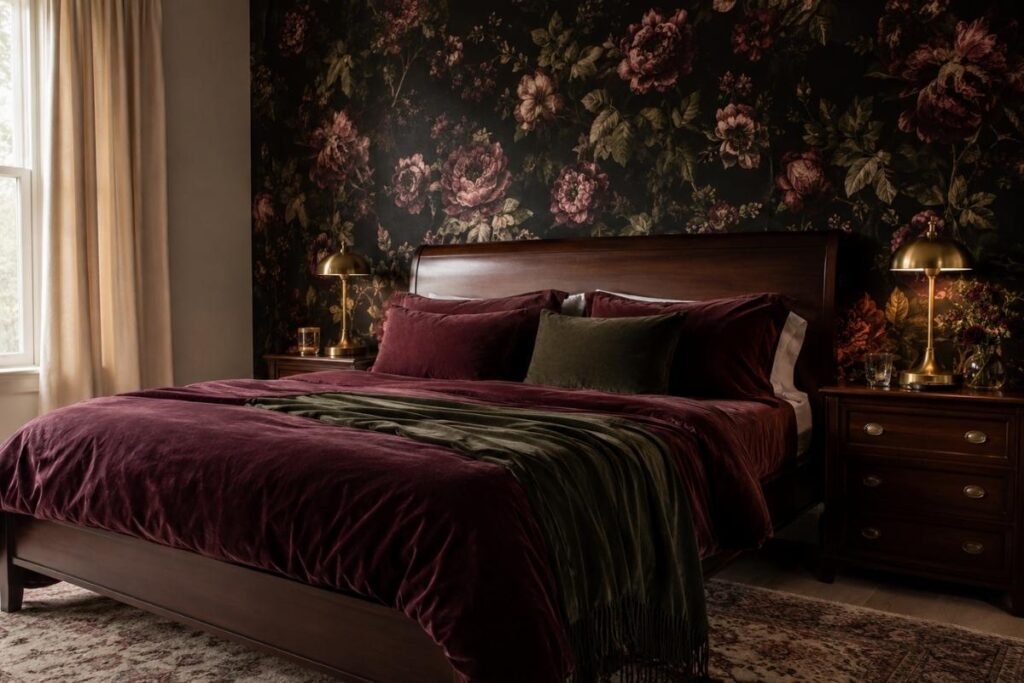
Dark floral wallpaper brings pattern, colour and romantic detail into a gothic room.
Look for designs featuring roses, vines, botanical illustrations or oversized flowers on black, navy or burgundy backgrounds. Use the wallpaper on one wall if the pattern is highly detailed.
A dark floral design works especially well in bedrooms, powder rooms and dining spaces.
3. Add Cathedral-Inspired Arches
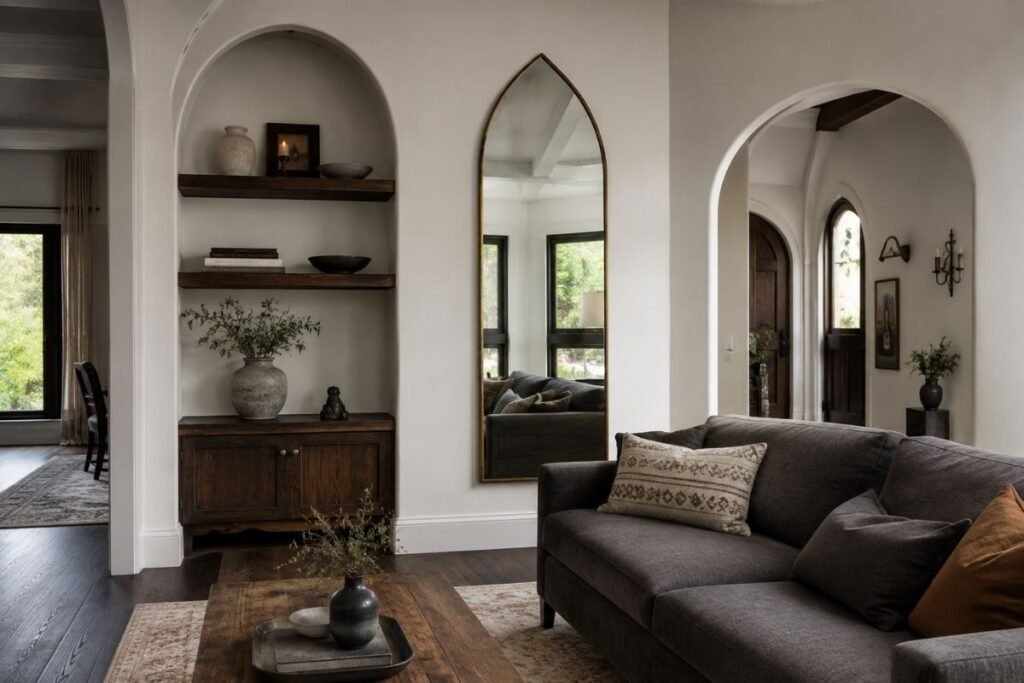
Pointed arches are strongly associated with Gothic architecture. They can be introduced through mirrors, shelving, door frames, wall panels or artwork.
A large cathedral-style mirror can immediately establish the theme without requiring structural changes. Smaller arched frames can also be grouped together to create a gallery wall.
Repeating the arch shape two or three times creates consistency without making the room feel overly themed.
4. Display an Ornate Mirror
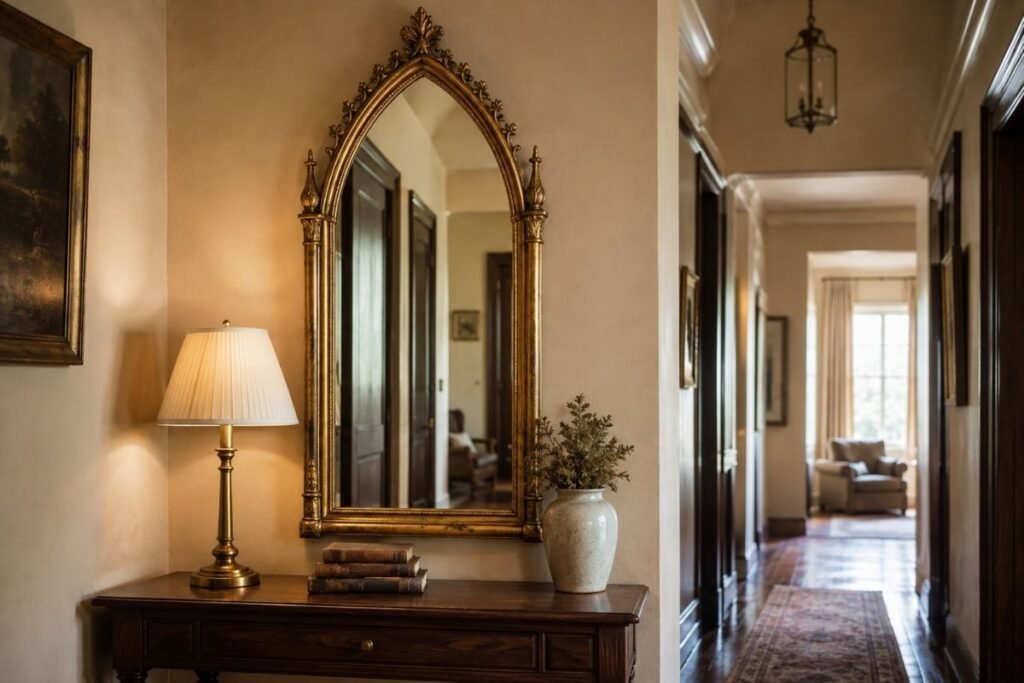
An ornate mirror adds decoration, reflection and visual depth. It is particularly valuable in a dark interior because it helps distribute light.
Choose a black, antique gold, silver or dark wood frame. Large mirrors work well above fireplaces, consoles and dressing tables.
For a more dramatic look, select a mirror with carved details, a pointed top or an aged finish.
5. Build a Gothic Gallery Wall
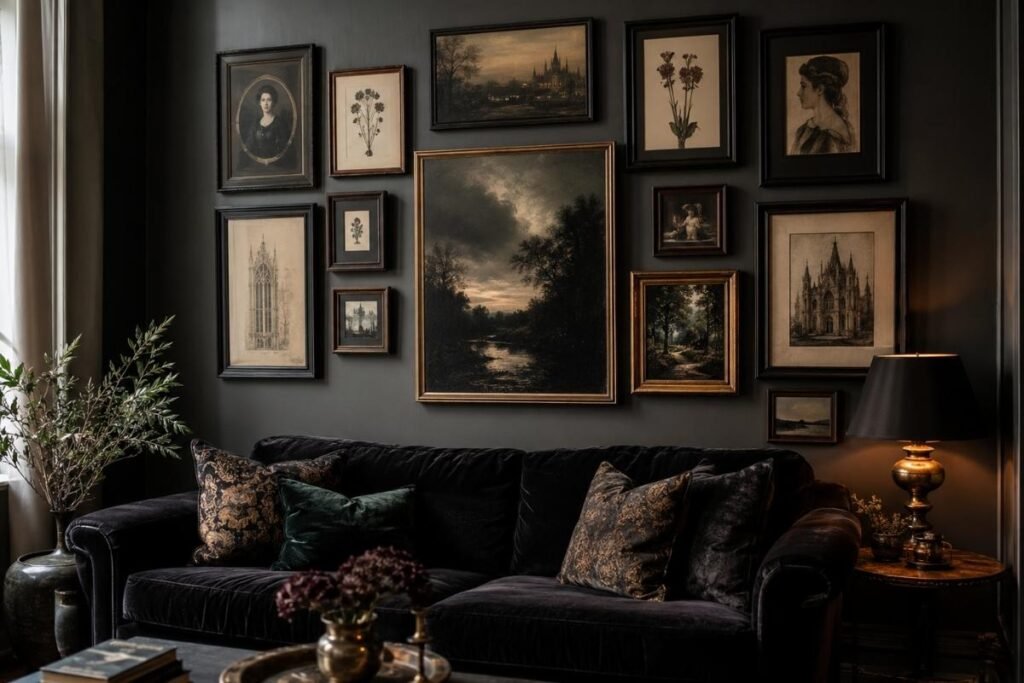
A gothic gallery wall can include vintage portraits, botanical illustrations, architectural drawings, antique maps, religious art or dark landscape paintings.
Use frames in black, dark wood, brass and aged gold. The frames do not need to be identical, but they should share a similar visual weight.
Arrange the collection around one larger central piece. This creates order and stops the wall from looking like a random collection.
6. Choose Carved Dark-Wood Furniture
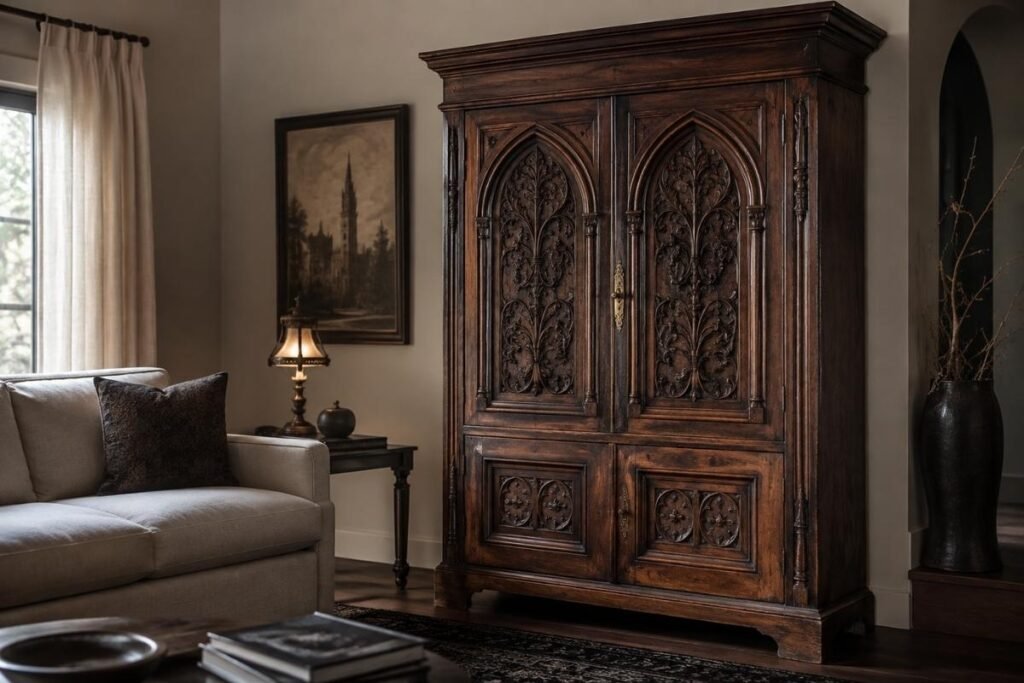
Dark wood creates warmth and authenticity in gothic interiors. Walnut, mahogany, oak and stained pine can all work well.
Look for furniture with carved doors, decorative legs, arched panels or traditional handles. A single antique cabinet or sideboard can become the main feature of a room.
Avoid filling a small space with several large pieces. Dark furniture has strong visual weight, so allow space around it.
7. Introduce Velvet Upholstery
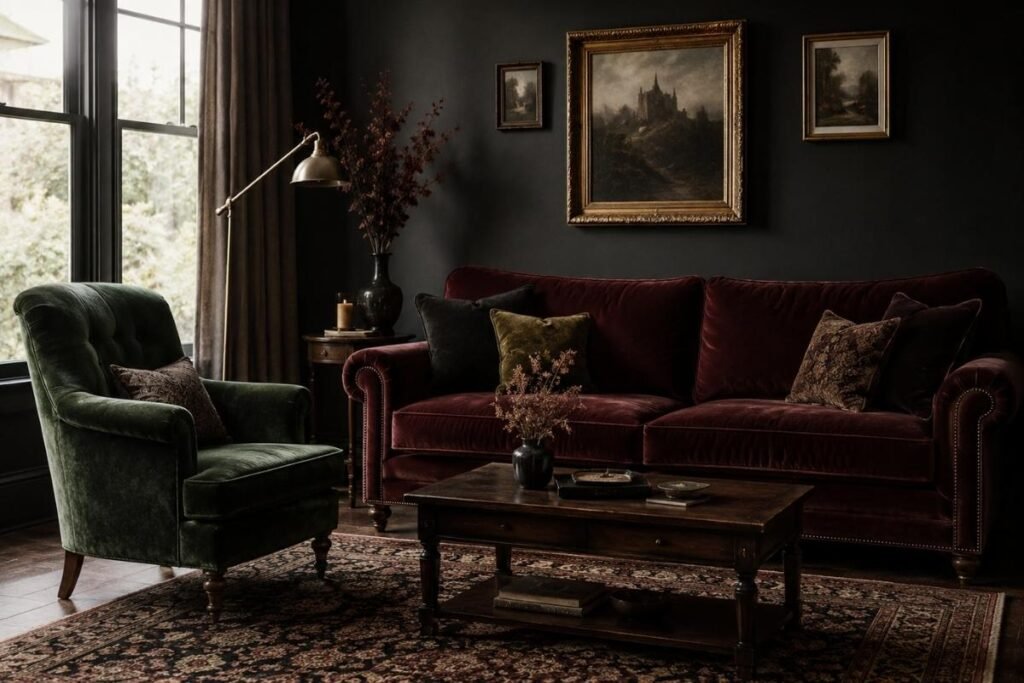
Velvet reflects light differently depending on the viewing angle, making it ideal for dramatic rooms.
A burgundy sofa, forest-green chair or black velvet headboard can add colour and texture. If large velvet furniture is outside your budget, use cushions, throws or curtains instead.
Combine velvet with smoother surfaces such as glass, metal or polished wood to create contrast.
8. Add a Four-Poster Bed
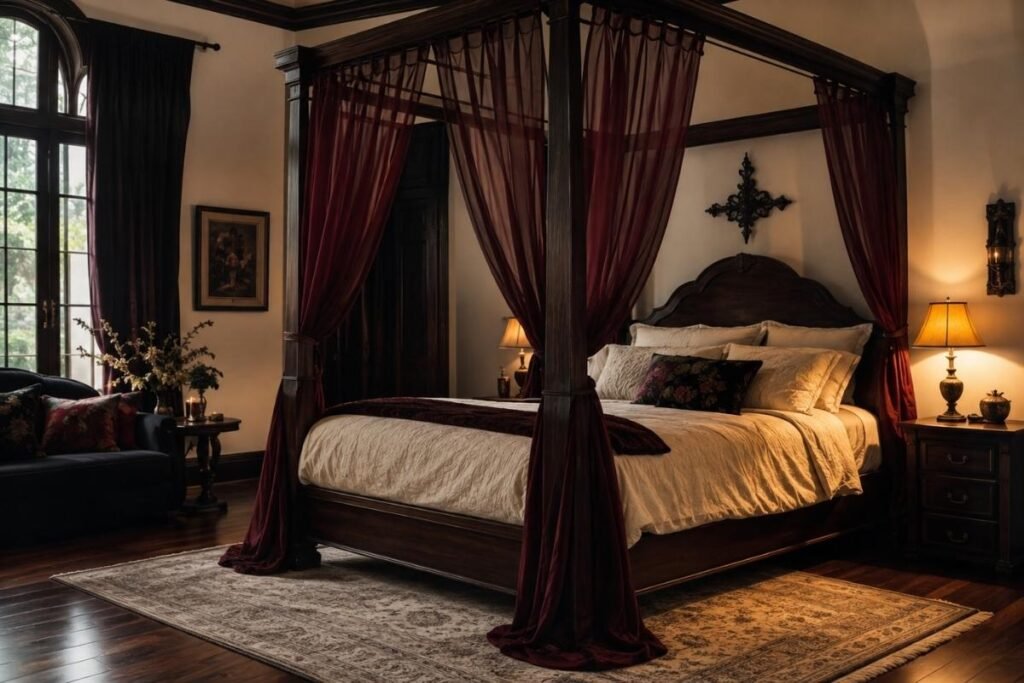
A four-poster bed creates a strong gothic bedroom focal point.
Choose dark wood or black metal. Curtains can be added for a more romantic effect, but lighter or semi-sheer fabric may work better in a small room than heavy drapes.
Keep the surrounding furniture relatively simple so the bed remains the main architectural element.
9. Use Wrought-Iron Details
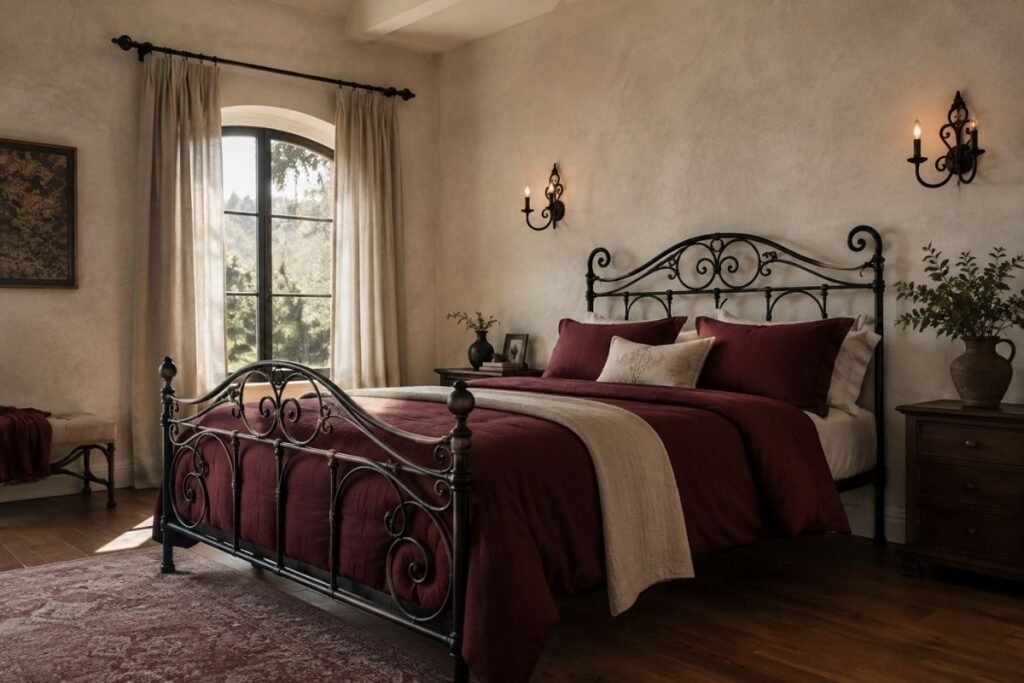
Wrought iron introduces a medieval and handcrafted quality.
It can appear in bed frames, curtain rods, shelves, candle holders, chairs or lighting fixtures. Black iron pairs naturally with wood, velvet and stone-inspired surfaces.
Use a few substantial iron pieces instead of many small decorative objects.
10. Install a Dramatic Chandelier
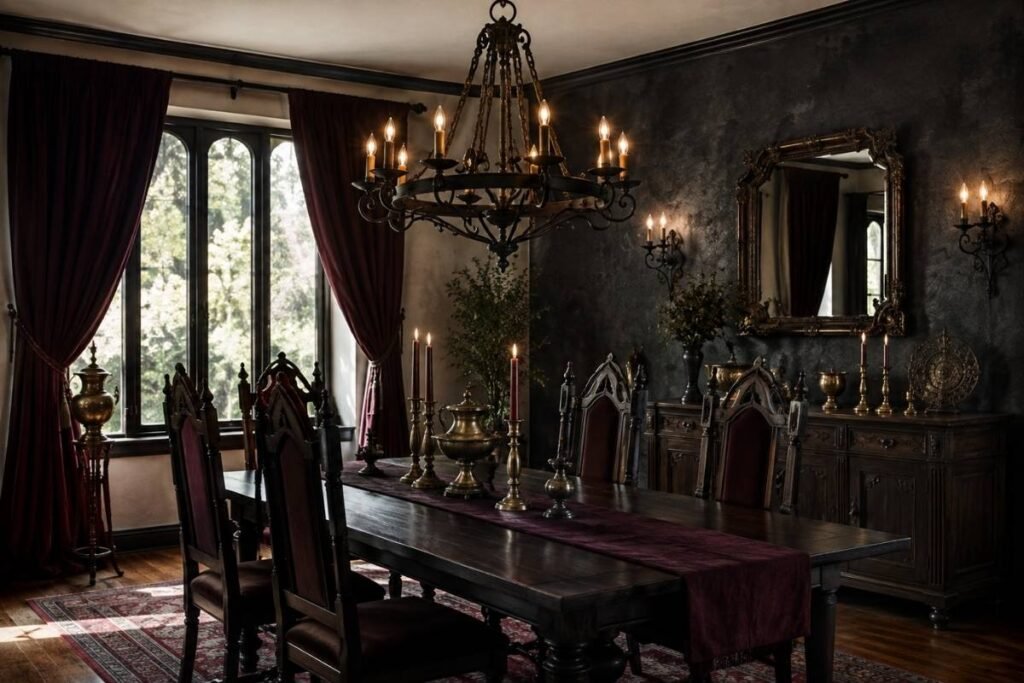
A chandelier can define the atmosphere of an entire room.
Candle-style chandeliers, black metal fixtures and designs with crystal drops all work in gothic interiors. Select the size carefully so the fixture suits the ceiling height and room dimensions.
Use warm bulbs rather than bright white light. Gothic spaces should feel atmospheric, but they still need to be comfortable and functional.
11. Add Gothic Wall Sconces
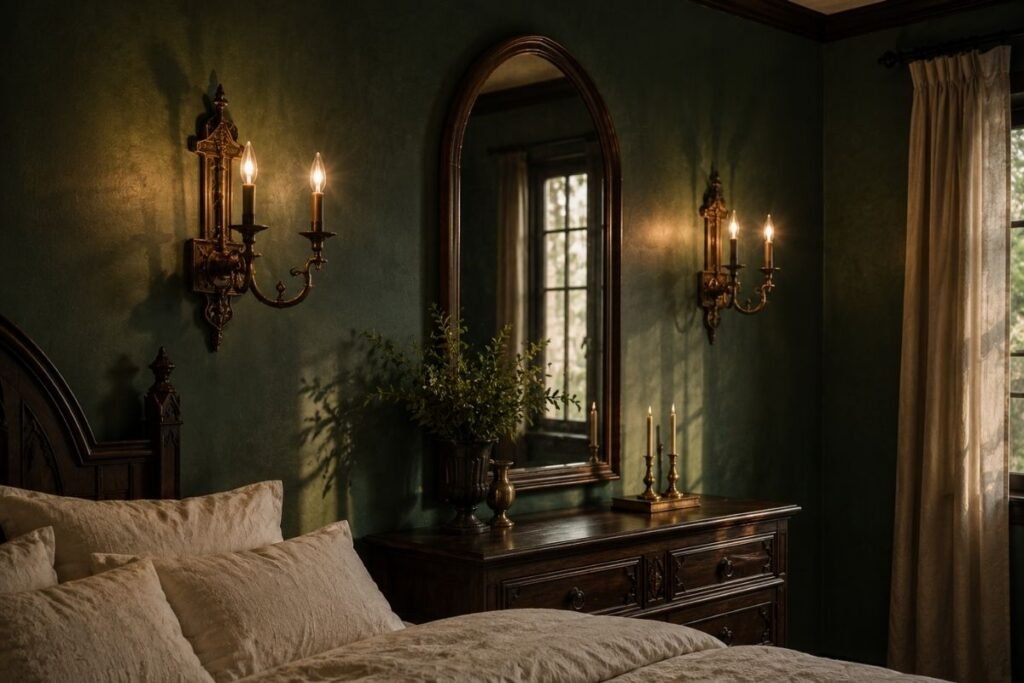
Wall sconces create layered lighting and emphasise architectural areas.
Place them beside a mirror, bed, fireplace, hallway console or artwork. Candle-style fixtures and aged brass finishes work particularly well.
For rental properties, rechargeable wall lights can offer a similar effect without permanent wiring.
12. Layer Several Light Sources
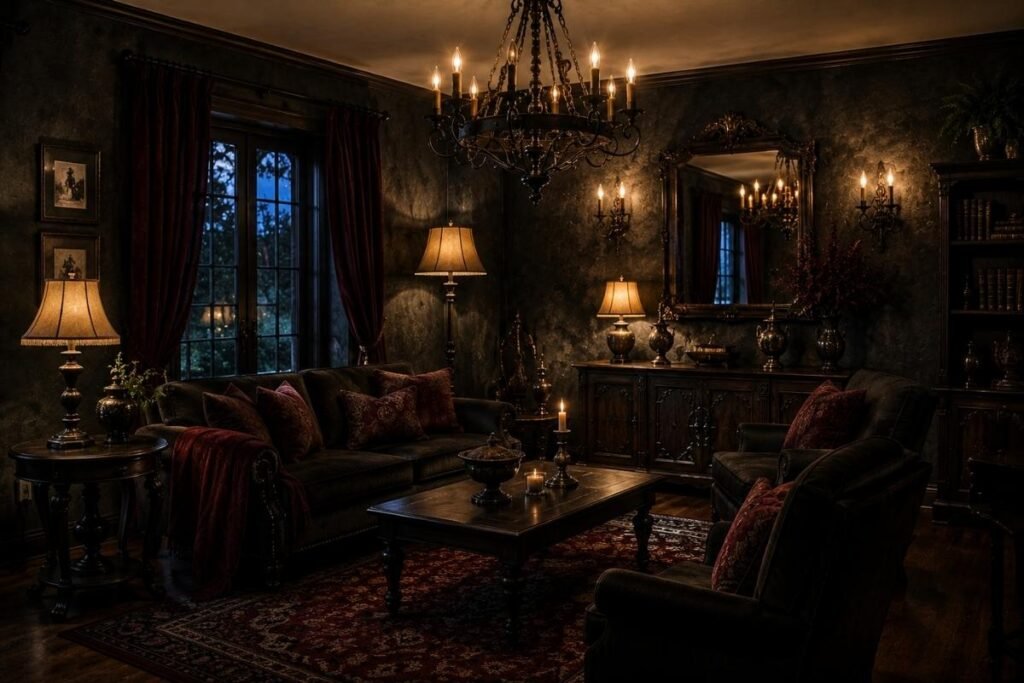
One ceiling light is rarely enough for a successful gothic room.
Use a combination of table lamps, floor lamps, wall sconces and candles. This produces pockets of warm light and makes dark colours feel richer.
Place lighting near mirrors, textured walls and metallic surfaces so the light can reflect throughout the room.
13. Use Velvet, Lace and Damask
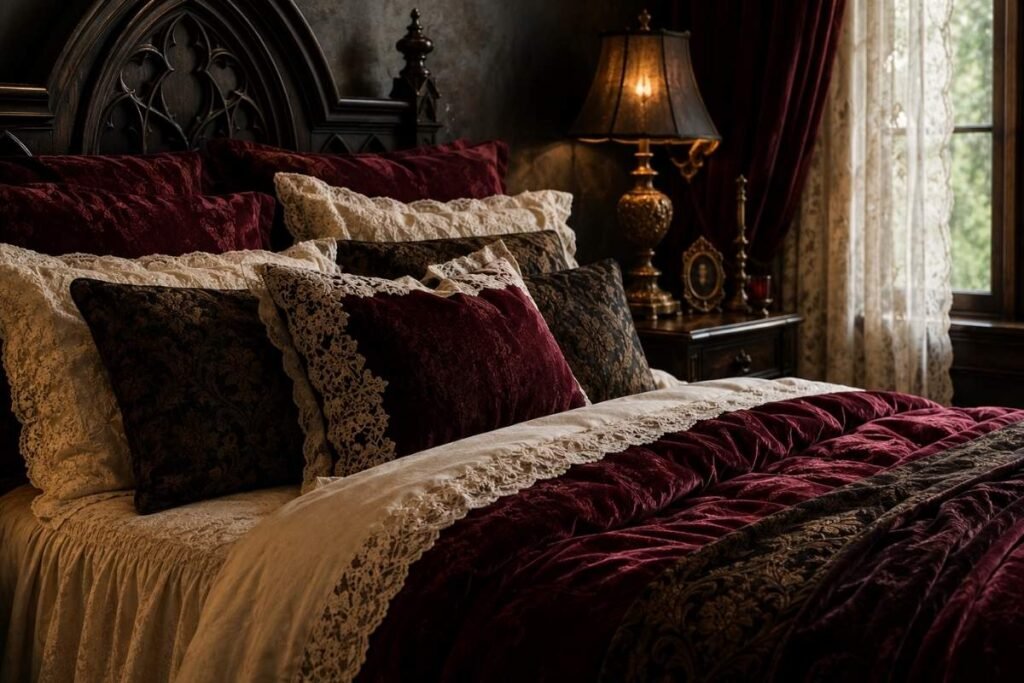
Layered textiles prevent dark interiors from feeling empty or cold.
Velvet adds weight, lace introduces detail and damask provides traditional pattern. These materials can be used on curtains, bedding, cushions, lampshades and table coverings.
Choose two or three main textures rather than using every gothic fabric in one room.
14. Introduce Stained-Glass Details
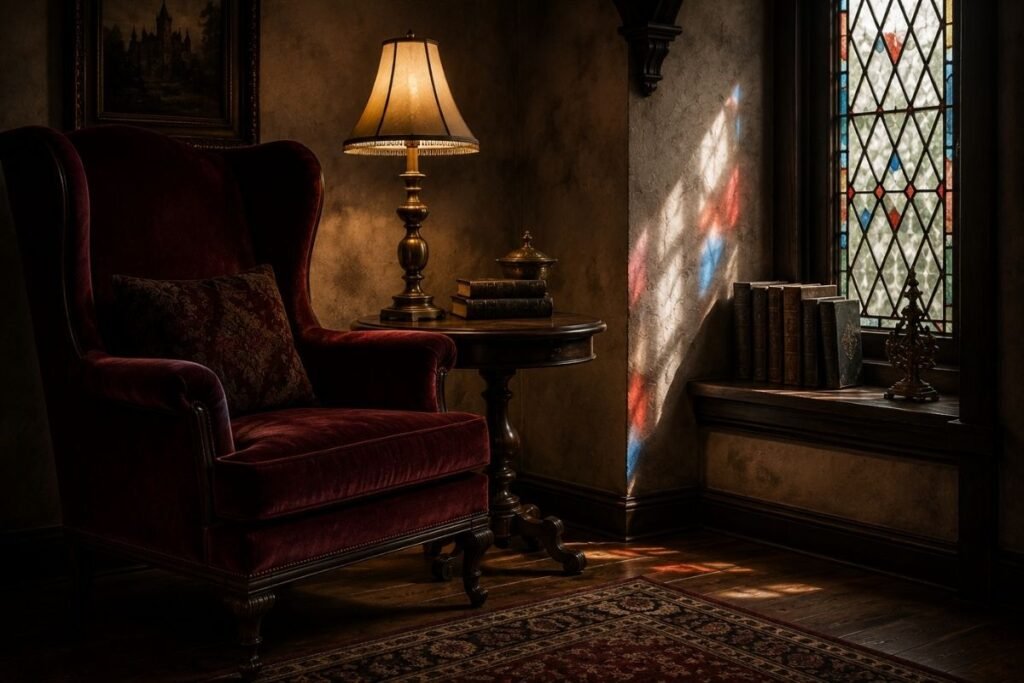
Stained glass adds colour and a clear connection to Gothic architecture.
A full stained-glass window is not necessary. Smaller panels, lamps, cabinet inserts and decorative hangings can create a similar effect.
Place stained glass where natural or artificial light can pass through it.
15. Style Antique Books
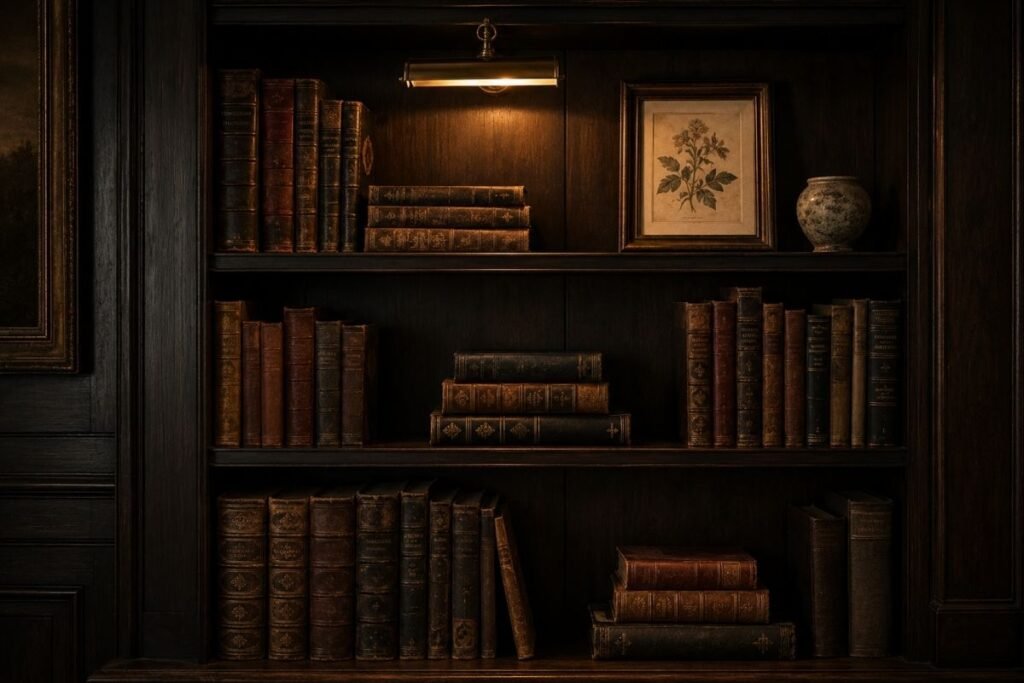
Old books add texture, history and a sense of intellectual character.
Arrange them on shelves, side tables or inside glass-front cabinets. Mix vertical rows with small horizontal stacks to create variety.
Do not overcrowd the shelves. Leave room for a framed picture, candle holder or sculptural object.
16. Add Vintage Portraits
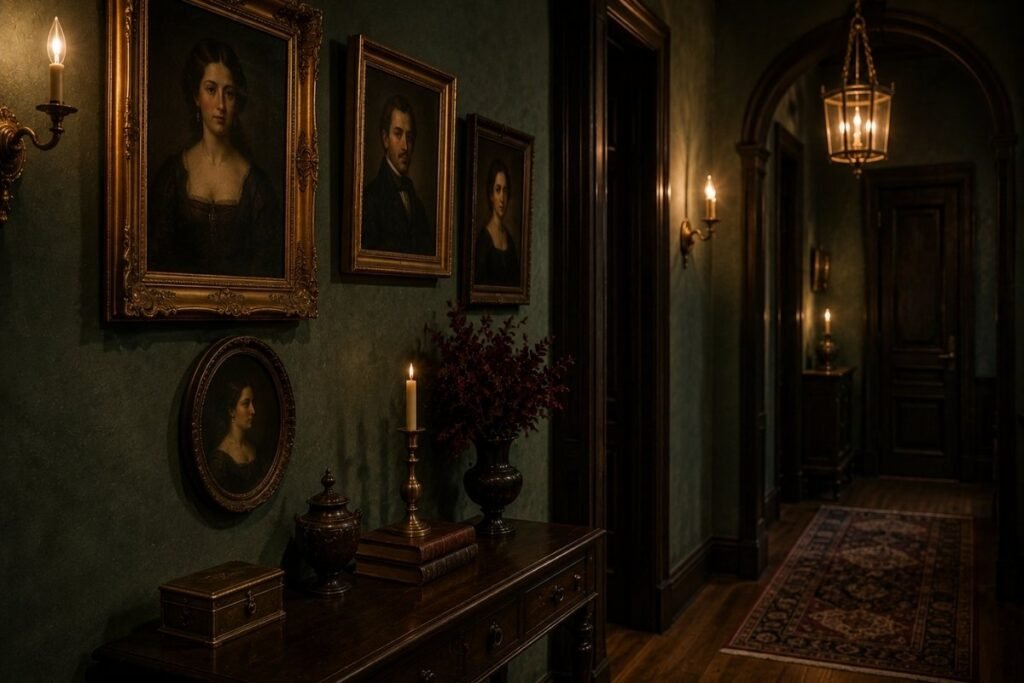
Vintage portraits introduce mystery and personality into a gothic interior.
Choose oil-painting reproductions, old photographs or historical illustrations. Dark landscapes and classical figures can also work well.
Use frames that complement the room’s metal and wood finishes.
17. Use Dark Botanical Prints
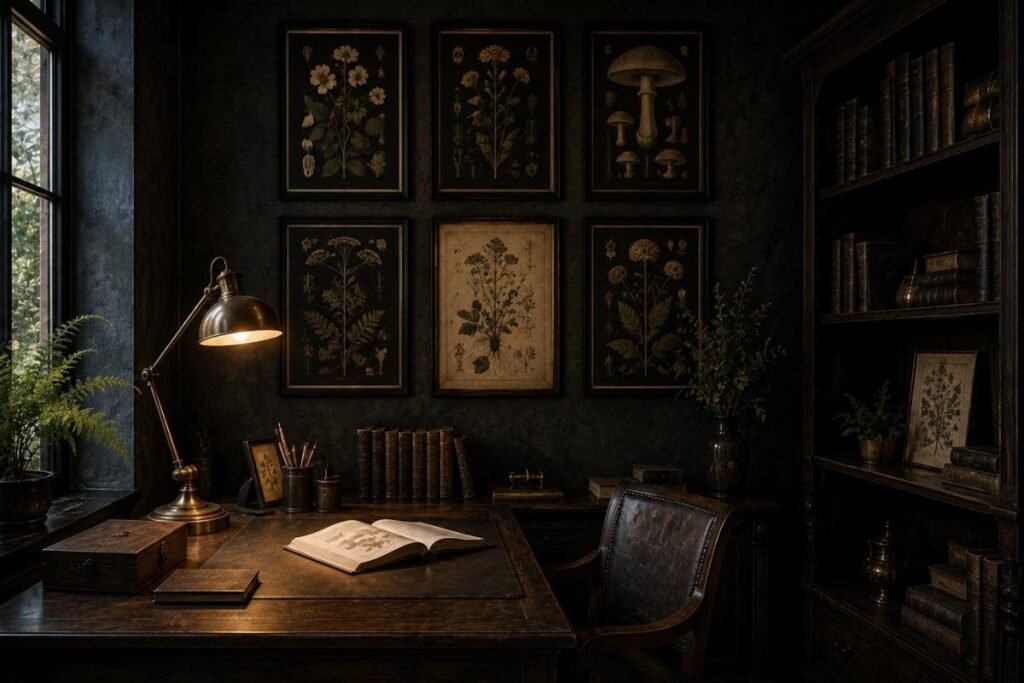
Botanical art softens a gothic interior while maintaining a moody aesthetic.
Look for flowers, mushrooms, medicinal plants, insects or natural-history illustrations. Black backgrounds and aged paper effects work particularly well.
These prints suit kitchens, hallways, bedrooms and home offices.
18. Incorporate Aged Brass
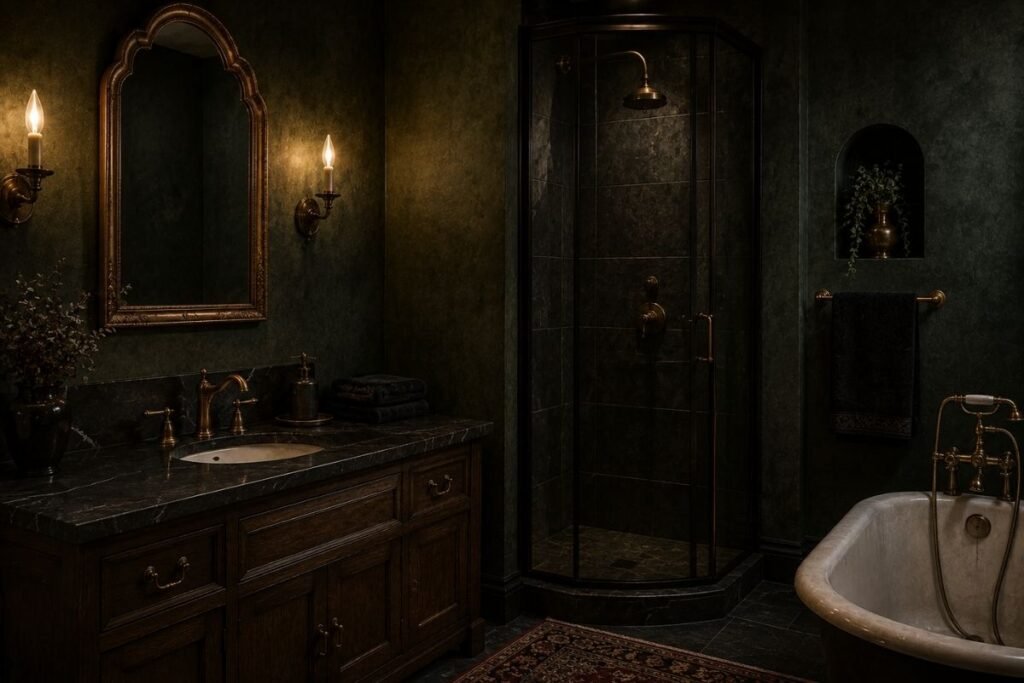
Aged brass adds warmth and prevents dark colour schemes from looking flat.
Use it in cabinet handles, lamp bases, candle holders, mirrors and picture frames. The finish does not need to be perfectly matched throughout the room.
A combination of aged brass and dark wood creates a classic Victorian gothic effect.
19. Create a Gothic Reading Corner
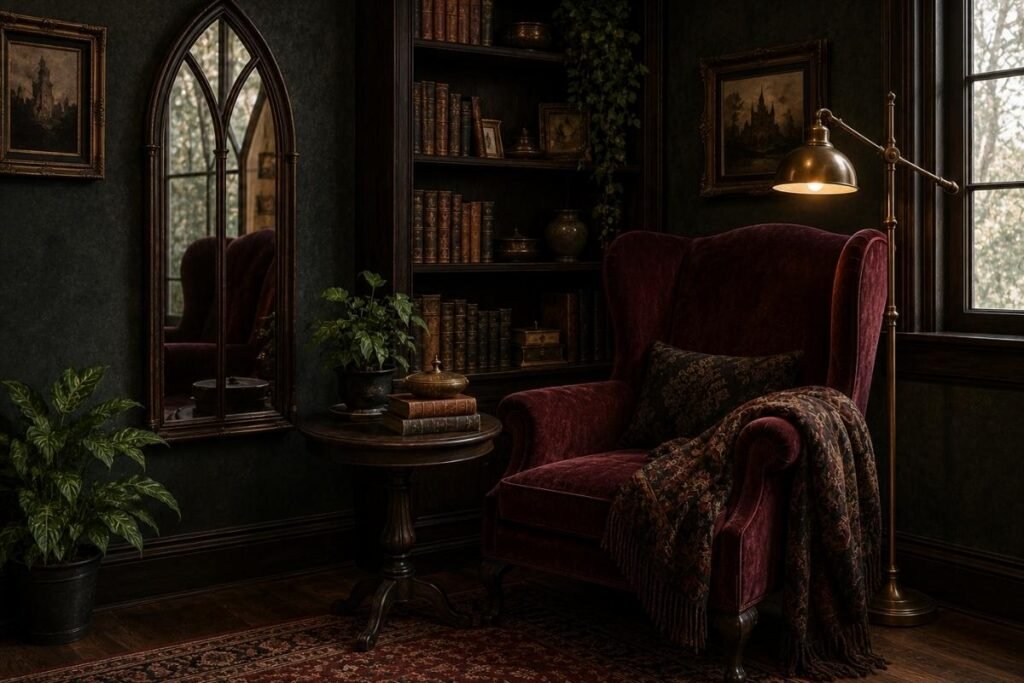
A reading corner can establish a strong gothic mood in a small area.
Use a comfortable chair, floor lamp, side table, dark cushion and a small book collection. Add an arched mirror or framed artwork behind the chair.
This is an effective option for people who do not want to redesign an entire room.
20. Add Stone-Inspired Texture
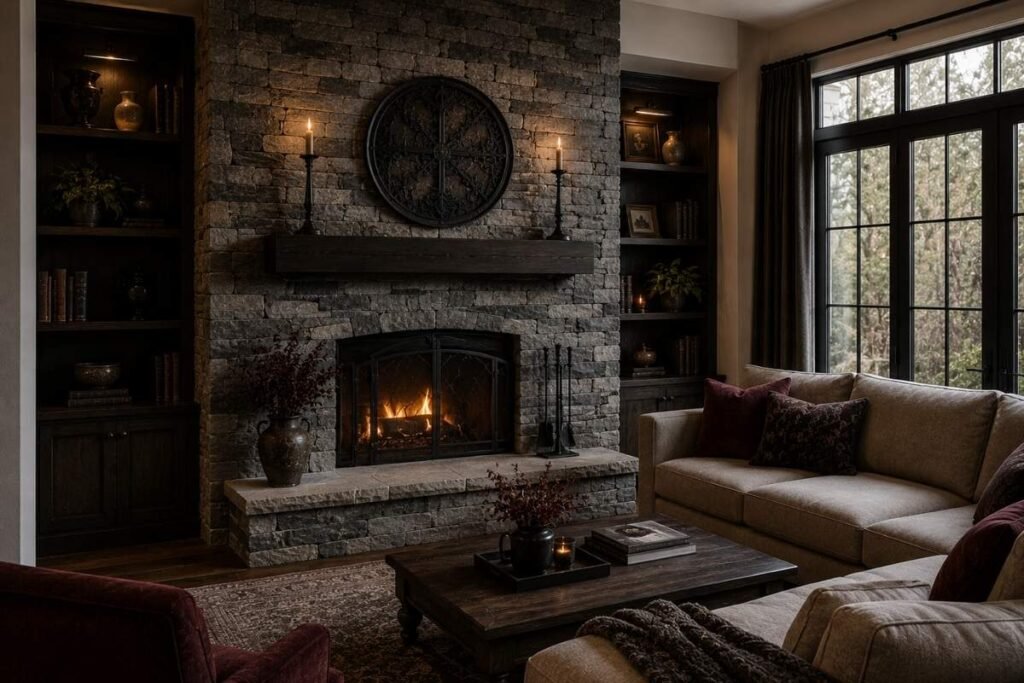
Stone surfaces connect gothic interiors with castles, churches and historic architecture.
Real stone can be expensive and heavy, but stone-effect wallpaper, textured panels and decorative plaster can create a similar appearance.
Use stone texture on a fireplace wall, alcove or small feature area rather than covering every surface.
21. Decorate Doorways and Ceilings
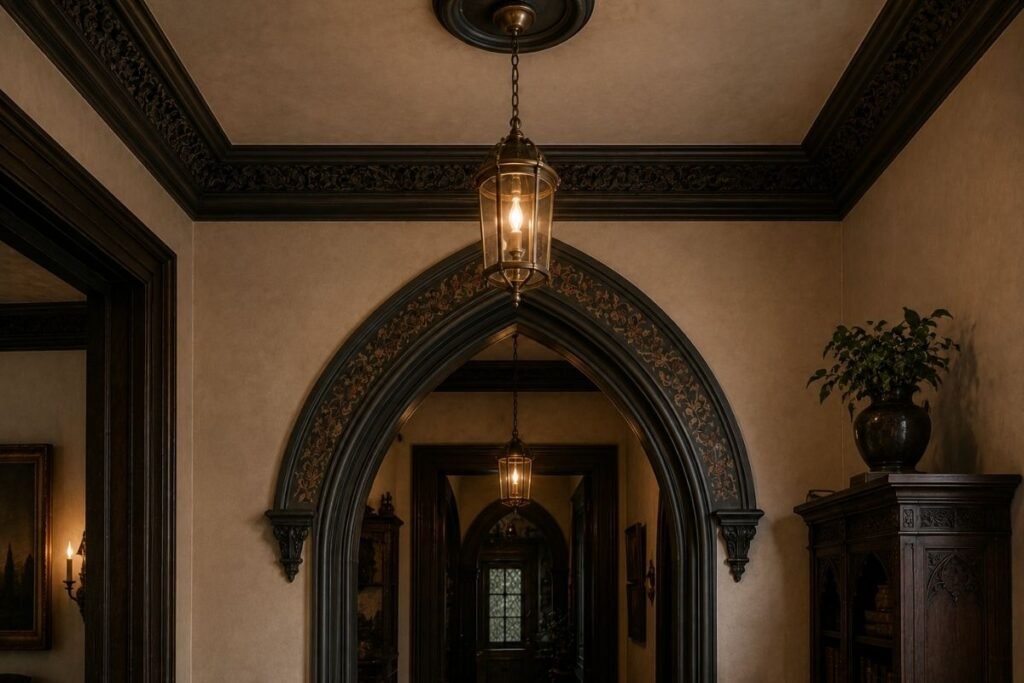
Gothic design does not need to remain at eye level.
Painted ceiling details, decorative moulding and dark door frames can make a room feel more complete. An arched design painted around a doorway can imitate architectural detail without major construction.
These treatments work best when they repeat shapes or colours already present in the room.
22. Use Plants to Soften the Interior
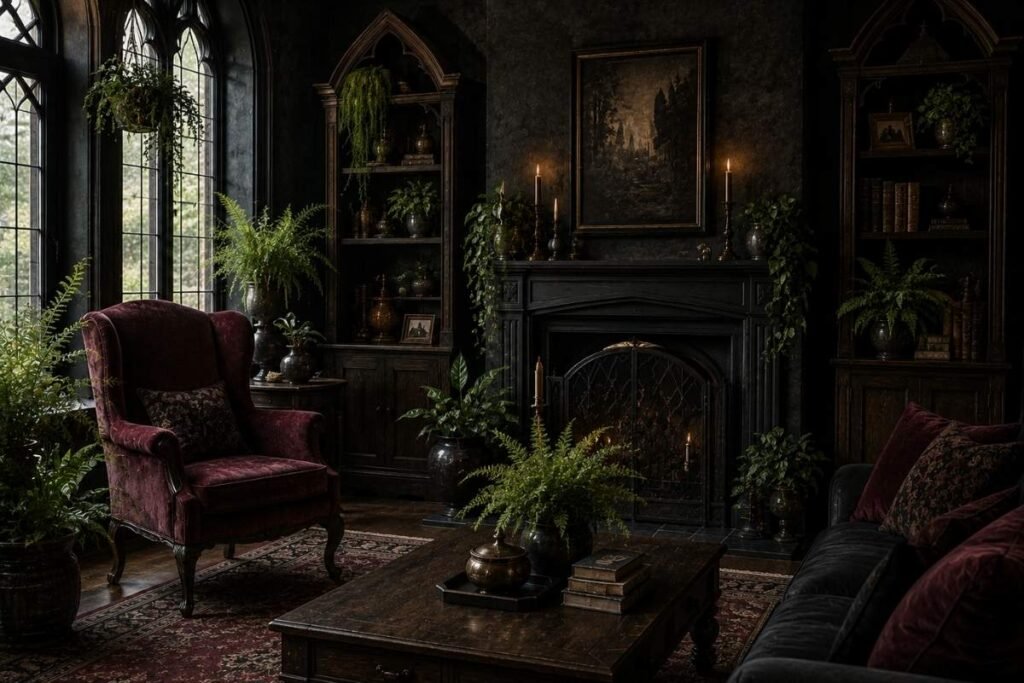
Plants bring life into dark spaces and create contrast with black, burgundy and dark wood.
Trailing plants, ferns and large leafy varieties fit naturally into moody interiors. Use dark ceramic, aged metal or stone-effect pots.
Choose plants according to the actual amount of natural light in the room.
23. Mix Antique and Modern Furniture
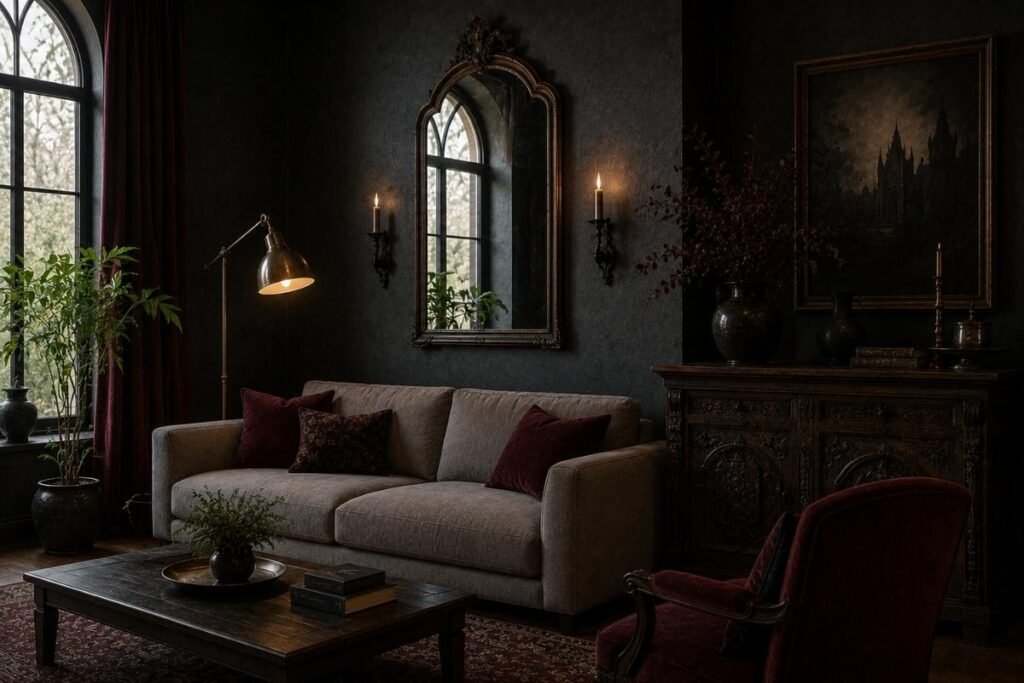
Using only antique-style furniture can make a room feel heavy. Combining old and new pieces creates a more practical interior.
Pair a carved cabinet with a simple sofa, or place a contemporary bed beneath an ornate mirror. The contrast makes the antique pieces more noticeable.
Repeat colours or materials across both furniture styles to keep the room connected.
24. Use Subtle Gothic Accessories
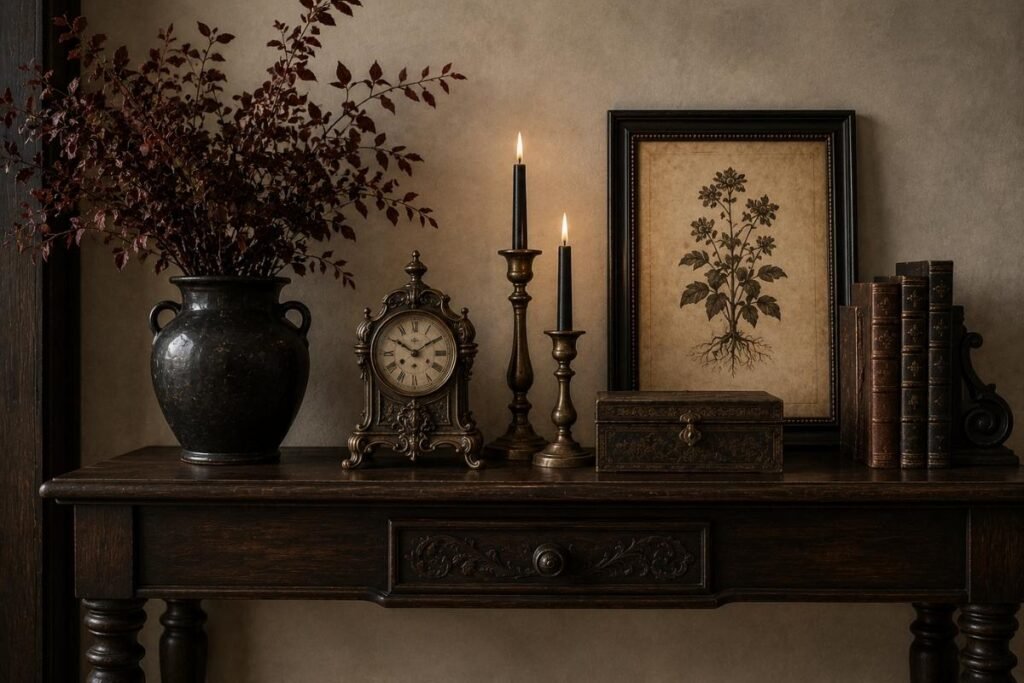
Small details can change the tone of a room without requiring a complete redesign.
Consider candle holders, decorative boxes, antique-style clocks, dark ceramics, sculptural bookends and embroidered cushions.
Choose accessories that suit the room rather than buying every object labelled as gothic.
25. Create Contrast With Lighter Elements
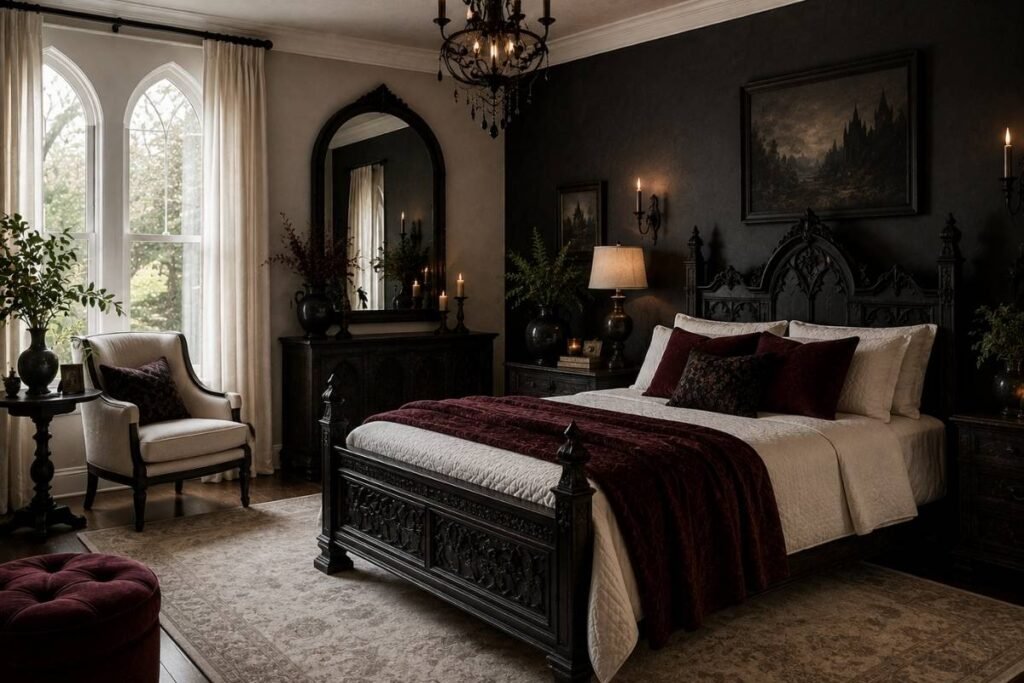
A gothic interior does not need to be uniformly dark.
Warm cream walls, pale bedding, light rugs and reflective glass can make dark furniture appear more dramatic. Contrast also improves visibility and prevents the room from feeling closed in.
Use lighter areas to frame your darkest and most decorative pieces.
Gothic Home Decor by Room
Gothic Living Room Decor
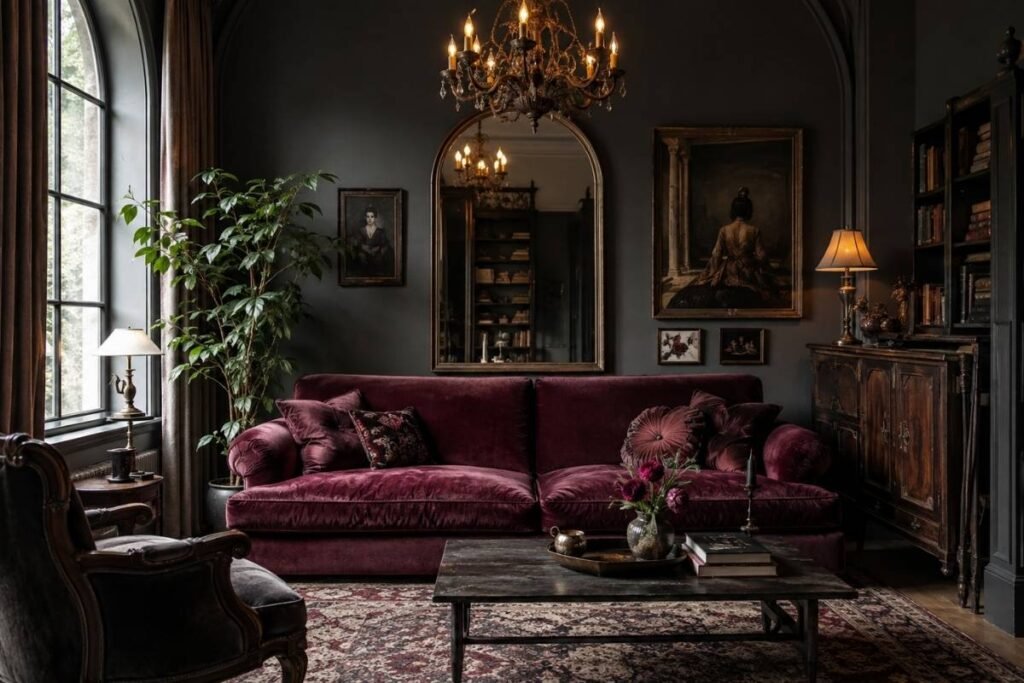
The living room should feel dramatic but welcoming. Begin with one main feature, such as a dark fireplace wall, velvet sofa or large arched mirror.
Use layered lighting so the room remains comfortable during the evening. A chandelier can provide general light, while lamps and sconces create atmosphere.
Add character through cushions, curtains, artwork and a few substantial accessories. Avoid filling every shelf with small objects, as this can make the room feel untidy.
Gothic Bedroom Decor
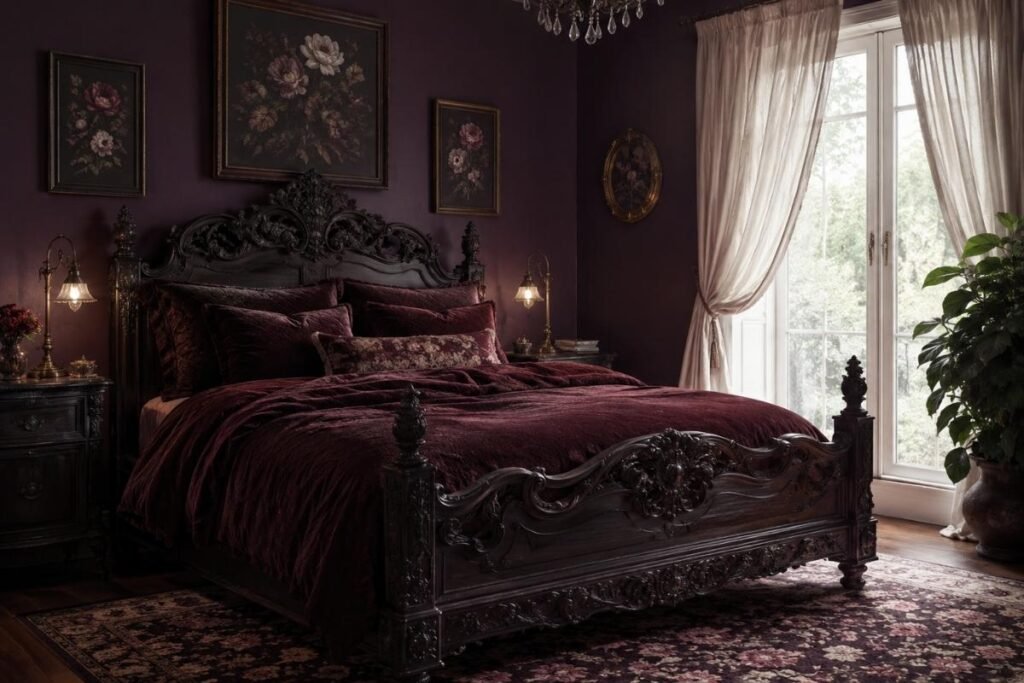
A gothic bedroom should feel private, calming and luxurious.
The bed should usually be the focal point. Use a dark headboard, four-poster frame, dramatic bedding or wallpaper behind the bed. Layer velvet, cotton and linen to create comfort.
Warm bedside lighting is essential. Add mirrors or lighter textiles if the room has limited natural light.
Gothic Kitchen Decor
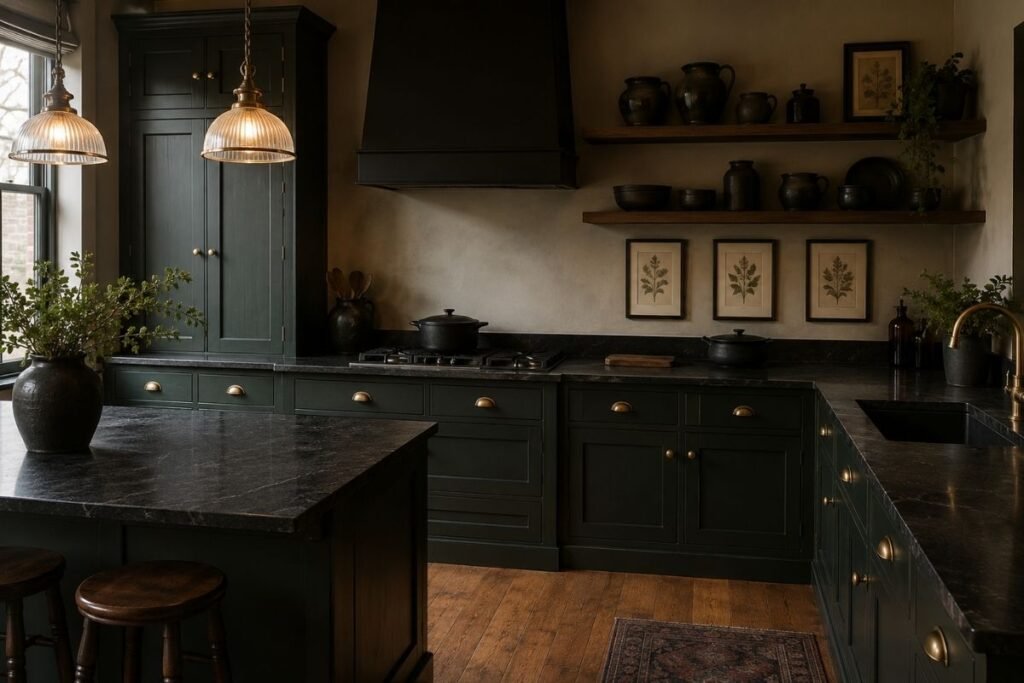
Gothic kitchen decor can be introduced through dark cabinets, brass handles, stone-effect surfaces and traditional lighting.
Open shelves can display dark ceramics, glass bottles, wooden boards and botanical prints. Keep frequently used areas practical and uncluttered.
For a lighter approach, retain neutral cabinets and add gothic character through wall colour, hardware, pendant lights and accessories.
Gothic Dining Room Decor
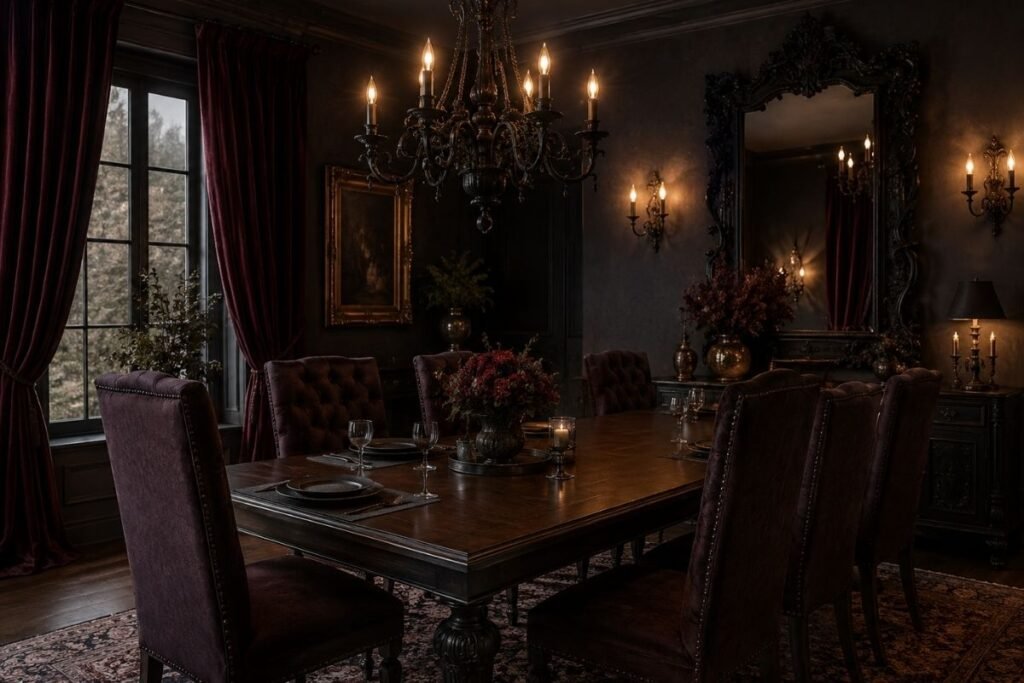
Dining rooms are naturally suited to dramatic decor.
A dark wooden table, upholstered chairs, chandelier and rich wall colour can create a formal atmosphere. Candles and table linens add warmth during meals.
Use one large artwork, mirror or wall panel as the main visual focus.
Gothic Bathroom Decor
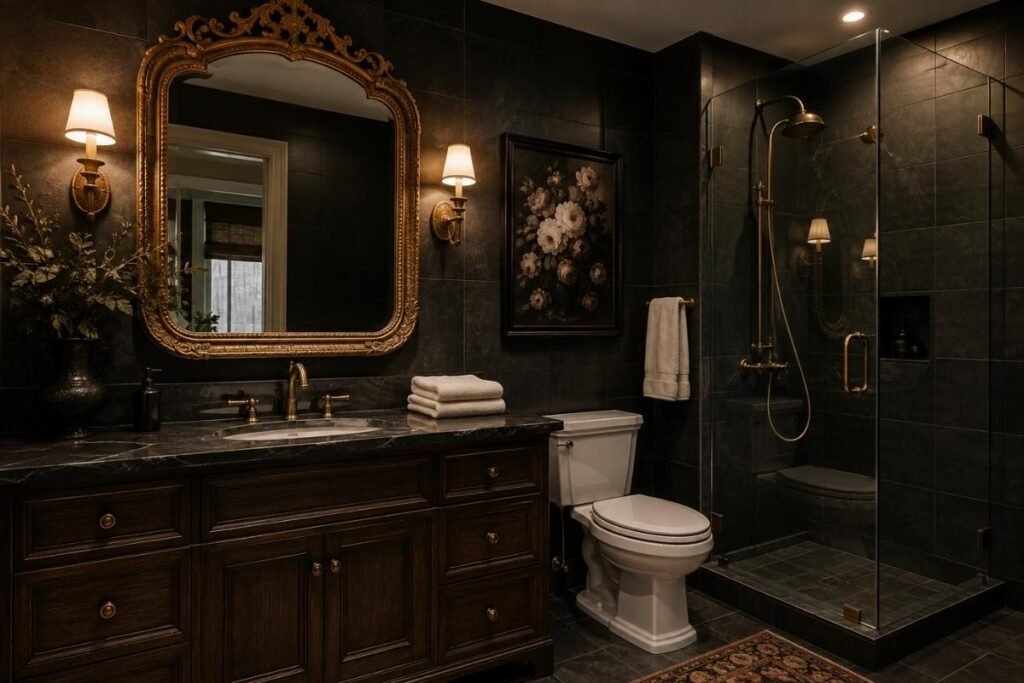
Bathrooms can support stronger colours and patterns because they are usually smaller, enclosed spaces.
Use dark tiles, floral wallpaper, an ornate mirror and aged-metal fixtures. Warm lighting will prevent black or charcoal finishes from feeling harsh.
Ensure all materials are suitable for moisture and ventilation conditions.
Gothic Home Office Decor
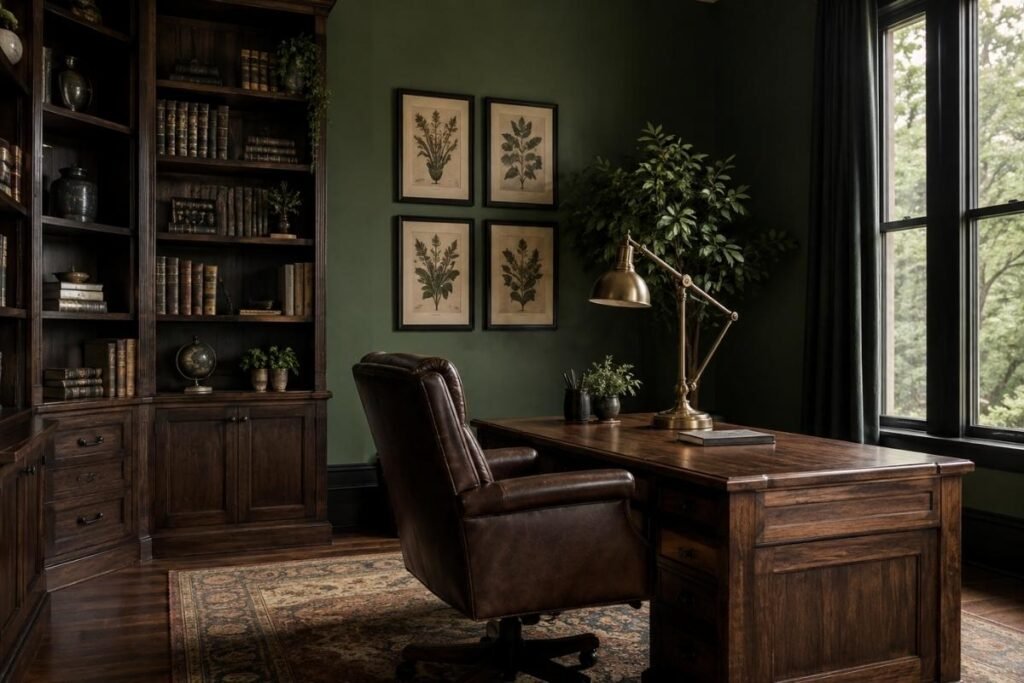
A gothic office can combine the atmosphere of a private library with the function of a modern workspace.
Use dark shelving, a wooden desk, vintage-style lamp and framed artwork. Forest green, brown, burgundy and charcoal are particularly effective.
Keep the desk surface organised so the decorative style does not interfere with productivity.
Gothic Decor for Small Apartments
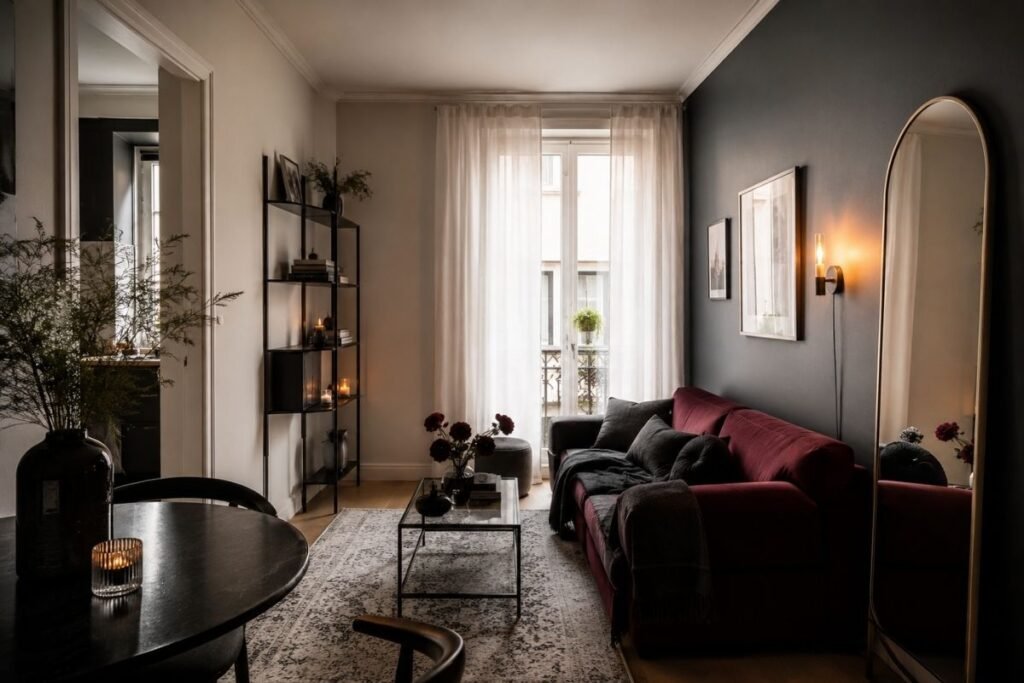
Small spaces benefit from selective gothic details rather than several heavy features.
Choose one dark wall, an arched mirror, compact furniture and layered lighting. Use vertical shelving to take advantage of wall height.
Mirrors, glass and lighter textiles can prevent the room from feeling smaller.
Renter-Friendly Gothic Home Decor
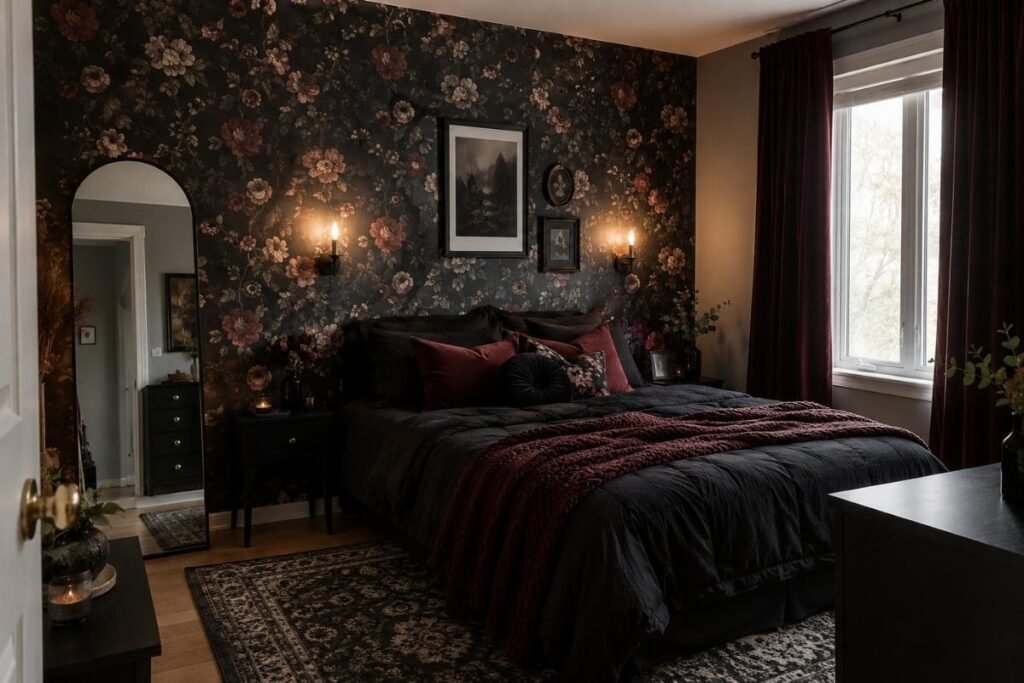
You can create gothic style without making permanent changes.
Use removable wallpaper, freestanding mirrors, rechargeable sconces, dark curtains and framed artwork. Furniture and textiles can create most of the atmosphere.
Instead of painting doors or cabinets, change removable handles where permitted and store the original fittings safely.
How to Create Gothic Home Decor on a Budget
Begin with changes that affect a large visual area. Paint, curtains, bedding and wall art usually create more impact than several small accessories.
Second-hand furniture can be particularly valuable. Look for mirrors, cabinets, chairs, side tables, frames and candle holders.
Minor scratches can add character, while damaged upholstery or unstable furniture may cost more to repair than expected.
Simple DIY projects can also work well. Paint an existing mirror frame, create a gallery wall with printable art, cover cushions with dark fabric or apply removable moulding to a feature wall.
Spend more on items that must remain comfortable, safe or durable. Seating, beds, electrical lighting and frequently used furniture should be selected carefully.
Common Gothic Decorating Mistakes
Using Too Much Black
Black is powerful, but excessive use can remove depth from a room. Combine it with burgundy, green, wood, metal and warm neutral shades.
Relying on One Light Source
A dark room with a single ceiling light may feel harsh or gloomy. Use several warm light sources at different heights.
Buying Too Many Novelty Items
Skulls, ravens and occult symbols can fit the style, but too many can make the room feel like a themed display.
Ignoring Texture
A room containing only smooth black surfaces can appear unfinished. Add velvet, wood, glass, metal, lace or stone-inspired texture.
Overcrowding the Space
Gothic furniture and accessories often have strong shapes. Give them enough space to be seen clearly.
Mixing Too Many Gothic Substyles
Victorian, medieval, modern gothic and whimsigoth can work together, but one style should remain dominant.
Step-by-Step Gothic Room Makeover Plan
First, choose the gothic style that best suits your home. This will guide all later decisions.
Next, select a colour palette with one dominant shade, one supporting shade and one metallic or light accent.
Choose the room’s focal point. It may be a bed, fireplace, sofa, gallery wall, chandelier or large mirror.
Add the largest furniture pieces before purchasing smaller decorations. This allows you to judge the available space accurately.
Plan the lighting before finalising wall colours. Dark rooms usually require more than one source of warm light.
Introduce two or three textures through curtains, rugs, upholstery and cushions.
Add wall decor and a limited number of accessories. Step back and remove anything that makes the room feel crowded.
Gothic Home Decor Checklist
A balanced gothic room usually includes:
- A controlled dark colour palette
- One clear focal point
- Warm layered lighting
- At least two contrasting textures
- One architectural or arched shape
- Dark wood or metal detail
- A reflective surface
- Carefully selected wall art
- Comfortable, functional furniture
- Enough empty space to prevent clutter
Frequently Asked Questions About Gothic Home Decor
What colours are commonly used in gothic home decor?
Black, charcoal, burgundy, forest green, midnight blue, plum, dark brown, antique gold and silver are commonly used. Warm cream and beige can also create contrast.
Can gothic decor work without black walls?
Yes. Deep green, burgundy, navy or neutral walls can support gothic furniture, lighting and accessories. Architectural shapes and texture are often more important than black paint.
How can I make gothic decor look elegant?
Use quality materials, repeat a controlled colour palette and choose a few substantial decorative pieces. Avoid excessive novelty objects and visual clutter.
Can gothic home decor work in a small apartment?
Yes. Use one focal wall, compact furniture, mirrors, vertical storage and warm layered lighting. Avoid filling the room with oversized dark furniture.
Is gothic home decor expensive?
It can be created at different budget levels. Paint, textiles, second-hand furniture and printable art can produce strong results without a complete renovation.
What furniture works in a gothic interior?
Dark wood cabinets, velvet chairs, four-poster beds, wrought-iron furniture, antique-style tables and high-back seating all work well. Modern furniture can also be mixed with traditional pieces.
What is modern gothic home decor?
Modern gothic decor combines dark colours, dramatic shapes and gothic details with contemporary furniture, simpler layouts and less ornamentation.
How do I stop gothic decor from looking like Halloween?
Focus on architecture, materials, lighting and craftsmanship rather than seasonal decorations. Use wood, metal, velvet, stained glass and antique-inspired pieces.
Conclusion
Gothic home decor is not simply about painting a room black or filling it with dramatic accessories. It is a layered interior style built around atmosphere, architecture, texture and thoughtful contrast.
Begin with one room, one focal point and a controlled colour palette. Add warm lighting, rich materials and carefully selected furniture before introducing smaller decorative items.
Whether your taste is modern, Victorian, romantic or medieval-inspired, gothic design can be adapted to different homes, budgets and room sizes. The strongest interiors feel personal, comfortable and intentional rather than overly themed.
Use the ideas in this guide to create a gothic home that feels dark and dramatic while remaining elegant, practical and welcoming.