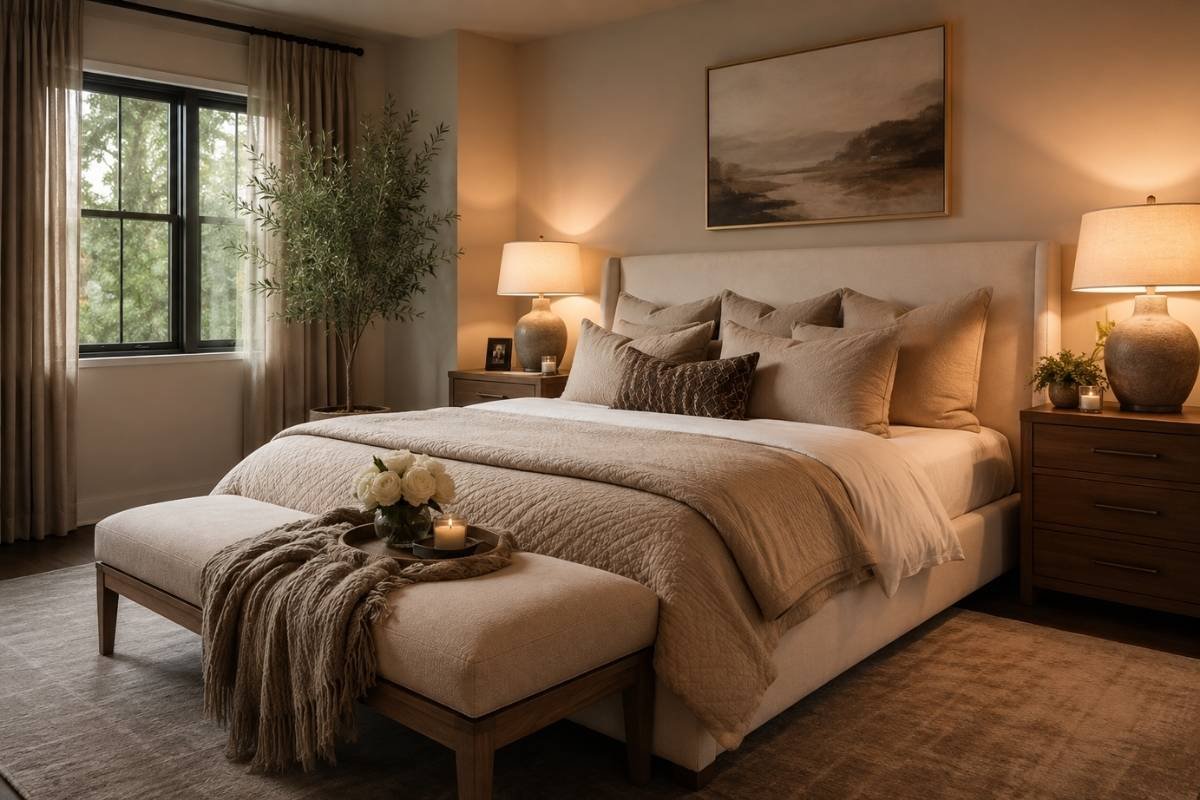

“Ask any couple who’s redecorated a shared bedroom and you’ll hear a version of the same story: one partner’s clothes take over the closet, the other person’s bedside lamp is somehow always too bright, and the ‘quick refresh’ turns into a three-weekend project. It usually isn’t the paint color that causes the friction, it’s storage that was never actually divided fairly in the first place.”
Introduction
Designing a bedroom as a couple isn’t just about picking furniture you both find attractive. It’s about merging two routines, two storage habits, and often two completely different ideas of what “cozy” or “clean” even means. One partner wants a calm, uncluttered room. The other wants color, texture, and a headboard with personality. Neither is wrong, the room just has to hold both.
This guide walks through the planning conversation to have first, 25 concrete ideas organized by what they actually solve (focal point, storage, lighting, personalization, small-space strategy, budget), a color palette reference table, a step-by-step makeover plan, and the mistakes that quietly ruin otherwise good-looking rooms.
Quick answer: the couple bedrooms that actually work long-term aren’t the most expensive ones. They’re the ones where storage was divided by real need (not a strict 50/50), lighting was layered instead of a single overhead bulb, and both partners had visible input even if one person did most of the actual shopping.
Before You Buy Anything: The Planning Conversation
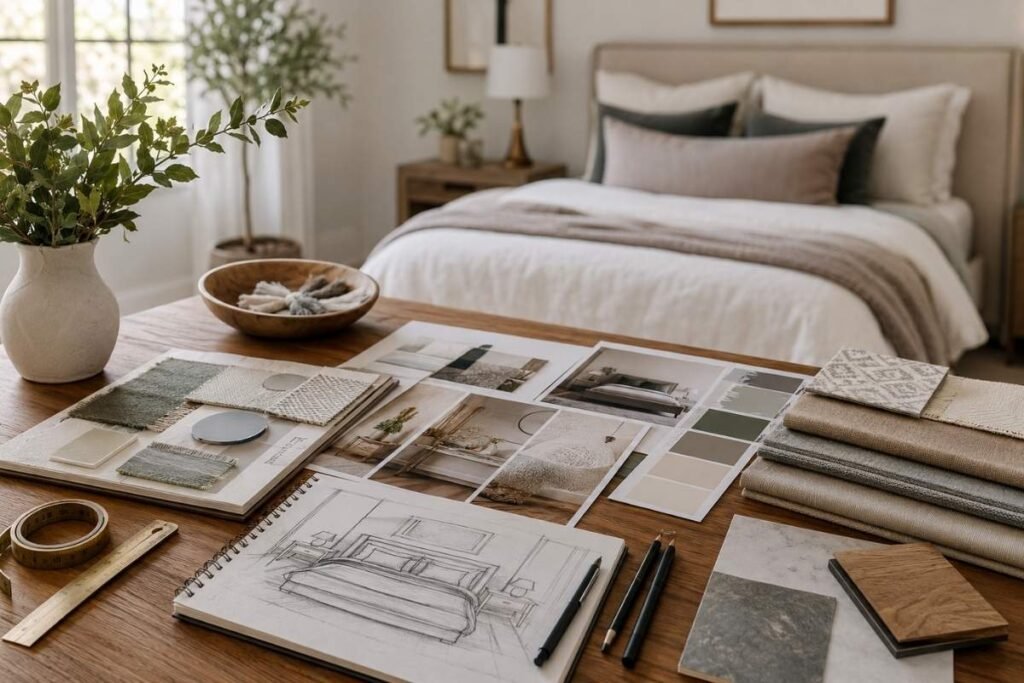
Skipping this step is the single most common reason couples end up redecorating twice. A 20-minute conversation up front saves both money and arguments later.
1. What style do we actually both like?
Don’t ask “what’s your style?” Most people can’t answer that abstractly. Instead, build a shared inspiration board (Pinterest, a folder of screenshots, whatever) and save anything either of you likes, without judging it yet. After a week, look for patterns. If six of your ten saved photos all have natural wood tones and warm lighting, that’s your real shared preference even if you’d have described your styles as totally different.
2. What do we actually need this room to do?
A bedroom used purely for sleeping has different requirements than one where someone reads every night, works occasionally, or gets dressed for an early shift while the other person is still asleep. Answer these honestly:
- Does one of us wake up significantly earlier or later?
- Do we watch TV or read in bed?
- Does anyone need a quiet, dark environment to fall asleep, while the other doesn’t care?
- Do we need a dedicated space for getting dressed, or a small desk?
- How much storage do we realistically need, given what we own right now not what we’ll own someday?
3. What’s the actual budget, split by priority?
Most couples try to buy everything at once and either overspend or run out of budget on the parts that matter most (a good mattress) after spending it on the parts that don’t (a fifth decorative pillow). Split spending into three tiers instead:
| Tier | What goes here | Typical share of budget |
| Essential | Mattress, bed frame, primary storage, main lighting | 55–65% |
| Comfort | Curtains, rug, bedding upgrade, headboard | 20–30% |
| Finishing | Artwork, plants, small accessories, candles | 10–15% |
There’s no rule that every tier has to be filled the same month. Rooms that develop over 2–3 months, tier by tier, usually end up better edited than ones furnished in a single weekend.
Combining Two Different Styles Without a Compromise That Pleases No One
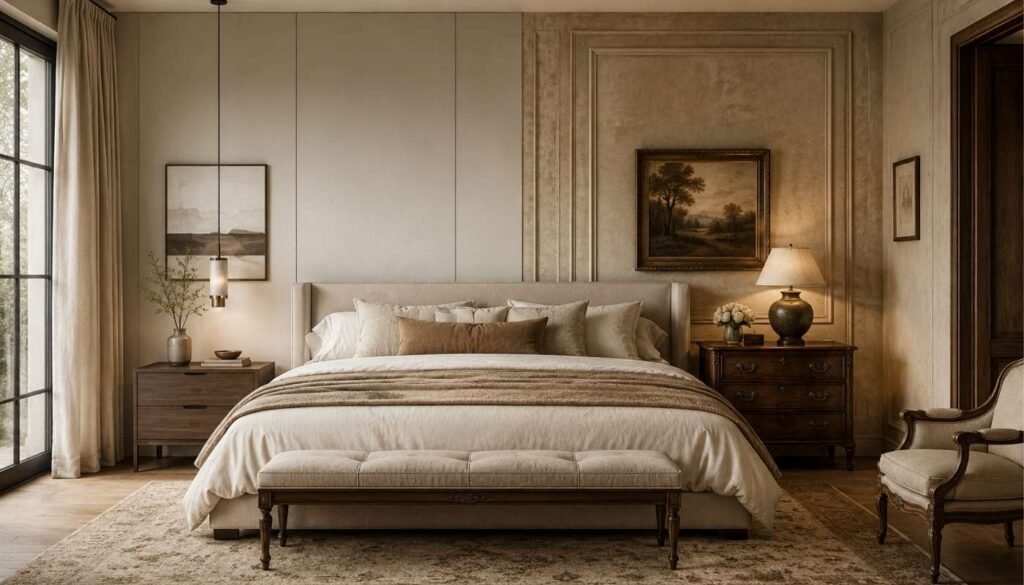
The instinct when partners disagree is to “meet in the middle” on everything which often produces a room that’s a watered-down version of both people’s actual taste. A more effective method is to let one style lead and let the other show up in specific details, rather than diluting both evenly.
The 70/30 method
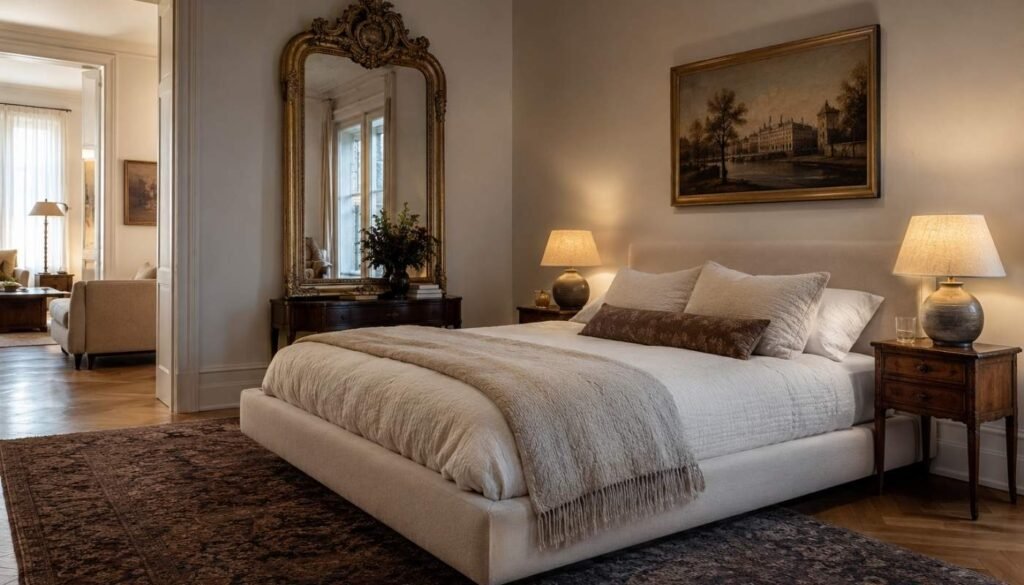
Pick a dominant style (70% of the room’s visual language) and a secondary style that shows up in a smaller, deliberate way (30%). This isn’t a strict math exercise, it’s a decision-making shortcut for the moments you disagree.
Modern base + vintage accents Clean-lined bed frame and neutral walls carry the room; an antique mirror, a vintage side table, or a single piece of classic artwork gives the partner who loves older pieces a real presence in the space, not just a token object shoved in a corner.
Minimalist base + cozy layering Simple furniture and limited decor keep the “clean” partner happy; the “cozy” partner gets their say through a heavier throw blanket, a textured rug, and warmer bulb temperature none of which clutters the room, all of which change how it feels.
Dark base + light accents (or the reverse) One partner who loves moody, dramatic rooms and one who wants brightness can usually meet through a dark accent wall paired with light bedding and natural wood the drama stays contained to one surface instead of fighting the whole room.
If dramatic, richly toned interiors are more your direction than a subtle accent, our gothic home decor guide goes deeper into using dark palettes and textured materials without making a room feel heavy or cave-like.
The advantage of 70/30 over generic “compromise” is that both people can point to something specific in the finished room and say “that’s mine” which matters more for long-term satisfaction than either partner realizes going in.
25 Ideas, Organized by What They Actually Fix
Anchoring the room
1. Build the whole room around the bed as the focal point
Put your visual budget into the bed headboard, layered bedding, balanced nightstands instead of spreading it across small decorations. This single decision does more for how “finished” a room looks than anything else on this list.
2. Choose a headboard that sets the tone for everything else
Upholstered headboards read as soft and hotel-like. Wood suits natural or Scandinavian rooms. A bold headboard can be your one statement piece, freeing the rest of the room to stay calm.
3. Let elements match in tone, not in identical form
A bedroom doesn’t need matching nightstands to feel cohesive. Two tables in a similar wood tone, or lamps in the same finish, create connection without forcing sameness.
4. Use a statement wall instead of decorating every wall
An accent wall paint, wallpaper, or a large piece of art behind the bed gives the partner with bolder taste a real outlet while the rest of the room stays simple.
Making it work for two people
5. Give each person a genuinely separate bedside zone
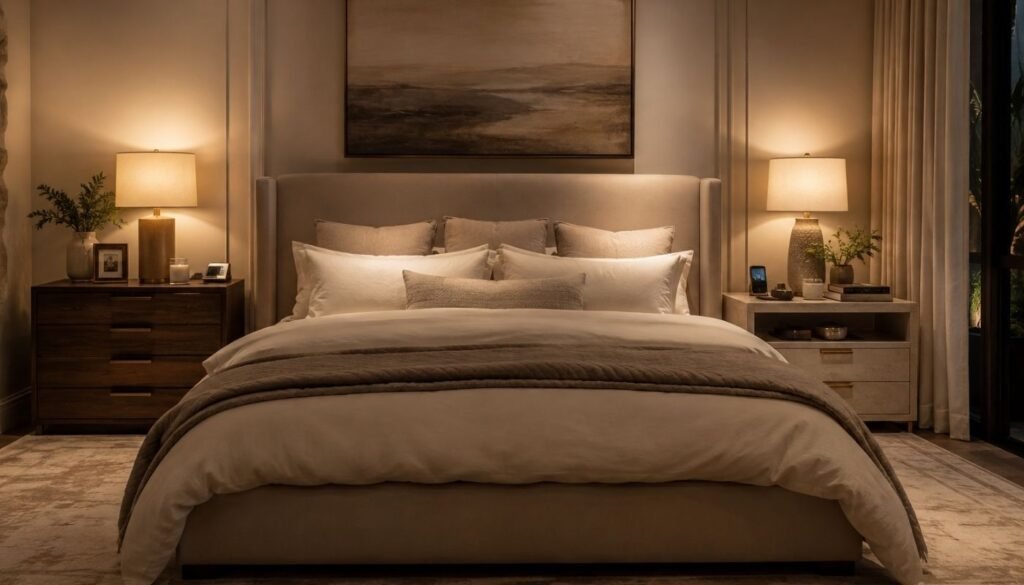
The highest-impact, lowest-cost idea here. Individual lamps and charging spots mean neither partner negotiates over reading light or where their phone charger lives.
6. Design storage around actual need, not a 50/50 split
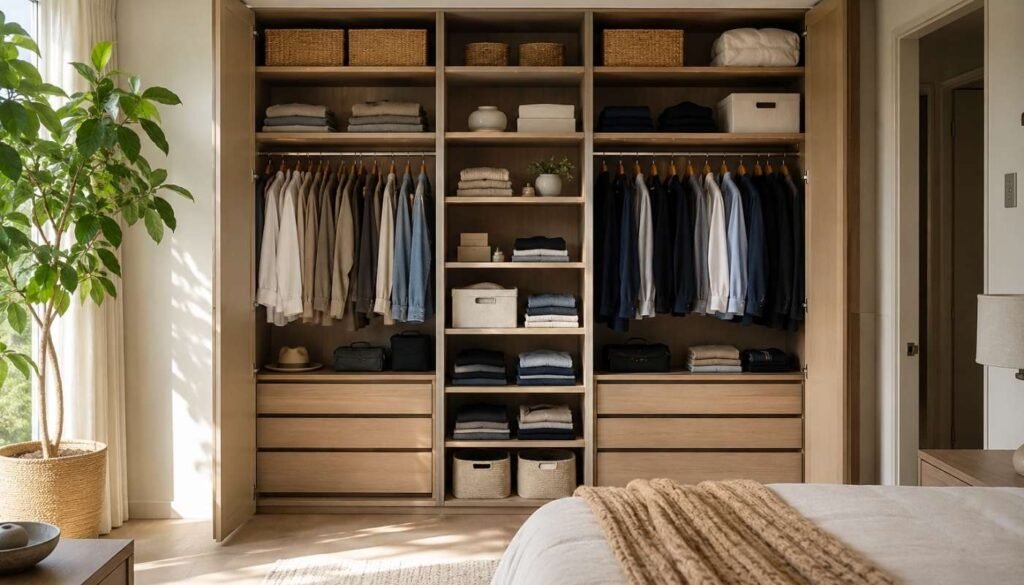
Storage conflict is rarely about decorating; it’s about an even split not matching real ownership.
- Divide wardrobe and drawer space by what each person actually owns
- Keep a small shared zone for bedding and joint belongings
- Add one closed-storage piece for items that don’t have a home yet
- Consider a second wardrobe if one partner owns significantly more
7. Build in real support for different sleep schedules
Individually controlled bedside lights, a sleep mask as a cheaper alternative to full blackout curtains, and keeping alarms confined to one nightstand all help when routines don’t match.
8. Add a bench or storage seat at the foot of the bed
Somewhere to sit while dressing, plus often hidden storage underneath. In smaller rooms, choose a slim option that doesn’t block the walking path.
Color, light, and texture
9. Choose color around mood, not favorite colors
Ask what mood you’re both after calm, cozy, elegant rather than picking a favorite color at full saturation.
10. Layer lighting instead of relying on one ceiling fixture
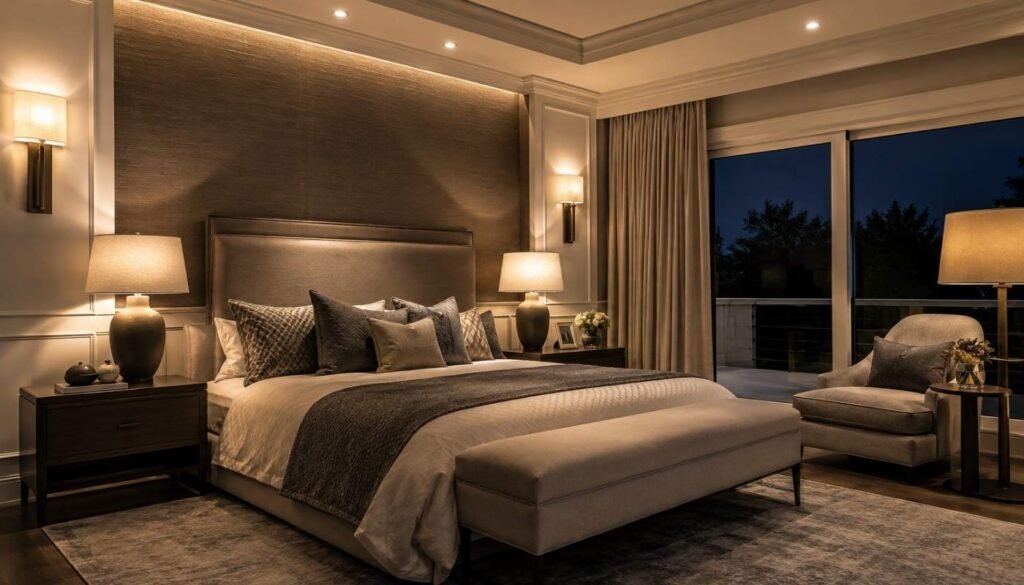
Aim for three layers: general ceiling light, bedside task lighting, and one softer accent source. Warm-temperature bulbs (2700K–3000K) read as more relaxing than cool white the National Sleep Foundation notes that low color-temperature, dimmer lighting in the evening supports the body’s natural wind-down process, not just aesthetics.
11. Add texture before adding more objects
A room can look finished and still feel cold if everything is smooth and flat. A knitted throw, a woven rug, and linen curtains do more than another decorative object.
12. Get a rug that’s actually sized for the bed
The rug should extend at least 18–24 inches past the sides of the bed so both people step onto it getting up on either side.
13. Use mirrors with intention, not just for extra light
A mirror opposite a window amplifies light; one on a wardrobe door adds function. Avoid a mirror that just reflects a cluttered closet.
Personality and story
14. Choose artwork that means something to both of you
A shared gallery wall travel photos, a few meaningful prints reads as far more personal than art chosen only to match the bedding.
15. Curate personal objects instead of displaying everything you own
A handful of items that actually carry meaning beats surface-covering the room with smaller trinkets, and they’re easier to dust.
16. Bring in plants for a natural, low-effort personality boost
Two or three well-placed, low-maintenance plants read as more considered than a windowsill crowded with a dozen.
17. Add a reading or relaxation corner if the room allows it
Even a small chair with a floor lamp gives one partner somewhere to read or unwind without disturbing the other.
Comfort as a design principle
18. Prioritize mattress and pillow comfort over how the bed looks in photos
A visually striking bed that’s uncomfortable to sleep in is a design failure. This is the one category worth spending above average on.
19. Solve curtains for both people’s light preferences
Layered curtains sheer plus blackout let each partner adjust rather than forcing one preference on both people.
20. Manage cables and tech so the room doesn’t look like a charging station
A cable box or shared charging dock solves this for under $20 and noticeably changes how finished the room looks.
Small-space and budget strategy
21. In a small room, furniture has to earn its footprint
A storage bed instead of a bed plus a separate dresser, floating nightstands, and wall-mounted lighting all reclaim floor space.
22. Use vertical space before you use more floor space
Tall wardrobes and wall-mounted organizers store more without shrinking the walking area.
23. Refresh seasonally instead of redecorating from scratch
Swap lighter bedding in warmer months and heavier textures in colder ones a low-cost way to keep the room feeling current.
24. Spend on paint and lighting before spending on furniture
On a tight budget, a new wall color and better bulbs change the room’s feel more per dollar than furniture.
25. Finish by removing, not just adding
After decorating, ask what’s actually earning its spot. Removing one or two items often improves a room more than adding another one does.
Bedroom Layout Ideas by Room Shape
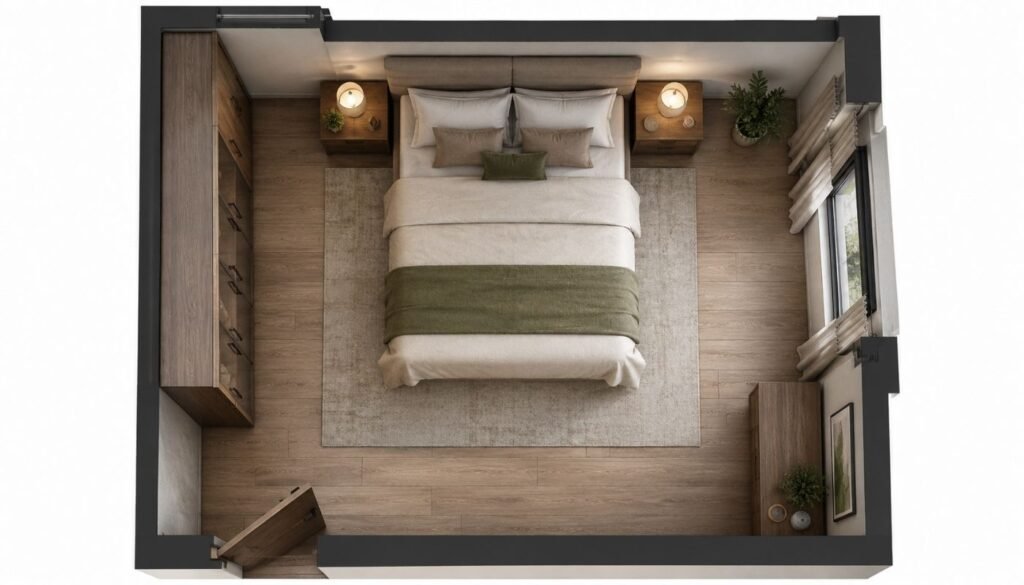
Furniture placement advice usually assumes a perfectly square room, which most people don’t actually have. Layout strategy changes depending on the room’s shape, and getting this wrong is why some couples end up with a bedroom that looks fine in a photo but feels cramped to actually live in.
Rectangular bedrooms. Place the bed against the longest solid wall, centered, with equal walking space on both sides.
Resist the temptation to push it into a corner to “save space” .It saves floor area but costs one partner easy access to their side of the bed every single day.
Use the shorter wall for a dresser or wardrobe, and keep a clear diagonal sightline from the door to the window if possible; it makes the room read as larger than it measures.
Square bedrooms. These are the most flexible but can feel static if the bed is dead-center facing the door.
Angling the bed slightly toward a window, or placing it against a wall that isn’t directly opposite the entrance, usually creates a more natural flow and a better spot for a reading chair or bench in the leftover corner.
Narrow or awkward bedrooms. When one dimension is significantly shorter, a headboard-first layout works better than trying to fit standard-sized nightstands on both sides.
Consider wall-mounted or floating nightstands, which recover the few inches that make the difference between a walkable room and a cramped one.
In truly tight layouts, one nightstand can sometimes be swapped for a slim wall shelf without either partner feeling shorted, as long as both still have somewhere for a lamp, phone, and glass of water.
Attic or sloped-ceiling bedrooms. Place the bed under the tallest section of ceiling, not the lowest, so both partners can sit up comfortably.
Storage works best along the lower walls where standing height isn’t needed built-in drawers or low benches under the slope use space that would otherwise go to waste.
Newlywed and First-Apartment Bedrooms vs. Long-Term Shared Bedrooms
The right approach genuinely differs depending on how long you’ve been sharing a space, and most decorating guides don’t separate these two situations even though the priorities aren’t the same.
If you’re newly living together or in a first apartment, the temptation is to buy the “complete” bedroom in one trip. Resist it. You don’t yet know each other’s real habits: who actually reads before bed, who needs total darkness to sleep, how much either of you actually owns once it’s combined into one closet. Furnish only the essentials (mattress, frame, basic storage, one lamp each) for the first few months, and let the rest of the room develop once you know how you actually use it.
A bedroom decorated too completely, too early, in a new relationship often needs an expensive re-do within the year.
If you’ve shared a bedroom for years, the challenge is usually the opposite: accumulated clutter, mismatched pieces from different life stages, and habits that have quietly stopped working (a nightstand that’s too small for what it now holds, a wardrobe system that made sense five years and one job change ago).
A long-term couple’s redecorating project benefits more from an honest audit of what’s actually still useful than from more shopping.
His and Hers: Making Storage and Surfaces Genuinely Equal
“His and hers” layouts get treated as a gimmick in a lot of decorating content, but the underlying idea is sound: giving each partner symmetrical, clearly-defined personal space reduces a surprising amount of daily friction, regardless of gender or how the couple identifies.
- Two nightstands, even if not identical each with its own drawer, its own lamp, its own surface for a phone or glass of water
- Two defined closet or wardrobe zones, sized by what each person actually owns rather than split evenly down the middle by default
- Two accessible sides of the bed, with enough clearance on both sides to get in and out without climbing over the other person
- A shared “neutral zone” for anything that belongs to both of you remotes, shared chargers, a shared alarm clock so it isn’t ambiguously stored on just one nightstand
Couples who skip this and default to “whoever gets there first” storage tend to end up with one side of the room quietly overflowing while the other stays empty which is a layout problem more often than a personality problem.
How Often Should Couples Redecorate a Shared Bedroom?
There’s no fixed timeline, but a few honest signals are more useful than a “redecorate every X years” rule:
- Storage no longer matches what you actually own (a common trigger after a move, a wardrobe change, or combining households)
- One partner has quietly stopped feeling represented in the room’s style
- The furniture layout was decided for a different life stage pre-kids, pre-pets, pre-remote-work and no longer fits how the room is actually used
- The room hasn’t been genuinely reassessed, beyond swapping bedding, in three or more years
A full redecoration isn’t usually necessary even when one of these is true. Often it’s one category storage, lighting, or the color palette that’s actually outdated, not the whole room.
Bedroom Color Combinations That Work for Two Different People
| Style | Main colors | Accent ideas | Feeling |
| Modern Calm | Soft gray, white, beige | Black, natural wood | Clean, peaceful |
| Warm Natural | Cream, tan, brown | Olive green, terracotta | Cozy, welcoming |
| Quiet Luxury | Ivory, taupe | Brushed gold, dark wood | Elegant, comfortable |
| Romantic Mood | Burgundy, charcoal | Warm lighting, velvet | Intimate, warm |
| Minimalist | White, warm beige | Natural textures only | Simple, calming |
| Earth-Inspired | Sage green, sand | Wood tones | Fresh, grounded |
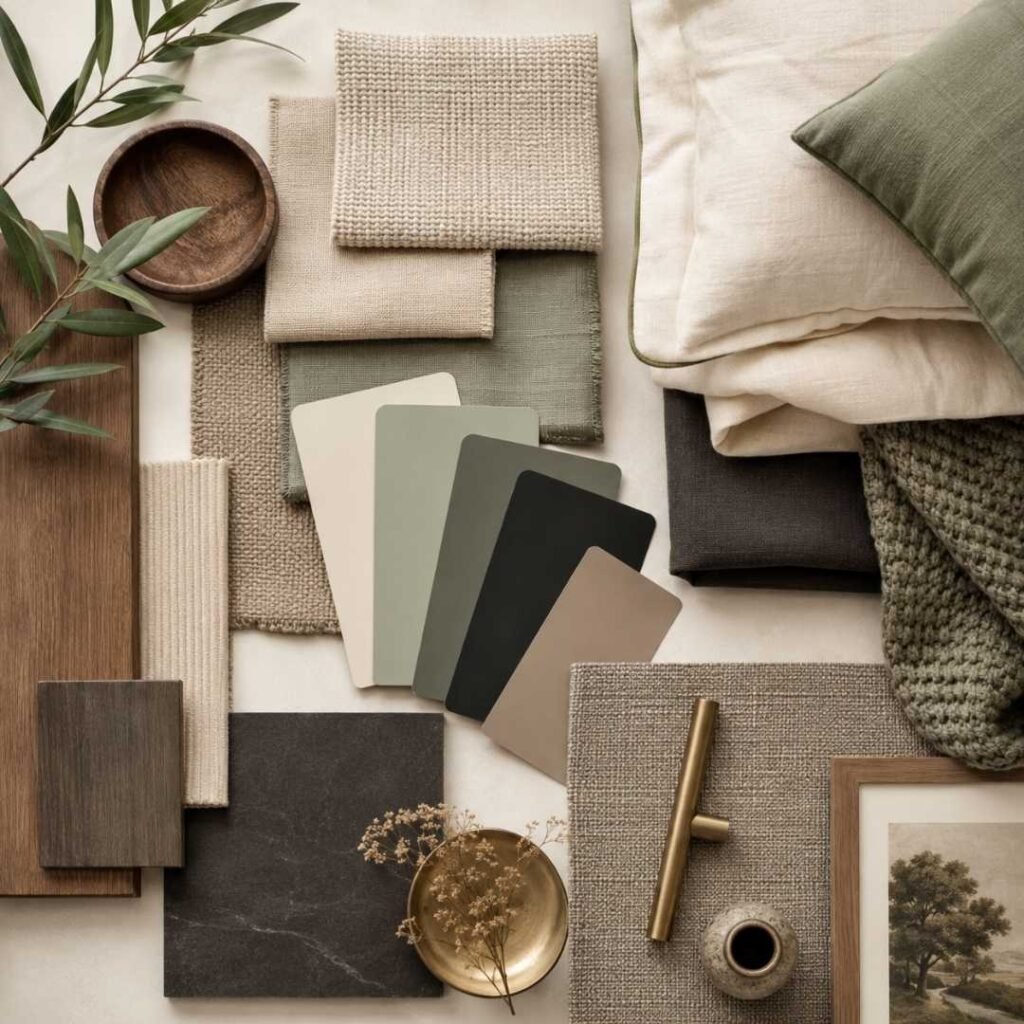
Test paint samples directly on your walls at different times of day before committing the same swatch can look warm at noon and gray by lamp light, and that shift matters more in a bedroom than almost any other room in the house.
Small Bedroom Strategy, in Full
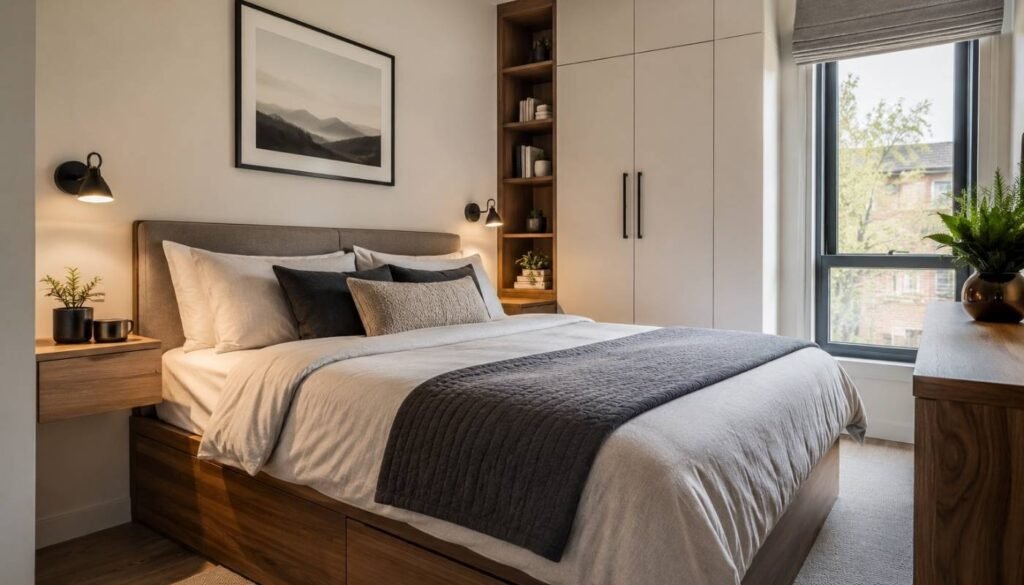
Small shared bedrooms fail for a predictable reason: too much furniture chasing too little floor space, not too little storage volume. The fix isn’t buying more, it’s being deliberate about size and placement.
Size furniture to the room, not the showroom. A king bed might be the goal eventually, but if it leaves 18 inches of walking space on either side, a queen is the better decorating decision, not a compromise. Beds with built-in drawers, slim nightstands, and wall-mounted lighting all reclaim floor area without shrinking storage.
Go vertical. Tall wardrobes and high shelving use wall space that’s otherwise wasted, and keep the floor clear which does more to make a small room feel larger than any single color choice.
Keep the palette tight. Light, connected colors read as more spacious than a room with several competing tones, though this doesn’t mean avoiding darker accents entirely; one darker wood tone or black fixture against a light palette still reads as open.
Split storage deliberately. In a small room especially, defining what’s personal (individual drawers, a wardrobe section each) versus shared (seasonal bedding, joint documents) up front, rather than letting it sort itself out undefined shared storage is where small-room clutter tends to start.
Decorate with restraint. One strong piece of art, one good rug, one statement lamp will do more for a small room than five smaller decorative objects competing for the same visual space.
Budget-Conscious Upgrades, Ranked by Impact per Dollar
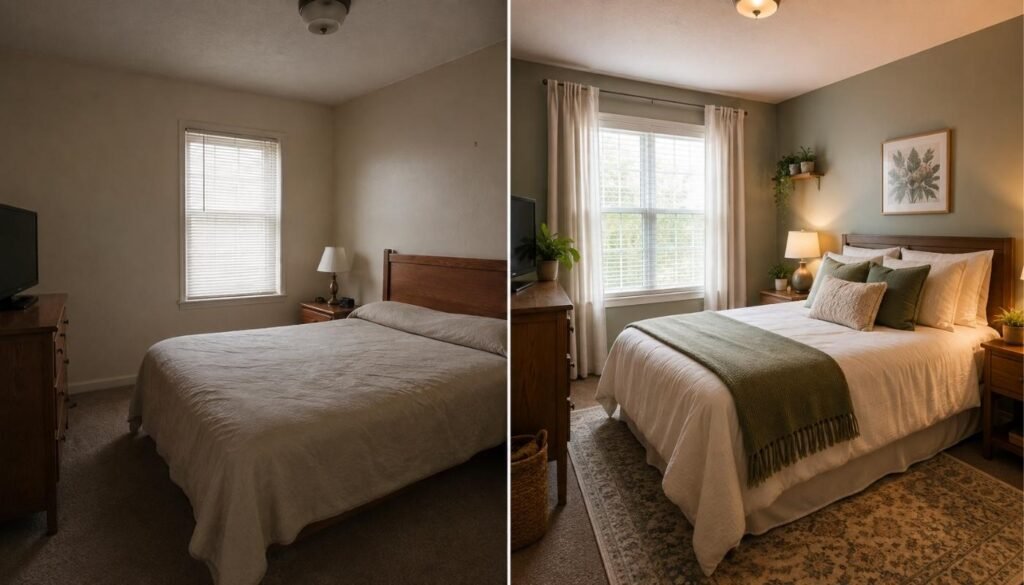
- Declutter and rearrange the first $0. Before spending anything, remove what you don’t use and reconsider furniture placement. This alone often makes a bedroom look meaningfully better.
- Paint, roughly $50–150 for one accent wall. The single highest-impact low-cost change available.
- Bedding refresh, roughly $60–200. New duvet cover, pillow covers, and a throw change the bed’s entire presence without touching furniture.
- Lighting upgrade, roughly $30–150. Swapping old lamps for warmer-toned fixtures, or adding one accent light, changes the room’s atmosphere more than most people expect for the price.
- A rug sized correctly, roughly $100–300 depending on size and material worth prioritizing over smaller decorative purchases.
- Personal details last, roughly $20–100 total. Framed photos, a plant, a secondhand mirror inexpensive, but only worth adding once the foundation above is in place.
A Step-by-Step Makeover Plan
Step 1: Have the planning conversation. Use the questions from the beginning of this guide. Skipping this is where most redecorating regret starts.
Step 2 : Measure the room and sketch a layout. Record wall lengths, window and door positions, and existing furniture dimensions. Even a rough hand-drawn plan prevents the classic mistake of buying a piece that technically fits but blocks the walking path.
Step 3 : Pick a direction using the 70/30 method, not a strict 50/50 compromise. Decide which of you is leading the base style and where the other partner’s preferences will show up.
Step 4 : Set the tiered budget from the planning section, and commit to buying in that order: essential, then comfort, then finishing touches.
Step 5 : Build the foundation first. Wall color, bed placement, main furniture, and lighting go in before any decorative purchase. Accessories should support the design, not define it.
Step 6 : Add comfort and personal details. This is where the room stops looking like a furniture catalog and starts looking like your meaningful art, plants, books, the small things that don’t show up in a showroom.
Step 7 : Edit. Walk through after everything’s in place and ask what’s actually earning its spot. A finished room usually needs less than the person decorating it assumed.
Mistakes That Quietly Undermine an Otherwise Good Room
Letting one partner make every decision. Even when one person naturally takes the lead on decorating, the other should have real input on color, comfort, and storage. A bedroom that only reflects one person’s taste tends to breed quiet resentment over time, however small.
Buying before measuring. The single most reversible, most common, and most expensive mistake. Measure walls, doorways, and walking space before any furniture purchase, not after.
Prioritizing how it photographs over how it sleeps. A visually striking bed with a mediocre mattress is a design failure. Comfort has to outrank appearance for anything you use every single night.
Over-decorating. More objects doesn’t equal more personality, it usually equals more clutter and more dusting. One large piece of art beats five small frames; one good rug beats three small mats.
A single ceiling light and nothing else. Covered in more detail above, but worth repeating as a standalone mistake because it’s the most common lighting error in bedrooms specifically.
Frequently Asked Questions
How should couples decorate when they have genuinely different styles?
Anchor the room in one partner’s style at roughly 70% of the visual language, and let the other partner’s taste show up deliberately in the remaining 30% a specific accent wall, a headboard, a piece of furniture rather than diluting both styles evenly across everything.
What colors actually work well for two different people sharing a room?
Neutral, warm-toned foundations (beige, warm gray, cream, soft earth tones) tend to work because they’re rarely anyone’s least favorite color, and they leave room for either partner to add personality through accents, bedding, or artwork without a full repaint.
How do we make a small shared bedroom actually work, not just look okay in photos?
Prioritize furniture sized correctly for the room over furniture that looks impressive online, use vertical wall space for storage instead of adding more floor-standing pieces, and split storage deliberately between personal and shared zones rather than letting it happen by accident.
What should we buy first when redesigning a shared bedroom?
Mattress, bed frame, primary storage, and lighting in that order. Decorative and finishing purchases should come only after the functional foundation is settled, not before.
How romantic can a bedroom look without it feeling like it’s trying too hard?
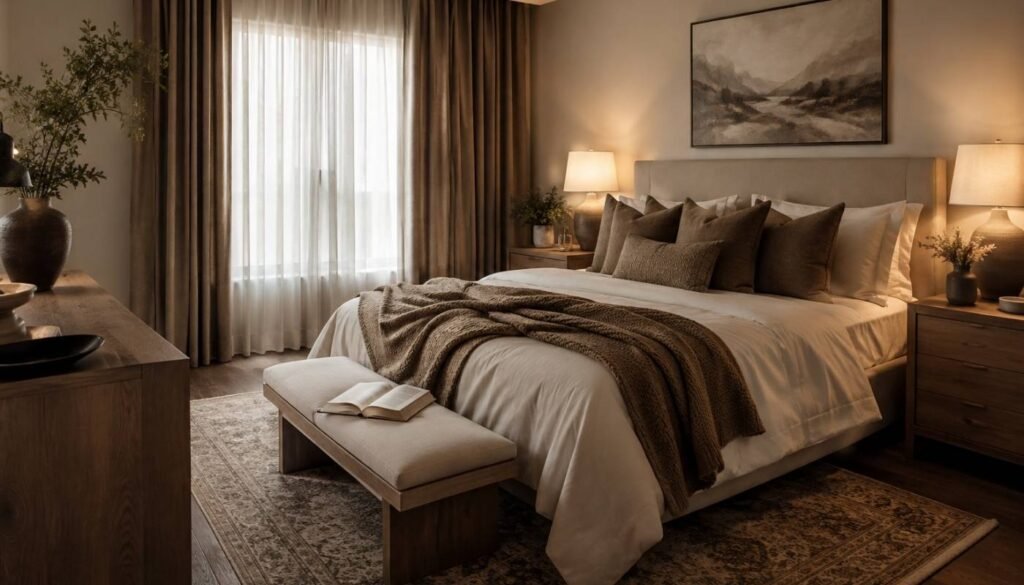
Warm-temperature lighting, comfortable and well-chosen textures, and a few genuinely meaningful personal objects create a warmer feeling than any amount of styled decor restraint tends to read as more romantic than abundance.
How do you decorate a bedroom for two people with very different sleep schedules?
Focus on independent control rather than compromise: individually switched bedside lighting, layered curtains that can adapt, and keeping alarms and notifications contained to one nightstand so they don’t disturb the other person’s sleep.
Final Thoughts
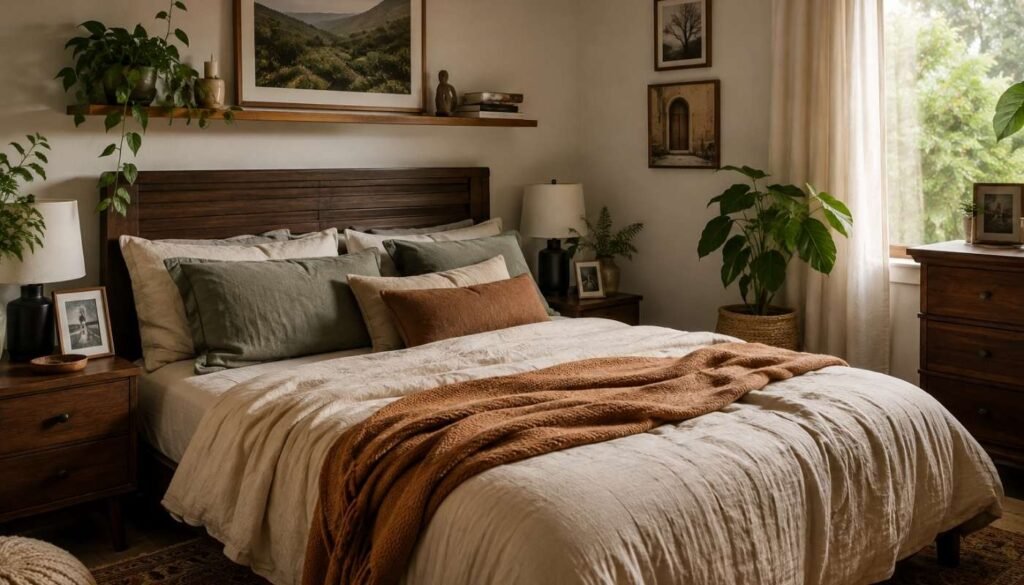
The bedrooms that actually work for couples long-term aren’t the most expensive or the most photogenic; they’re the ones where storage was divided by real need, lighting was layered instead of a single overhead bulb, and both people can point to something in the finished room and say it’s genuinely theirs.
Start with the conversation, build the foundation before the decoration, and let the room develop over a few months rather than a single weekend. That’s what makes it feel like home instead of a showroom.